MESQUITE BEAN WINE
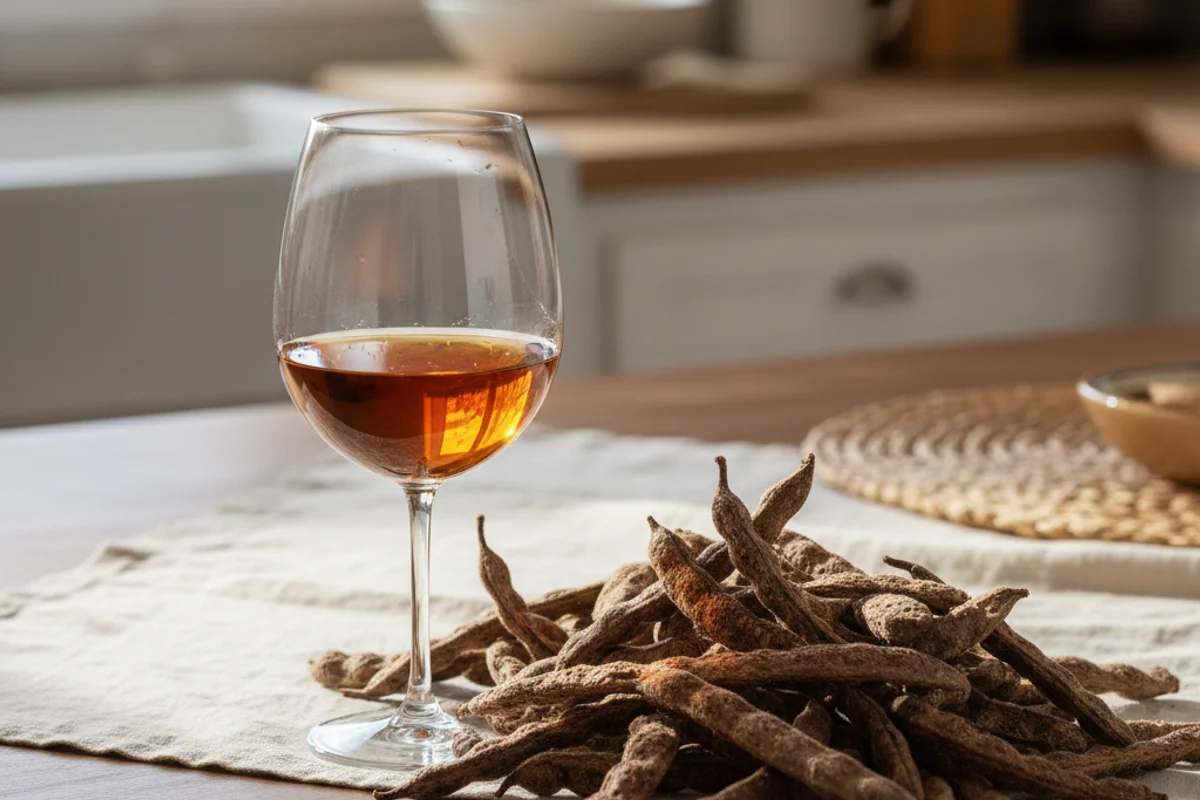
Mesquite trees are famous for smoking brisket, but those long tan pods hanging off the branches? They’re loaded with natural sugar and carry a subtle sweetness — somewhere between vanilla, caramel, and dried fruit. Indigenous peoples across the American Southwest knew this long before anyone had a hydrometer. The result in a glass is a dry, earthy, amber wine with a surprisingly smooth finish. It takes patience, but so does anything worth doing right.
The beginner trap: Skipping the full year of aging — this wine tastes harsh and unbalanced young, but transforms dramatically with time.
Ingredients
- 3 lbs mesquite bean pods, broken into 1-inch pieces
- 2 lbs granulated sugar, divided
- 1 cup golden raisins, chopped (fresh or from the baking aisle)
- Water to make 1 gallon total
- 1½ tsp acid blend
- ½ tsp pectic enzyme
- 1 tsp yeast nutrient
- 1 packet wine yeast
Method
- Wash the bean pods, break them into 1-inch pieces, and place them in a large pot covered with about 7 pints of water. Simmer covered on low heat for one hour, then strain out and discard the solids.
- Pour the hot liquid into your primary fermenter and stir in half the sugar until fully dissolved. Add the chopped raisins.
- Cover the fermenter with a clean cloth and let it cool to room temperature. Once cool, stir in the acid blend, yeast nutrient, and pectic enzyme.
- Cover again and let the must rest for 12 hours.
- Activate your yeast according to the packet directions, then add it to the must. Cover loosely and stir once daily for 7 days.
- Strain out and discard the raisins. Stir in the remaining sugar until fully dissolved, then transfer to a clean secondary fermenter. Top up to 1 gallon and fit an airlock.
- Rack into a fresh secondary every 30 days for the next 4 months, topping up and refitting the airlock each time.
- Stabilize, then bottle. Age at least one year before opening.
Why this works
Mesquite pods are naturally high in sucrose and simple sugars, which is why cattle will seek out fermenting fallen pods — their noses know. Simmering the pods extracts those sugars and flavor compounds without releasing bitter tannins the way a boil would. The raisins serve a dual purpose: they add a small sugar boost and contribute body-building nutrients that keep the yeast healthy through a long primary fermentation. Pectic enzyme breaks down any pectin in the liquid early on, which helps the wine clear properly rather than staying permanently hazy. The slow racking schedule over four months gradually drops out sediment and lets the wine develop structure that makes that one-year wait actually worth it.
Notes
If you don’t live in mesquite country, check Latin grocery stores or online retailers — dried mesquite pods are sometimes sold for cooking. The golden raisins can be swapped for regular raisins in a pinch, though golden raisins keep the flavor profile cleaner and lighter. If your finished wine seems thin, a small addition of grape tannin powder (available at any homebrew shop) at the stabilization step can add backbone.