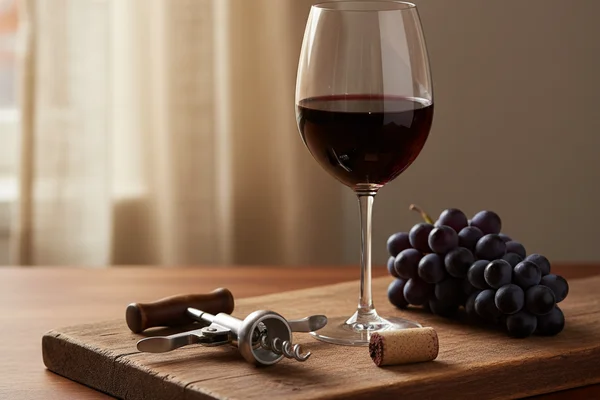
Winemaking: The Potential Health Benefits of Red Wine Consumption
Here’s something worth thinking about before your next batch bubbles away in the corner: the wine you’re making might actually be doing your body a favor. Red wine contains a complex mix of compounds — tannins, flavonoids, resveratrol — that researchers have linked to heart health, brain protection, and lower mortality rates. The Copenhagen City Heart Study tracked 13,000 people over more than a decade and found that moderate daily wine drinkers had roughly half the mortality risk of non-drinkers. That’s not a small number. So yes, that fermentation crock deserves some respect.
The beginner trap: New winemakers often reach for white or rosé because the process feels simpler, but they miss out on the skin-contact fermentation that produces the polyphenols responsible for red wine’s health benefits.
Ingredients
This page is an informational guide, not a recipe with a fixed ingredient list. To make a red wine that captures the most health-promoting compounds, start here:
- 15–18 lbs fresh or frozen red grapes (Cabernet Sauvignon, Merlot, or Syrah work well; frozen wine grapes from a homebrew shop are a solid substitute)
- 1 Campden tablet (potassium metabisulfite) per gallon, crushed
- 1 tsp pectic enzyme per gallon
- Wine yeast (Red Star Côte des Blancs or Lalvin EC-1118 are widely available)
- Granulated white sugar, as needed to reach your target starting gravity (around 1.090–1.095)
- Acid blend, to taste (start with 1 tsp per gallon; adjust after testing)
- 1 tsp yeast nutrient per gallon
Method
- Crush and destem your grapes into a sanitized primary fermenter, leaving the skins in — this is non-negotiable for red wine.
- Add crushed Campden tablets and let the must sit, covered, for 24 hours to knock out wild yeast and bacteria.
- Stir in pectic enzyme, acid blend, and yeast nutrient; check your specific gravity with a hydrometer and add sugar dissolved in warm water if needed to hit 1.090–1.095.
- Pitch your rehydrated wine yeast and stir well to distribute it throughout the must.
- Ferment at 65–75°F (18–24°C), punching down the cap of grape skins at least twice a day to keep it submerged and extracting color, tannin, and polyphenols.
- After 5–7 days, when specific gravity drops to around 1.010–1.020, press the must through a mesh bag or wine press and transfer the liquid to a sanitized glass carboy.
- Allow fermentation to finish completely (gravity at or below 1.000), then rack to a clean carboy, add a Campden tablet, and age for at least 3–6 months before bottling.
Why this works
The health-linked compounds in red wine — resveratrol, catechin, quercetin, and other polyphenols — live in grape skins, not the juice. White wine skips skin contact entirely, which is why it lacks these compounds. When you ferment red wine on the skins, the alcohol acts as a solvent, pulling polyphenols out of the skin cells and into solution. Tannins extracted this way also act as antioxidants, helping to raise HDL (“good”) cholesterol while nudging LDL (“bad”) cholesterol lower. The longer your must stays in contact with the skins during fermentation — and the more diligently you punch down that cap — the more of these compounds end up in your finished wine.
Notes
Frozen wine grapes (available from homebrew suppliers) work just as well as fresh and are often easier to source outside of harvest season. If whole grapes aren’t available, 100% red grape juice concentrate can work in a pinch, though you’ll sacrifice some tannin and polyphenol content since the skins are removed during processing. Moderation matters: the research consistently points to one to two glasses per day as the beneficial range — more than that, and the math stops working in your favor.