ANISE WINE
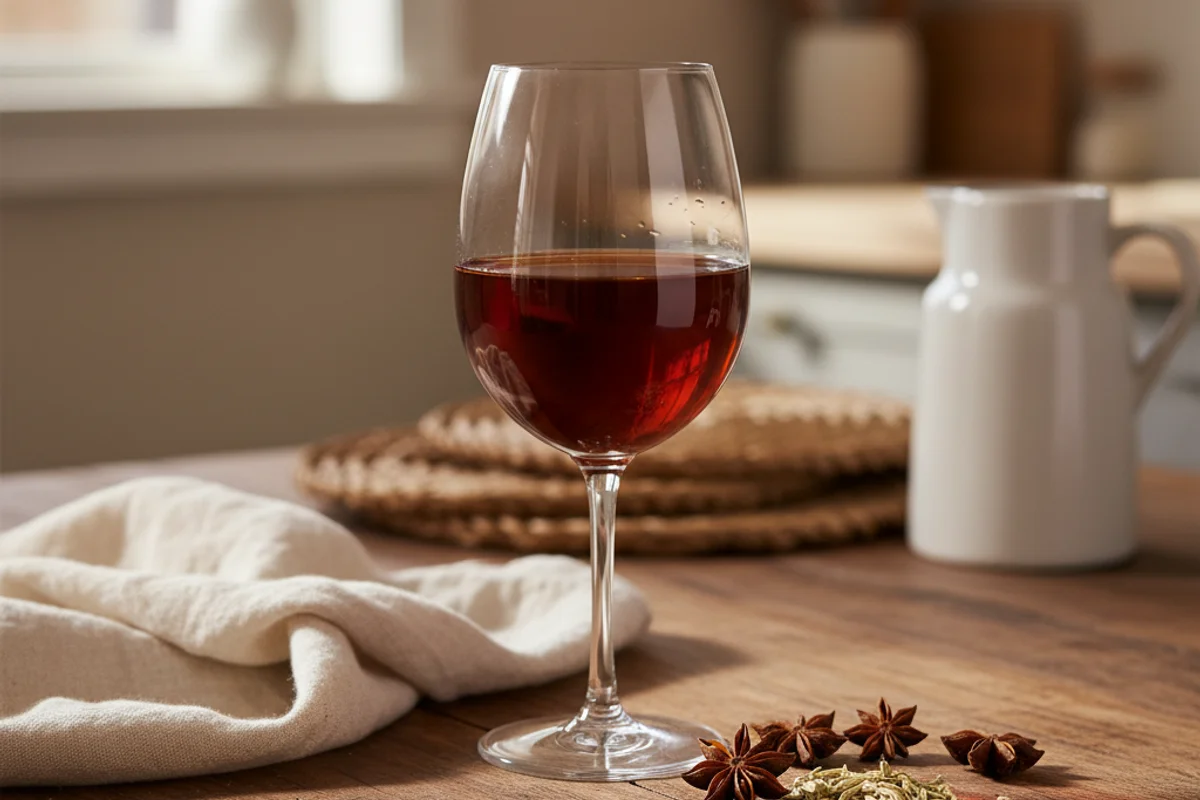
Star anise is the spice that makes absinthe mysterious, ouzo cloudy, and black licorice divisive. Drop two crushed stars into a white grape base and something interesting happens: the wine picks up that warm, herbal, fennel-like aroma without turning into candy. The result is dry, slightly exotic, and genuinely unlike anything you’ll find at a grocery store. This is a flavored wine, not a distilled spirit, so the anise character is subtle — think background note, not front-row licorice punch.
The beginner trap: Leaving the star anise in too long will push the flavor from pleasant and aromatic into bitter and medicinal — pull the spice packet out when active fermentation slows, around day 7 to 9.
Ingredients
- 1¼ lbs (570 g) granulated white sugar
- 2 cans (11.5 oz each) Welch’s 100% White Grape Juice frozen concentrate (Niagara variety)
- 2 whole star anise “stars,” crushed
- 2 tsp acid blend
- 1 tsp pectic enzyme
- 1 tsp yeast nutrient
- Water to make 1 gallon total
- 1 packet wine yeast (Lalvin EC-1118 or similar)
Method
- Bring 1 quart of water to a boil and stir in the sugar until fully dissolved. Remove from heat and stir in the frozen grape juice concentrate.
- Add additional water to bring the total volume to 7 pints (just under 1 gallon), then pour the mixture into your fermentation vessel (secondary/carboy).
- Add the acid blend, pectic enzyme, and yeast nutrient. Stir to combine.
- Place the crushed star anise into a small square of cheesecloth along with a clean glass marble to weigh it down. Gather the cloth, tie it shut with a long piece of string, and lower the packet into the must — leave the loose end of the string hanging outside the vessel so you can pull it out later.
- Cover the mouth of the vessel with a clean cloth secured with a rubber band and let it sit for 12 hours.
- Activate your wine yeast according to the packet directions, add it to the must, and re-cover the vessel.
- After 7 to 9 days, when vigorous bubbling slows noticeably, pull out the anise packet, top up with water to 1 gallon, and fit an airlock.
- After 60 days, rack the wine into a clean vessel, top up with water, and refit the airlock.
- After another 60 days, stabilize the wine (potassium sorbate plus potassium metabisulfite), sweeten to taste if desired, and let it rest under airlock for 2 more weeks.
- If you see no signs of renewed fermentation, rack into bottles and seal.
Why this works
Star anise (Illicium verum) gets its flavor from a compound called anethole, the same molecule responsible for the taste of licorice, fennel, and tarragon. Anethole is fat-soluble but only slightly water-soluble, which means it extracts slowly into a water-based must — great news, because it gives you control. The cloth packet acts like a tea bag: it lets the alcohol and water in the must slowly pull anethole and other aromatic compounds out of the crushed spice. Pulling the packet early locks in the floral, herbal top notes before the harsher back-end compounds have time to follow. The white grape base keeps things neutral and lets the anise character speak clearly without competition from heavy fruit tannins.
Notes
Mediterranean anise seed (Pimpinella anisum) is a different plant and is not recommended here — stick with star anise, which is easy to find in the spice aisle of most grocery stores or in the bulk section of natural food stores. If your finished wine tastes too thin, a touch of simple syrup at bottling rounds it out nicely. Acid blend can be substituted with 2 tablespoons of fresh lemon juice in a pinch.