APPLE CONCENTRATE WINE
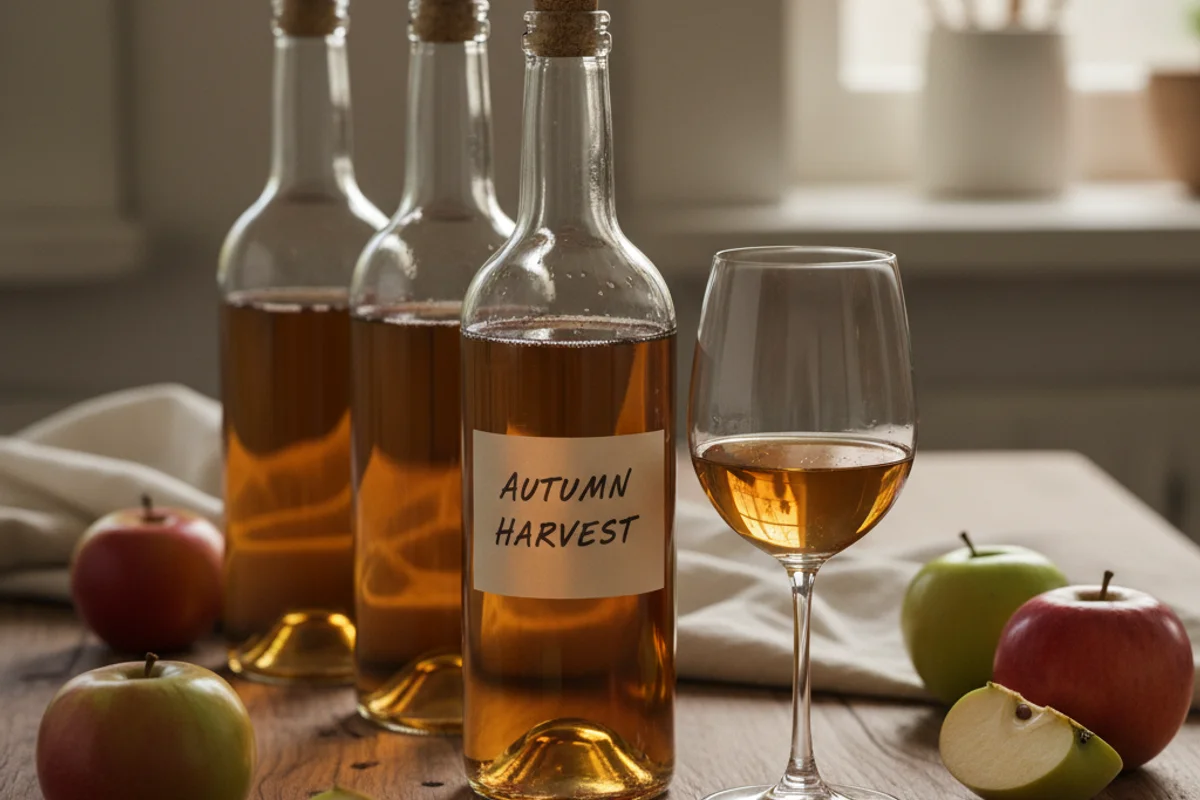
Frozen apple juice concentrate is a winemaker’s shortcut that actually works. The apples were already pressed, pasteurized, and reduced down to a syrupy punch of flavor before they ever hit your freezer. Crack open two cans and you get bright, tart apple character without hauling a bushel of fruit or running a press. The finished wine lands somewhere between a crisp hard cider and a light country white — pale, clean, and surprisingly drinkable after a year in the bottle.
The beginner trap: Grabbing a “apple cocktail” concentrate or one with added preservatives — either will stall your fermentation or wreck your flavor before it even starts.
Ingredients
- 2 cans (12 oz each) frozen apple juice concentrate, thawed — no preservatives, no cocktail blends
- 1½ lbs (680 g) granulated white sugar
- 3 qts (2.8 L) water, divided
- 1 tsp acid blend (or 1 tsp lemon juice as a grocery-store stand-in)
- 1 tsp pectic enzyme
- 1 tsp yeast nutrient
- ¼ tsp grape tannin (or 1 cooled cup of strong-brewed black tea)
- 1 Campden tablet, crushed
- 1 packet Champagne yeast (Lalvin EC-1118 is easy to find online or at homebrew shops)
Method
- Bring 1 qt of water to a boil and stir in the sugar until fully dissolved. Remove from heat.
- Pour both cans of apple concentrate into your primary fermenter (a food-safe bucket works fine). Add the hot sugar-water and stir to combine.
- Add the remaining 2 qts of cold water, acid blend, tannin, yeast nutrient, and the crushed Campden tablet. Stir well, cover the fermenter, and leave it alone for 12 hours.
- After 12 hours, stir in the pectic enzyme, re-cover, and wait another 12 hours.
- Activate your yeast according to the packet instructions, then pitch it into the must. Cover and stir daily for 10 days.
- Rack the wine into a 1-gallon glass jug (secondary fermenter), top it up with a little water or extra apple juice if needed, and fit an airlock.
- Every 60 days for the next 6 months, rack into a clean jug, top up to minimize headspace, and refit the airlock.
- After 6 months, stabilize the wine (potassium sorbate + Campden tablet), sweeten to taste if you’d like, and wait 2 more weeks.
- Rack into bottles and age for at least 1 year before drinking.
Why this works
Pectic enzyme is the unsung hero here. Apple juice is loaded with pectin — a natural polysaccharide that makes jam thick and makes wine hazy. Adding pectic enzyme breaks those pectin chains apart, which clears the wine and also releases more flavor compounds locked inside the fruit cells. That’s why it goes in after the Campden tablet has had its 12-hour head start: sulfite from the Campden would partially deactivate the enzyme if you added them at the same time. The staggered timing lets the sulfite do its antimicrobial job first, then steps out of the way so the enzyme can work cleanly.
Notes
Look for 100% apple juice concentrate in the frozen juice aisle — store brands are fine. Avoid anything labeled “from concentrate with added vitamin C (ascorbic acid)” in large amounts, as high ascorbic acid levels can interfere with stabilization. If your wine still looks cloudy after several months of racking, a second dose of pectic enzyme at the start of secondary fermentation usually clears it up.