APPLE & CRANBERRY WINE
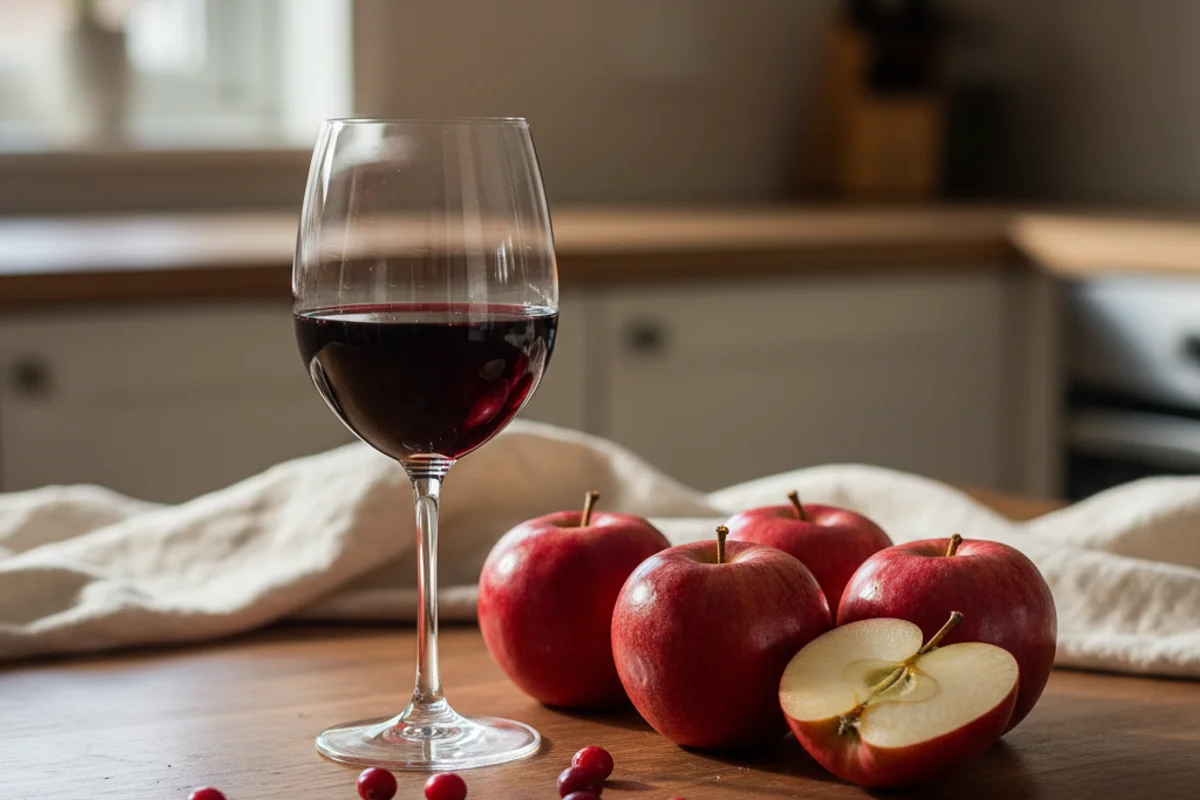
Think of this wine as a tart handshake between two fruits that both refuse to play nice on their own. Raw cranberries are mouth-puckering. Sweet apples are flat and forgettable. But sour cooking apples — Granny Smith, Braeburn, McIntosh — bring enough acid and body to meet cranberry halfway. The result is a deep ruby wine with a sharp, bright nose, a cranberry-forward palate, and just enough apple backbone to keep it grounded. It takes patience, but the six-month bottle age transforms something rough into something genuinely worth pouring.
The beginner trap: Using sweet apple varieties like Gala, Fuji, or Red Delicious — they lack the acid and tannin structure this wine needs, leaving you with a flat, one-dimensional result.
Ingredients
- 7–8 lbs sour cooking apples (Granny Smith, Braeburn, McIntosh, or a mix), washed, cored, and minced
- 2½ lbs cranberries (fresh or frozen), chopped
- 1½ lbs granulated white sugar
- 1 tsp yeast nutrient
- ½ tsp pectic enzyme
- ½ tsp ascorbic acid (plain vitamin C powder, found in the supplements aisle)
- 1 Campden tablet, crushed
- 1 packet Champagne wine yeast (or any dry wine yeast)
- Water to make 1 gallon total volume
Method
- Wash and core the apples, then mince or finely chop them along with the cranberries — smaller pieces mean better juice extraction.
- Immediately toss the chopped fruit with the ascorbic acid to prevent browning, then load everything into a nylon straining bag and place it in your primary fermenter.
- Add the sugar, pectic enzyme, yeast nutrient, and crushed Campden tablet; stir well until the sugar fully dissolves.
- Cover the fermenter with a clean cloth and let it sit at room temperature for 18–24 hours — this gives the Campden time to sanitize the must before yeast goes in.
- Add the yeast, stir gently, and re-cover; check daily for active fermentation, which should begin within 24–48 hours.
- Ferment on the fruit for about 9 days, or until the specific gravity (SG) drops to 1.020.
- Pull out the straining bag, press it firmly to extract all juice, then discard the spent pulp.
- Transfer the wine to a 1-gallon glass jug (secondary fermenter) and fit an airlock.
- After 30 days, rack the wine off its sediment into a clean jug, top up with water or a small amount of the same wine to minimize headspace, and reattach the airlock.
- Continue racking every 30 days until the wine is clear, still, and dropping no new sediment; add ¼ tsp ascorbic acid and a fresh crushed Campden tablet at the 2nd and 4th rackings.
- Once stable and clear, stabilize with potassium sorbate if you plan to sweeten, then sweeten to taste if desired; set aside for 3 weeks.
- Bottle the wine and age for at least 6 months before opening.
Why this works
Two things are happening here that make this wine succeed. First, the ascorbic acid (vitamin C) coats the cut fruit and blocks oxidation — apples brown fast, and that oxidized flavor will follow you all the way to the bottle if you skip this step. Second, pectic enzyme breaks down pectin, a natural thickener in both apples and cranberries. Without it, your finished wine could end up hazy no matter how long you wait. Champagne yeast is a strong, clean fermenter that handles the high acid load from cranberries without stalling, which is exactly what you want when your fruit is working against you.
Notes
Frozen cranberries from the grocery store work just as well as fresh — freezing actually ruptures cell walls and helps release more juice. If you can’t find pectic enzyme at a homebrew shop, look for it online; there’s no everyday substitute that works as well. For the apple mix, buying a bag each of Granny Smith and McIntosh at any grocery store gets you most of the way there.