APPLE JUICE WINE
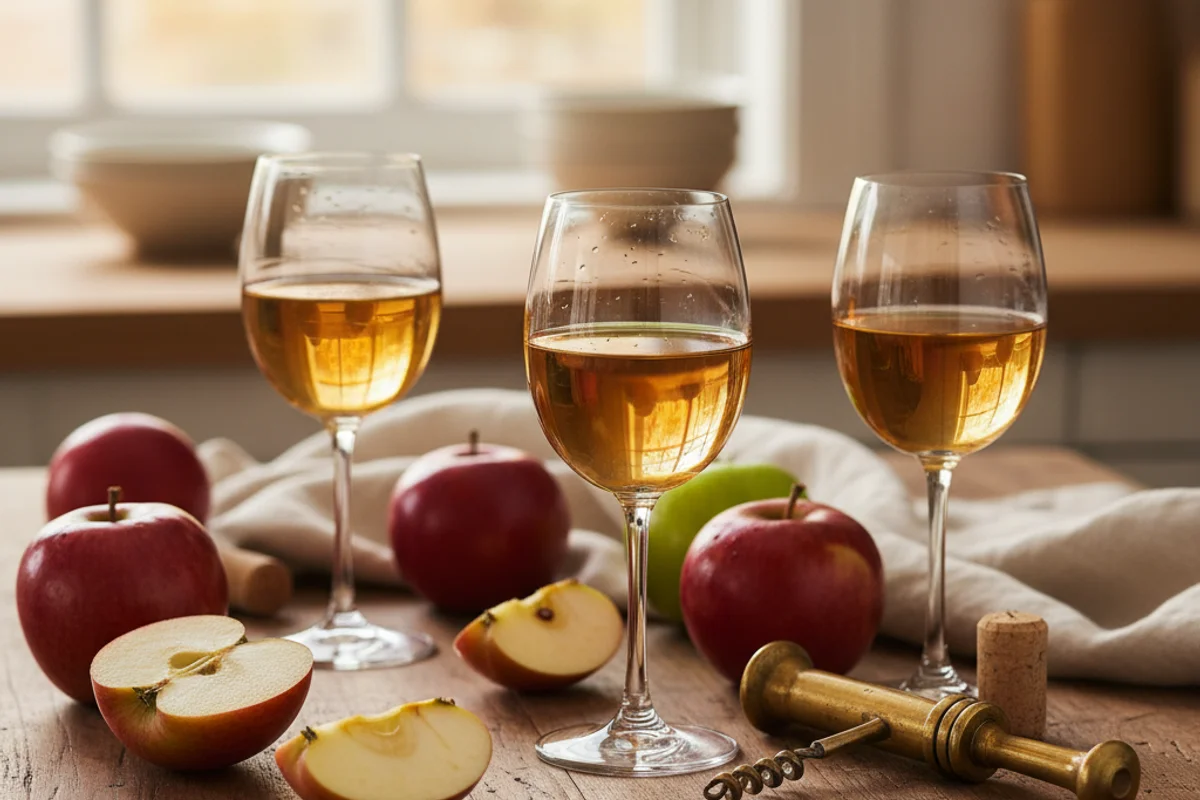
Apple juice wine is one of those quiet overachievers. The raw material is sitting right there in your grocery store — clear, consistent, and pre-pressed. What you get in the glass after a year of patience is a dry, crisp wine with delicate fruit character and a clean finish that punches well above its humble origins. Think less “juice box” and more “off-dry Riesling’s laid-back cousin.” The catch is that you have to actually wait for it. Bottle it young and you’ll wonder what all the fuss is about. Give it a full year and you’ll understand.
The beginner trap: Grabbing a jug of juice that contains preservatives like sodium benzoate — these chemicals are designed to stop microbial activity, which means they’ll stop your yeast cold before fermentation ever gets going.
Ingredients
- 1 gallon fresh or bottled apple juice (no preservatives — check the label)
- 1¼ lb granulated white sugar
- 1 tsp acid blend (find it at a homebrew shop, or use 1 tsp lemon juice as a rough stand-in)
- 1⅔ tsp pectic enzyme
- 1 Campden tablet, crushed (potassium metabisulfite powder works too — use ¼ tsp)
- ¼ to ½ tsp wine tannin (or 1 strongly brewed, cooled black tea bag steeped in a little juice)
- 1½ tsp yeast nutrient
- 1 packet Champagne wine yeast (Lalvin EC-1118 is widely available)
Method
- Pour the apple juice into your primary fermenter and stir in the sugar until it fully dissolves.
- Add the acid blend, ¼ tsp tannin, yeast nutrient, and crushed Campden tablet; stir well, then cover and let it rest for 12 hours.
- Stir in the pectic enzyme, cover again, and wait another 12 hours.
- Activate your yeast according to the packet instructions, then add it to the must and cover the fermenter.
- Stir the must once daily for 10 days, keeping it covered between stirs.
- Taste the wine after 10 days; if it tastes flat or thin, stir in ⅛ tsp more tannin, wait 4 hours, taste again, and repeat once more if needed.
- Rack the wine into a 1-gallon glass secondary (a clean apple juice jug works perfectly), fit an airlock, and set any overflow wine aside in a small sealed bottle for topping up.
- Every 60 days for 6 months, rack the wine into a clean vessel, top it up to minimize headspace, and refit the airlock.
- After 6 months, stabilize with potassium sorbate, sweeten to taste if desired, and wait 2 weeks before bottling.
- Rack into bottles and store for at least 1 year before opening.
Why this works
Apple juice is low in tannin — that’s the grippy, slightly bitter compound in grape skins that gives wine structure and helps it age. Without it, apple wine can taste thin and fall apart in the bottle over time. Adding wine tannin (or strong black tea as a substitute) gives the wine a backbone to hold everything together. Pectic enzyme is equally important here: apples are high in pectin, a natural gelling agent that causes haze. The enzyme breaks pectin down into smaller sugars, clearing the wine and preventing a permanently cloudy result. The Campden tablet at the start knocks out wild yeast and bacteria so your chosen yeast can do its job without competition.
Notes
If fresh juice is hard to find without preservatives, look for pasteurized juice at a natural grocery store, or use frozen apple juice concentrate (thawed and diluted per the package) — it works extremely well and tends to have a cleaner ingredient list. The year of bottle aging isn’t optional if you want a quality result; apple wine is notably harsh when young and transforms significantly with time. If your finished wine is too dry, add a small amount of dissolved sugar at stabilization and taste as you go.