Apple Sherry Wine
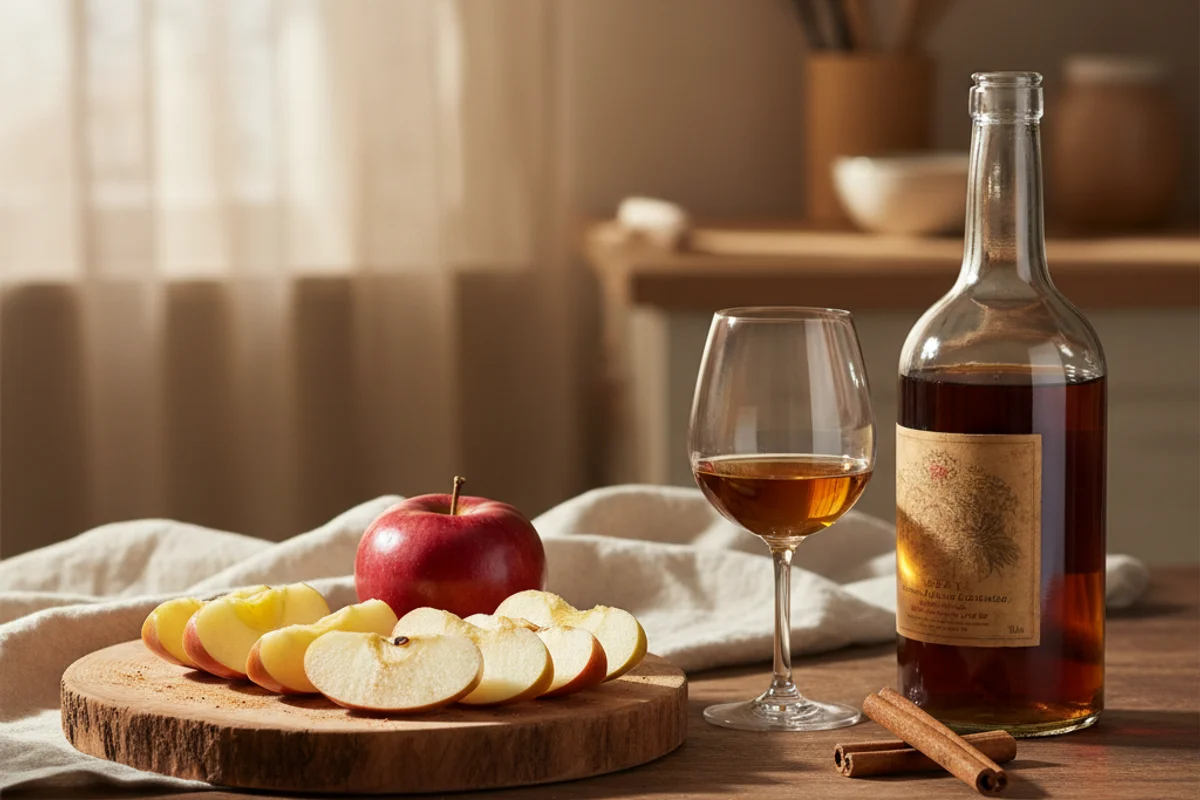
Think of this as a sherry-style country wine that punches well above its weight class. Tart apples bring the acid backbone, dried apricots add a honeyed depth, and raisins contribute that characteristic nutty oxidative note you expect from a proper sherry. A biscuit of shredded wheat gives the yeast extra surface area to work on — a small detail that pays off in texture. Let it age a full six months before you open the first bottle, and plan on making a fresh batch every year.
The beginner trap: Skipping the two-stage fermentation process — the apples must be removed and discarded before the raisins and shredded wheat go in, or the flavor balance falls apart.
Ingredients
- 6 lbs tart apples (fresh, such as Granny Smith or Winesap)
- 1 lb dried apricot halves
- 1 lb raisins, chopped or minced (golden raisins give a lighter result; dark raisins give stronger sherry character)
- 1 large shredded wheat biscuit
- 2 lbs granulated sugar
- 7 pints water
- 1 tsp pectic enzyme
- 1 tsp yeast nutrient
- 1 packet Red Star Premier Cuvée (or Champagne) wine yeast
Method
- Wash and inspect the apples; cut out any damaged spots, then core and chop them into ¼- to ⅓-inch pieces. Place the chopped apples in a fine-mesh nylon straining bag, tie it closed, and set it in your primary fermenter.
- Place the dried apricot halves in a pot with the 7 pints of water, bring to a boil, reduce heat, and simmer for 20 minutes.
- Strain out and discard the apricot solids, then pour the hot apricot water directly over the bag of apples in the primary.
- Once the liquid cools to room temperature, stir in the pectic enzyme and yeast nutrient, cover the primary, and set aside for 10–12 hours.
- Add the yeast in an activated starter solution, recover the primary, and punch the apple bag down 2–3 times daily for two weeks.
- Remove the apple bag, let it drip dry, and discard the spent apples.
- Add the sugar to the primary and stir well until fully dissolved.
- Place the chopped raisins and the shredded wheat biscuit together in a nylon straining bag, submerge it in the primary, and push it down 2–3 times daily for three weeks.
- Remove the raisin and shredded wheat bag, squeeze it gently, and discard the contents.
- Rack the wine into a secondary fermenter and attach an airlock.
- Rack again after 2 months, then once more after another month to drop all remaining lees.
- Bottle and age at least 6 months before tasting.
Why this works
The two-stage approach here is doing real science. In stage one, the simmered apricot liquid extracts color, flavor, and soluble solids from the fruit without adding pulp to your ferment — it acts almost like a tea. The apples ferment freely in the straining bag, contributing malic acid and apple esters. Stage two is where the sherry character builds: raisins are partially dried grapes loaded with concentrated sugars, amino acids, and volatile compounds that develop during drying — many of the same compounds found in oxidatively aged wines. The shredded wheat is not a gimmick; its porous structure gives yeast a massive surface area to colonize, supporting a cleaner and more complete fermentation.
Notes
Golden raisins produce a lighter, more delicate wine; dark raisins push the flavor profile toward a bolder, nuttier sherry character — choose based on your preference. If fresh apples are unavailable, a firm frozen apple sliced before freezing works in a pinch, though fresh tart varieties give the best acid balance. Chopping raisins is notoriously sticky work; a food processor with short pulses makes it far more manageable than a knife.