ARTICHOKE WINE
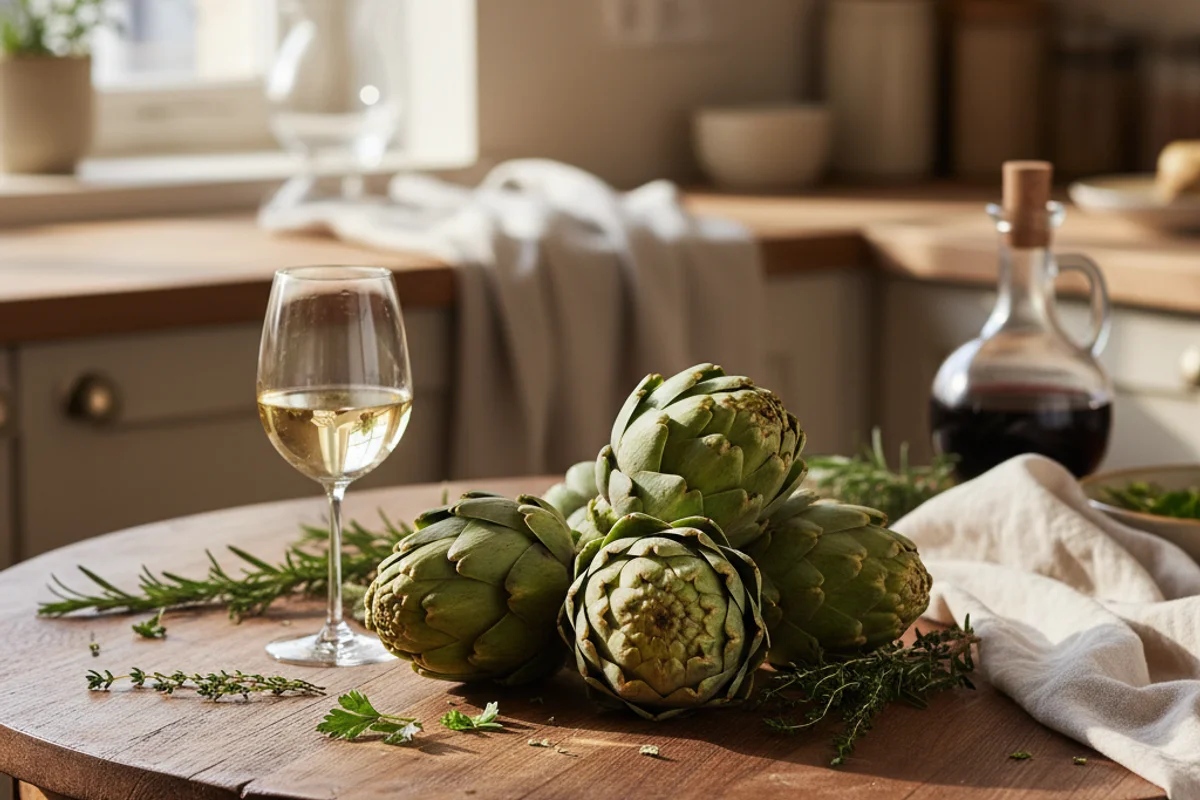
Artichokes are not the first thing most people picture when they think about wine, yet they produce a surprisingly clean, pale white with a mildly earthy backbone. Fresh ginger adds a quiet warmth, citrus keeps everything bright, and raisins bring enough body to make the glass feel substantial. Serve it well chilled and most guests won’t guess what’s in it — which is half the fun of pouring it.
The beginner trap: Skipping the staggered sugar additions and dumping all the sugar in at once can stress the yeast early and leave fermentation stuck before it finishes.
Ingredients
- 4½ lbs fresh artichokes (globe artichokes from the produce section)
- ½ lb golden or white raisins, finely chopped
- 1¾ lbs granulated white sugar, divided (1 lb + ½ lb + ¼ lb)
- 1 large lemon, juiced
- 1 large orange, juiced
- 1 oz fresh ginger root, thinly sliced
- ¼ tsp grape tannin (or 1 cup strong-brewed plain black tea, cooled)
- 6½ pts (about 3¼ quarts) water
- 1 tsp yeast nutrient
- 1 packet sherry wine yeast (or any dry white wine yeast as a substitute)
Method
- Trim the leaf tips off each artichoke. Slice the ginger root and finely chop the raisins.
- Bring the water to a full boil in a large covered pot. Add the artichokes, ginger, and raisins, then boil covered for 30 minutes.
- While the pot boils, juice the lemon and orange and set the juice aside.
- Remove the pot from heat and let it cool until it’s no longer steaming. Strain out all solids and pour the liquid into your primary fermenter.
- Stir in the citrus juice, grape tannin, 1 lb of the sugar, and yeast nutrient until the sugar is fully dissolved.
- Activate your yeast according to the packet directions, then add it to the must and cover the fermenter.
- After 7 days of active fermentation, add the next ½ lb of sugar, stir well to dissolve, and re-cover.
- After another 7 days, stir in the final ¼ lb of sugar, dissolve completely, cover, and leave undisturbed for 2 weeks.
- Rack the wine into a clean secondary fermenter (glass carboy or food-safe jug), top up to reduce headspace, and fit an airlock.
- At the 2-month mark, rack again, top up, and reattach the airlock.
- Allow up to 90 days for the wine to clear on its own. If it remains hazy, add amylase enzyme following the product instructions.
- Once clear, rack one more time, top up, and refit the airlock. Age for 2 more months, then stabilize with potassium sorbate and potassium metabisulfite per product directions.
- After a final 30 days of rest, rack into bottles and wait at least 3 months before opening.
Why this works
Artichokes contain a compound called cynarin, which can make water taste sweeter right after you eat them — an interesting quirk, but not what drives this wine. The real work here is the staggered sugar schedule. Yeast under high sugar stress early in fermentation can produce off-flavors or simply give up. By adding sugar in three rounds, you keep the sugar level comfortable throughout, giving the yeast steady fuel without overwhelming them. The raisins contribute unfermentable solids and trace nutrients that add body. The amylase step matters too: artichokes carry starches that can permanently cloud a finished wine if they aren’t broken down enzymatically.
Notes
If fresh artichokes are out of season or expensive, canned artichoke hearts (packed in water, not oil) can work — use about 3 lbs drained weight. Grape tannin powder is available at homebrew shops, but a cup of cooled black tea is a reliable grocery-store stand-in. If fermentation slows unexpectedly, check that your must temperature is between 65–75°F before troubleshooting further.