AUTUMN OLIVE WINE
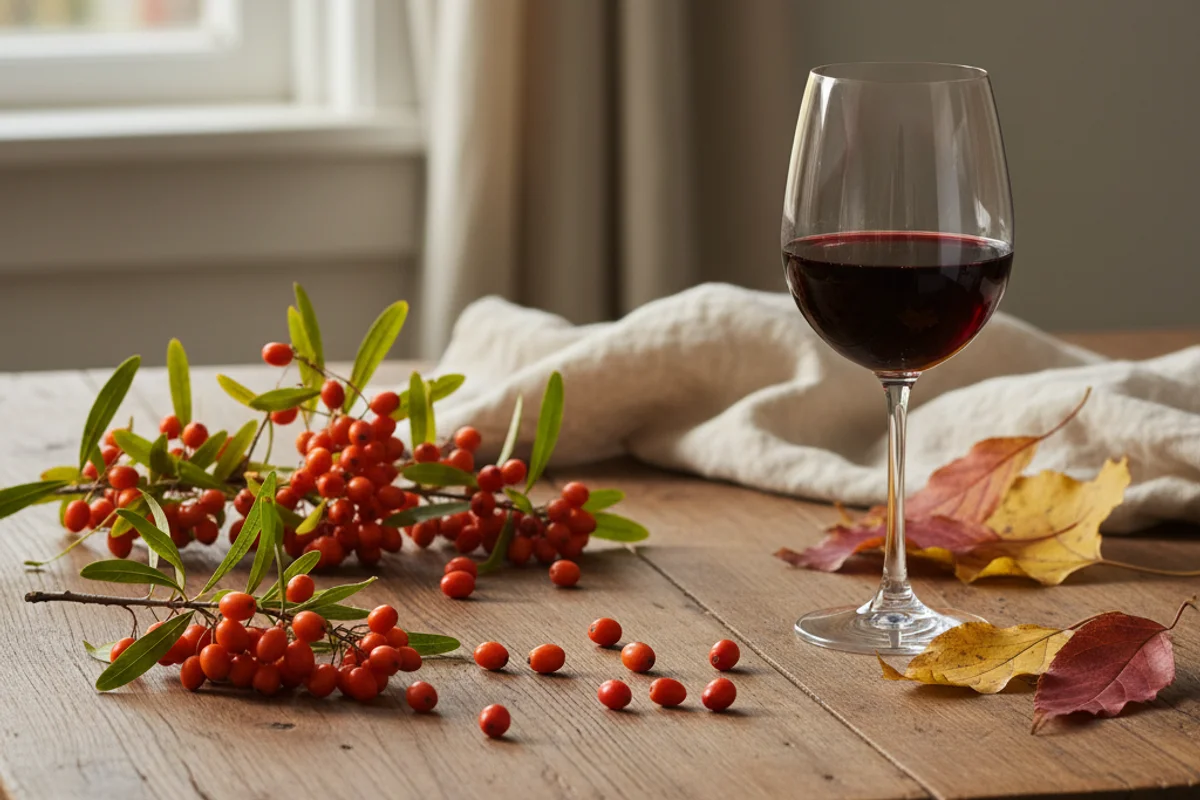
Here’s a fruit that most people walk right past without a second glance. Autumn olive (Elaeagnus umbellata) is an invasive shrub that ripens in late summer, producing small, speckled red fruits with a flavor that punches well above its size — tart, sweet, and slightly astringent, with a juicy pulp that ferments into a wine with real depth and a striking ruby color. Think cranberry met a rosehip at a farmers market and decided to make wine together. This is a forager’s reward in a bottle.
The beginner trap: Autumn olive color is chemically fragile — skipping the boiling water extraction step will leave you with a pale, washed-out wine instead of the rich red you’re after.
Ingredients
- 4–5 lbs autumn olive fruit, fresh or frozen
- 2 lbs granulated white sugar
- 3 qts water, divided
- 1½ tsp yeast nutrient
- ½ tsp wine tannin (or 1 strong cup of unsweetened black tea)
- 1 Campden tablet, crushed
- 1 tsp pectic enzyme
- 1 packet Lalvin RC212 yeast (or any Burgundy-style red wine yeast)
Method
- Bring 2 quarts of water to a full boil. While it heats, sort through the fruit and discard anything soft, moldy, or damaged.
- Place the fruit in a nylon straining bag, tie it closed, and set it in your primary fermenter. Squeeze and press the bag firmly with your hands to bruise the fruit — work it well, but avoid cracking the seeds.
- Pour the boiling water directly over the bagged fruit, then cover the fermenter and let it sit.
- Stir the remaining 1 quart of water together with the sugar until fully dissolved, then add that syrup to the fermenter. Re-cover and let everything cool to room temperature.
- Once cool, stir in the tannin, yeast nutrient, and crushed Campden tablet. Cover and wait 12 hours.
- Stir in the pectic enzyme, cover again, and wait another 12 hours.
- Activate your yeast according to the packet directions, then add it to the fermenter. Cover loosely to allow gas to escape.
- Stir the must twice a day until the specific gravity drops to 1.015, which typically takes one to two weeks.
- Lift out the straining bag and squeeze it firmly to recover as much juice as possible, then discard the pulp. Let the liquid settle for a day, then rack it into a glass secondary fermenter and fit an airlock.
- After 30 days, rack again, top up to reduce headspace, and refit the airlock. Repeat this step once the wine clears.
- Allow the wine to rest under airlock for another 60 days. Then stabilize, sweeten to taste if you like, wait 10 days, and rack into bottles.
- Age at least six months before opening — this wine rewards patience.
Why this works
Autumn olive fruit contains pigments called anthocyanins, the same compounds responsible for the red color in cherries and elderberries. The problem is that these pigments are water-soluble and sensitive to heat — in a good way, initially. Pouring boiling water over the fruit ruptures cell walls and releases those pigments quickly, locking in color before fermentation begins. Pectic enzyme is just as important here: the fruit’s natural pectin acts like a gel that traps juice and clouds the wine. Adding pectic enzyme after the Campden tablet (never at the same time — sulfites slow the enzyme down) breaks that pectin apart, giving you a cleaner, brighter finished wine.
Notes
Frozen autumn olive works well and can actually improve juice yield because freezing ruptures cell walls the same way crushing does — thaw completely before using. If you can’t source wine tannin at a homebrew shop, steep one cup of strong black tea (no milk, no sugar) and use that instead. RC212 yeast is widely available online; Red Star Côte des Blancs is a reasonable grocery-store-accessible substitute if you want a slightly softer finish.