BANANA AND APRICOT MADEIRA-TYPE WINE
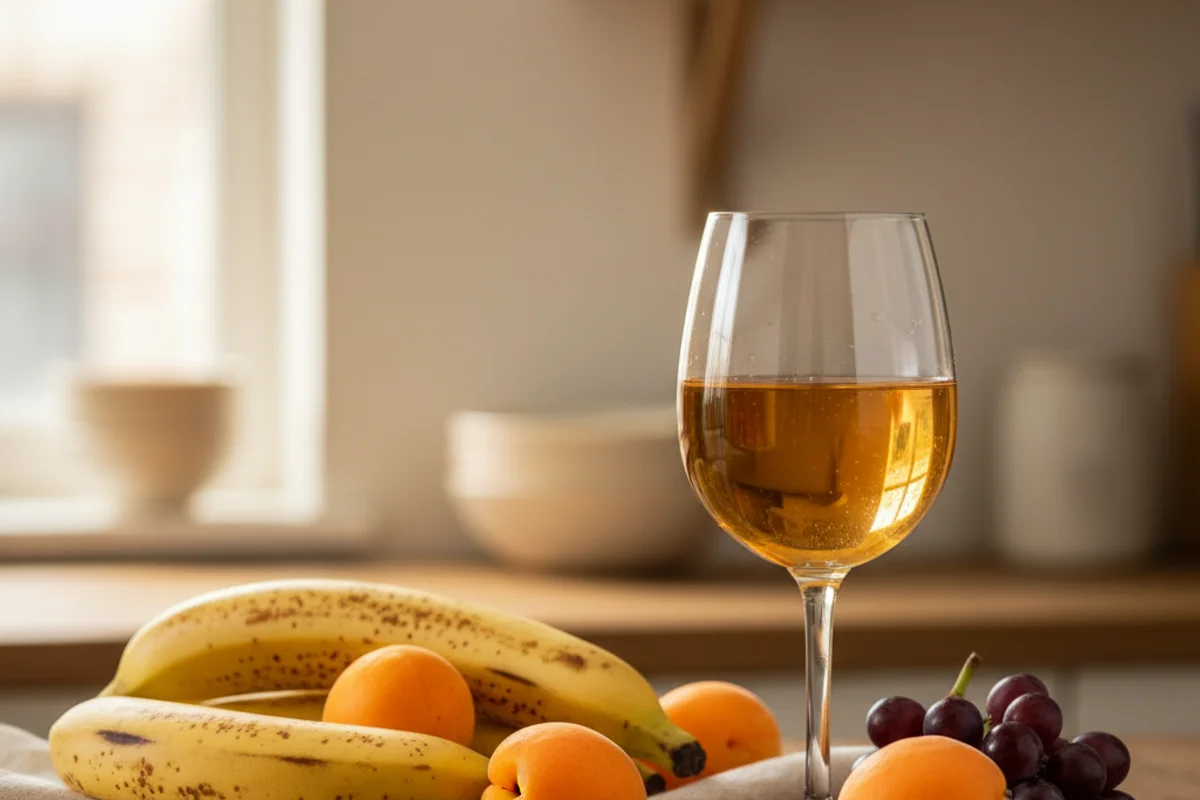
Think of Madeira as wine that has been through something — heat, time, oxidation — and come out richer for it. This recipe leans into that idea by combining the caramel depth of ripe bananas with the tangy sweetness of dried apricots, then deliberately aging the wine in a warm environment to coax out that signature nutty, honeyed complexity. The result is a sweet, amber-toned wine that tastes like it took effort, because it did. Plan for two full years before you open a bottle, and you’ll be rewarded.
The beginner trap: Skipping the gradual sugar additions — dumping all the sugar in at once overwhelms the yeast early and leaves you with a stuck fermentation instead of the high-alcohol base this style needs.
Ingredients
- 2 lb. ripe bananas (fresh or frozen), peeled and thinly sliced
- 1 lb. dried apricots, chopped
- 1 pt. (2 cups) white grape juice concentrate (canned or frozen, unsweetened)
- 2 lb. granulated white sugar, divided (made into syrup — see Method)
- 1 gallon water, divided
- ½ tsp. pectic enzyme
- 1 packet Madeira wine yeast (or a Sherry yeast as a grocery-accessible substitute) plus yeast nutrient
- 1 oz. granulated activated charcoal (sold at homebrew shops or online)
Method
- Place the banana slices and chopped apricots into a nylon mesh bag, tie it closed, and boil the bag in 5 pints of water for 30 minutes.
- Lift the bag and suspend it over your primary fermentation vessel so the liquid drains freely; once it’s cool enough to handle, press it gently to release more juice — stop before pulp starts squeezing through.
- Dissolve the sugar in 1 pint of boiling water to make a simple syrup; once cool, pour it into a clean sealed bottle and set aside.
- When the drained liquid cools to 70–75°F, stir in the pectic enzyme, yeast, and yeast nutrient, then cover the vessel and leave it alone for two days.
- After two days, stir in the grape concentrate, then transfer everything to your secondary fermentation vessel (a 1-gallon glass carboy works well).
- Add enough of the reserved sugar syrup to bring the total volume to 7 pints, then fit an airlock.
- Check the specific gravity (SG) every day; each time it drops to 1.005 or below, stir in ½ cup of the reserved syrup and re-fit the airlock — keep doing this until the syrup runs out or fermentation stops completely.
- Once fermentation has fully stopped, let the wine settle for 3–4 more days, then rack (siphon) it off the sediment.
- Move the sealed, airlock-fitted vessel to a very warm spot — 100–110°F is the target; a warm attic in summer, a seedling heat mat, or a proofing oven on its lowest setting all work.
- After two days at that temperature, top the vessel up with water to replace any evaporation, then leave it in that warm place for 6 months, checking the airlock water level every few weeks so it never dries out.
- After 6 months, rack the wine into a clean 1-gallon bottle, add 1 oz. of granulated activated charcoal, seal tightly, and let it sit at room temperature for 3 days.
- Rack the wine off the charcoal, bottle it, and age for at least 2 years before drinking.
Why this works
Madeira’s magic comes from a process called maderization — controlled oxidation and heat that would ruin most wines but transforms this one. Holding the wine at 100–110°F for months triggers the Maillard reaction between sugars and amino acids, building deep caramel and nutty flavors. The slow sugar additions during fermentation (called fractional feeding) keep the yeast from being shocked by a high-sugar environment all at once, allowing them to push alcohol levels higher than a single large addition would allow. The activated charcoal step at the end acts like a filter, pulling out harsh or off-putting volatile compounds and leaving the mellower, more complex flavors behind.
Notes
Frozen bananas work beautifully here — they’re often riper and more flavorful than fresh, and the freeze-thaw cycle breaks down cell walls to release more juice. If you can’t find Madeira or Sherry yeast locally, Lalvin EC-1118 (Champagne yeast) is a widely available substitute that handles high alcohol and heat reasonably well. If your home doesn’t have a reliably warm spot for the 6-month aging phase, a brew belt wrapped around the carboy inside a insulated box can maintain the temperature without much fuss.