Barberries
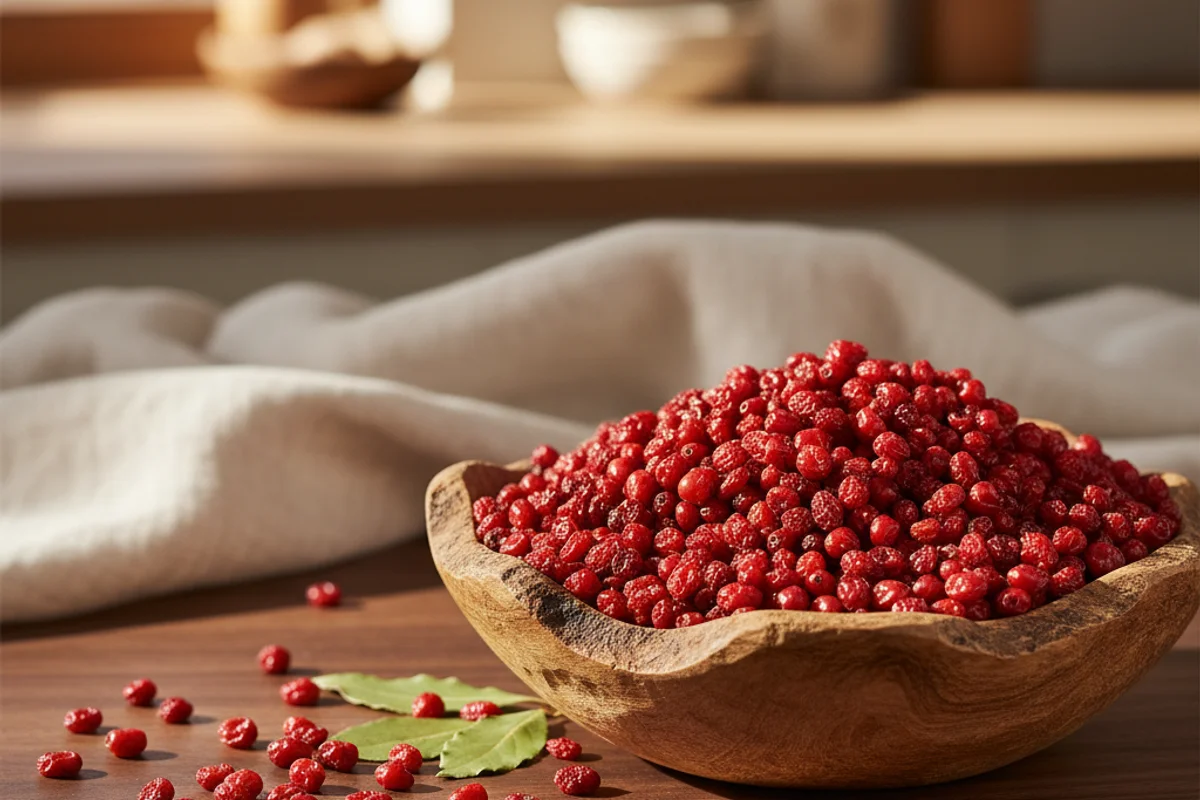
Barberries are the underdog of the fruit wine world. These small, tart berries grow wild across most of North America — from scrubby southwestern shrubs dripping with blood-red fruit to the thorny, orange-scarlet clusters blanketing New England hedgerows come September. The flavor is bright and punchy, somewhere between a cranberry and a sour cherry, with enough natural acid to make your mouth sit up and pay attention. That acidity is exactly what makes barberry wine so rewarding: given time, it rounds out into something genuinely complex and worth opening.
The beginner trap: Barberries are naturally high in acid, so skipping an acid test and adjustment can leave you with a wine that tastes sharp and harsh even after months of aging.
Ingredients
- 2–3 lbs barberries, fresh or frozen, destemmed
- 2½ lbs granulated sugar
- 5–7 pints water
- ½ tsp pectic enzyme
- 1 tsp yeast nutrient
- 1 packet wine yeast (Lalvin 71B or EC-1118 work well)
Method
- Wash and destem the berries, then crush them by hand or with a potato masher in a large pot.
- Bring the crushed berries to a low boil, then reduce heat, cover, and simmer for 10 minutes. Fold the top layer of berries under, re-cover, and simmer another 10 minutes.
- Pour the hot berry mash into a nylon straining bag set over your primary fermenter and let it drip until the pulp cools completely.
- While the pulp drips, dissolve the sugar in 3 cups of boiling water to make a syrup, then let it cool to room temperature.
- Gently squeeze the cooled straining bag to release the remaining juice into the primary, then set the bag aside — don’t discard it yet.
- Add all but one cup of the sugar syrup to the primary, then top up with enough water to reach exactly one gallon.
- Check the specific gravity — you’re aiming for 1.090. Add the reserved sugar syrup a little at a time until you hit that number.
- Test the acid level and adjust to 0.50–0.65% tartaric if needed. Add the pectic enzyme, yeast nutrient, and the straining bag back into the primary.
- Cover the fermenter and wait at least 10 hours, then pitch your wine yeast. Stir daily and keep the fermenter somewhere warm, around 70–75°F.
- When the specific gravity drops to 1.040 — usually around day 5 — gently press the straining bag one final time to extract the clear juice, then discard the remaining pulp and seeds.
- Siphon the wine off the sediment into a clean secondary fermenter, top up to minimize headspace, and fit an airlock. Move it somewhere cooler, around 60–65°F.
- Rack after 3 weeks, then rack again 3 weeks after that. Bottle once the wine runs clear. Wait at least 6 months before tasting.
Why this works
Barberries are loaded with berberine and organic acids, which is great for flavor but can stall or stress your yeast if you’re not careful. Heating the fruit first does two things: it breaks down the cell walls so you extract more juice and color, and it kills off wild microbes that could compete with your yeast. The pectic enzyme matters here because fruit pectin — the same stuff that makes jelly gel — will cloud your finished wine and never fully drop out on its own. Adding it after the heat step (not during) lets it work properly, since high temperatures deactivate it. Waiting 10 hours before pitching yeast gives the enzyme time to do its job and lets any remaining heat dissipate so you don’t kill your yeast on contact.
Notes
Frozen barberries work just as well as fresh and can be found at Middle Eastern grocery stores, where they’re sold dried or frozen for use in Persian rice dishes — look for the label zereshk. If using dried barberries, reduce the quantity to about 1 lb and rehydrate them in warm water before crushing. Acid blend (available at any homebrew shop) is the easiest way to hit your tartaric target if adjustment is needed.