BASIL WINE
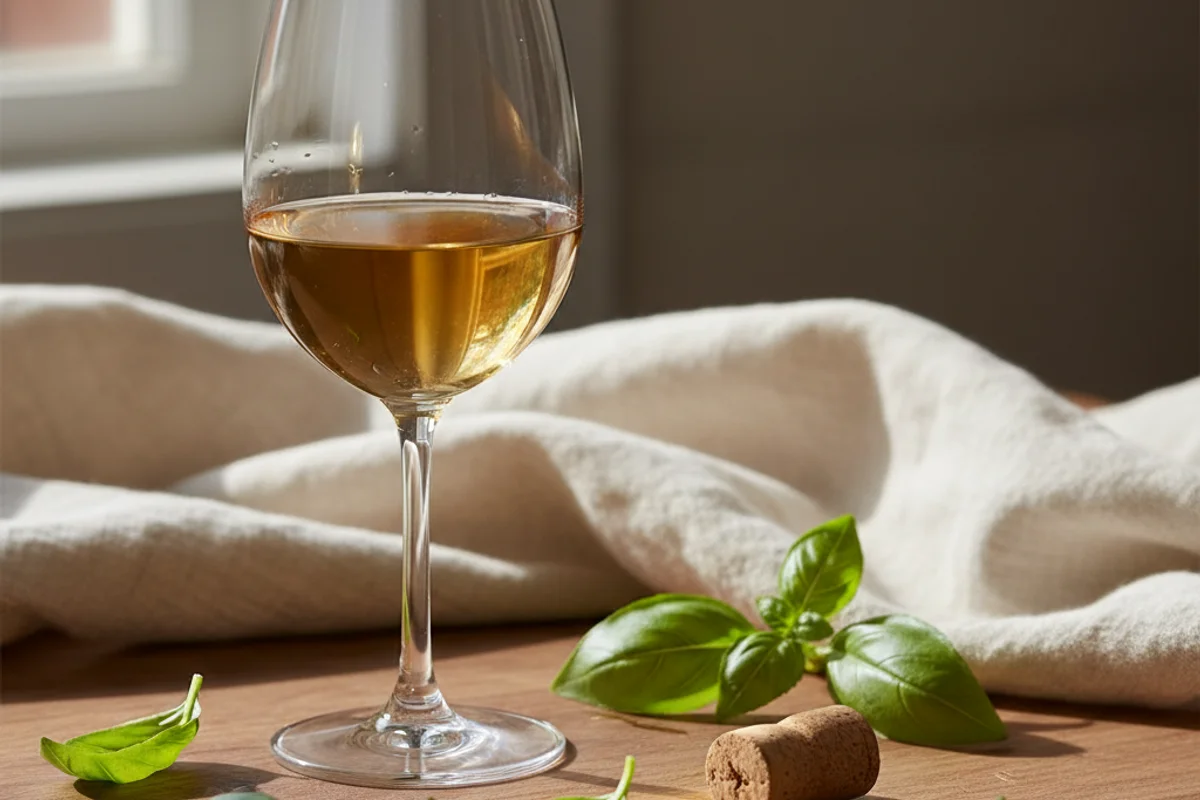
Think of basil wine as the herb garden’s answer to a crisp white wine — if that white wine had a peppery kick and a whisper of clove. The white grape concentrate gives it a clean, neutral backbone, while the basil drives something unexpected: floral, slightly minty, unmistakably savory. Done right, this is a conversation-starter in a glass. Done wrong, it tastes like you fermented a pasta sauce. The margin between elegant and overwhelming is surprisingly thin, and it all comes down to how long you leave those leaves in contact with the must.
The beginner trap: Leaving the basil bag in too long — even one extra day past peak flavor — can push the wine from pleasantly herbal into sharp and medicinal.
Ingredients
- 1 cup basil leaves, loosely packed (fresh; sweet basil from the grocery store works great)
- 2 cans (11 oz each) frozen 100% white grape juice concentrate, thawed
- 14 oz granulated white sugar (target a starting specific gravity of 1.085)
- Water to make 1 gallon total
- 2½ tsp acid blend (found at homebrew shops; or use 1½ tsp lemon juice per tsp as a rough stand-in)
- 1 Campden tablet, finely crushed and dissolved in ¼ cup water
- ¼ tsp grape tannin powder (or substitute 2 oz strong-brewed black tea)
- 1¼ tsp yeast nutrient
- 1 packet Champagne wine yeast (or any dry white wine yeast)
Method
- Rinse the basil leaves well, place them in a nylon mesh straining bag, and tie it closed. Set the bag aside for now.
- Combine the grape concentrate, sugar, acid blend, dissolved Campden tablet, tannin, and yeast nutrient in your primary fermenter. Stir until the sugar fully dissolves.
- Cover the fermenter and let it sit for 6–8 hours to allow the sulfite (from the Campden tablet) to off-gas.
- Activate your yeast according to the packet instructions, then add the yeast and the basil bag to the fermenter. Cover loosely with a cloth or lid.
- After 5 days, taste the must. If the basil flavor is strong enough, pull the bag and discard the leaves. If it needs more depth, leave it one additional day — then remove it regardless.
- Keep the fermenter covered until the specific gravity drops to 1.015, then transfer the liquid to a 1-gallon glass jug (secondary fermenter) and fit an airlock.
- Let fermentation finish until the specific gravity reaches 1.000 or below (fully dry), then rack the wine off the sediment into a clean jug, top up with water if needed, and refit the airlock.
- Rack again every 30 days until the wine is clear and no new sediment forms over a full 30-day period.
- Stabilize the wine, then sweeten to taste if you like. If you sweeten, wait three weeks to make sure fermentation doesn’t restart before bottling.
- Bottle, then age at least 3 months before opening. Serve well chilled.
Why this works
Basil’s flavor compounds — primarily linalool, eugenol, and various terpenes — are aromatic and volatile. That’s great for cooking, but in a long fermentation they can either concentrate into something complex or blow off entirely if mishandled. Keeping the basil in a mesh bag (rather than loose in the must) lets you control extraction the same way a tea bag controls steeping. The white grape concentrate provides fermentable sugars plus natural grape acids and body without adding competing fruit flavors. Champagne yeast is chosen here for its clean profile and high alcohol tolerance — it finishes dry without dumping off-flavors that might clash with the herb.
Notes
If fresh basil is out of season or expensive, a well-stocked grocery store often carries live basil plants in the produce section year-round — these work perfectly. Thai basil will give a slightly more anise-forward result; purple basil adds a subtle floral note and a faint rose color. If you can’t find acid blend at a homebrew shop, citric acid (sold near canning supplies) works as a substitute.