BEET [Sugar] WINE
Sugar beets aren’t the beets you roast for salad. They’re starchy, mild, and loaded with fermentable sugar — which makes them a surprisingly capable base for a dry, pale wine. Done right, you get something clean and faintly earthy, closer to a light country white than anything vegetal. The raisins add body and a whisper of fruit that the beet alone can’t provide. Age this one a full year and you’ll be rewarded with a wine that’s genuinely hard to place — in a good way.
The beginner trap: Boiling the beets too long turns them mushy, which releases excess starch and clouds your wine in ways that patience alone won’t fix.
Ingredients
- 2½ lb. sugar beets, washed, peeled, and thinly sliced
- 1¾ lb. granulated sugar
- ½ lb. raisins, chopped (golden or dark, both work)
- 2 tsp. acid blend (find it at any homebrew shop, or online)
- ¼ tsp. grape tannin (powdered; substitute 1 cup strong-brewed black tea if needed)
- 1 Campden tablet, crushed
- 1 gallon water
- 1 packet wine yeast (Lalvin EC-1118 or any general-purpose wine yeast)
Method
- Place the sliced beets in a mesh straining bag, tie it closed, and gently boil them in 2 quarts of water until just tender — firm enough to hold their shape, not falling apart.
- Pour the hot beet liquid directly over the sugar in your primary fermentation bucket and stir until the sugar fully dissolves.
- Drop the tied bag of beets into the bucket, then add the raisins, acid blend, grape tannin, and crushed Campden tablet.
- Cover the bucket loosely and let it sit at room temperature for 24 hours — this gives the Campden time to neutralize wild yeast and bacteria.
- Add your wine yeast, cover well, and stir the must once a day for 5 days.
- After 5 days, squeeze the straining bag gently to extract the liquid, then siphon the wine off the sediment into a 1-gallon glass jug (dark glass preferred).
- Fit an airlock and move the jug to a cooler spot — 60–65°F is the sweet zone.
- Rack the wine after 3 weeks, then again 2 months after that.
- Once the wine is fully clear, rack one final time and bottle in dark glass; age at least 1 full year before opening.
Why this works
Sugar beets carry enough natural fermentable sugar that yeast barely need help — but the added granulated sugar pushes the final alcohol to a stable wine-strength level. The Campden tablet (sodium or potassium metabisulfite) releases sulfur dioxide, which knocks out competing wild yeast and spoilage bacteria so your chosen wine yeast can take over cleanly. Raisins contribute unfermentable polysaccharides that give the finished wine body and a rounder mouthfeel. Acid blend corrects the beet’s naturally low acidity, keeping pH in a range where yeast thrive and spoilage organisms don’t. The long secondary fermentation at cool temperatures encourages slow, clean finishing and better clarity before bottling.
Notes
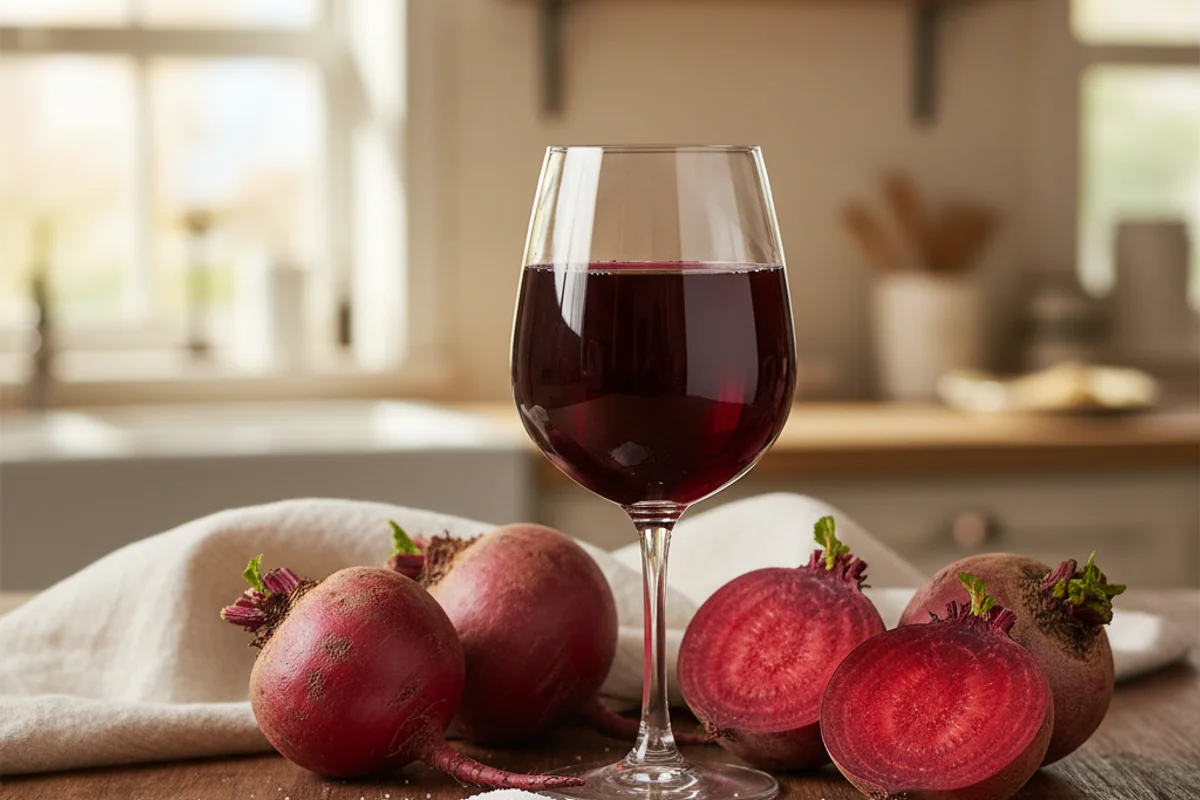
Sugar beets are available at some farmers markets in fall, but they’re not a typical grocery-store find — call ahead or check a specialty produce supplier. If you can only find regular red beets, the wine will still ferment but will turn deep pink and carry a more pronounced earthy flavor; adjust expectations accordingly. Grape tannin powder is sold at homebrew retailers; if you substitute black tea, use 1 cup of a strong, plain brew and add it with the other ingredients in step 3.