BEET WINE (1) [Heavy Bodied]
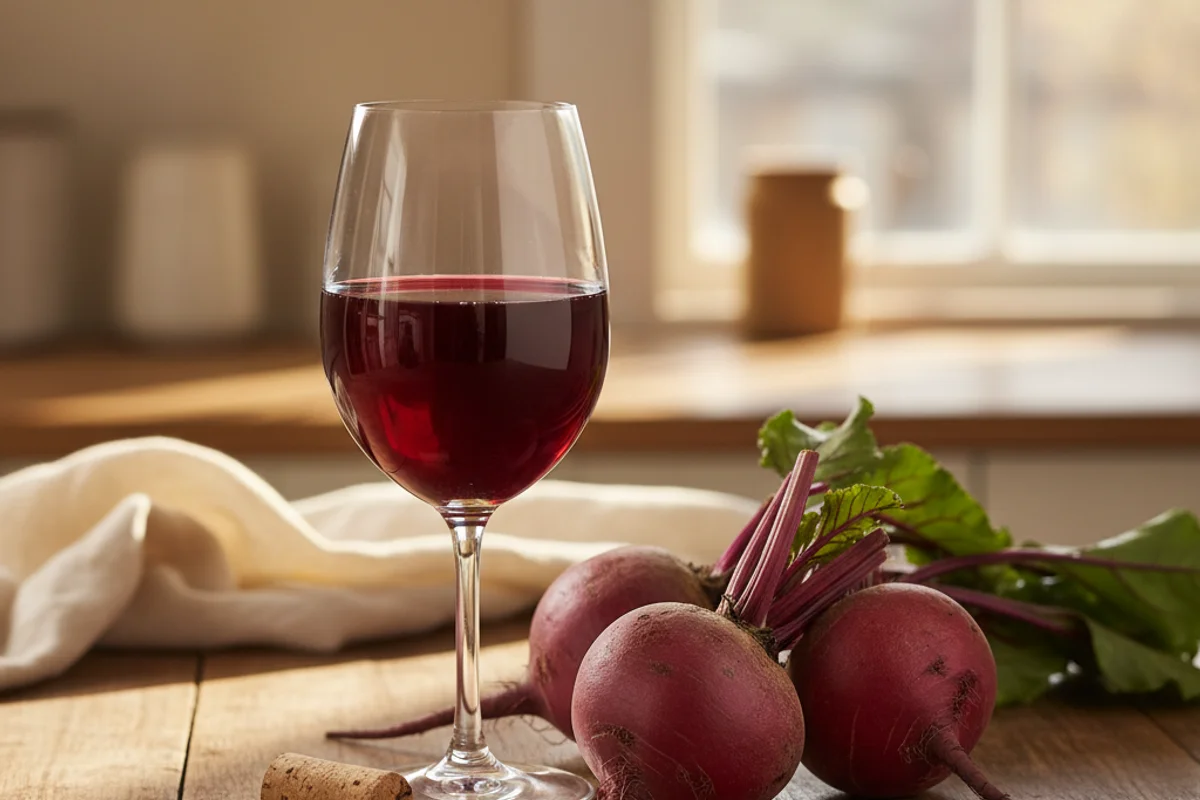
Beets don’t mess around. Roast one and your cutting board looks like a crime scene — that’s the same pigment that will give this wine a deep, jewel-toned ruby that turns heads in the glass. Young beets bring sweetness and a clean earthiness; cloves and ginger push it toward something almost spiced and meditative. The result is a full-bodied country wine that takes patience to make and more patience to drink — but after a year in the bottle, you’ll understand why people have been fermenting root vegetables for centuries.
The beginner trap: Cooking the beets too long makes the liquid starchy and muddy — pull them off the heat while they’re tender but still have a little resistance.
Ingredients
- 4 lb. young beets, scrubbed and thinly sliced
- 2½ lb. granulated white sugar
- 4–6 whole cloves
- ½ oz. fresh or jarred shredded ginger
- 1 lemon (zest and juice used separately)
- 1 gallon water, divided
- 1 packet wine yeast (Lalvin EC-1118 or similar)
- 1 tsp. yeast nutrient
Method
- Combine the sliced beets, lemon zest, cloves, and ginger in a large pot with 6 pints (about ¾ gallon) of water. Bring to a boil, then reduce heat and simmer until the beets are tender but not falling apart, roughly 25–30 minutes.
- Pour the strained liquid directly over the sugar in your primary fermentation vessel (a food-grade bucket works well). Stir thoroughly until the sugar fully dissolves.
- Let the liquid cool to around 70°F — warm to the touch but not hot. Stir in the lemon juice, yeast nutrient, and your prepared wine yeast.
- Cover the vessel with a cloth or loose lid and move it somewhere warm (68–72°F). Let it ferment for two days.
- Transfer the liquid to a dark secondary vessel — a dark glass carboy, or a clear one wrapped in a brown paper bag. Top up with the remaining water, then fit an airlock.
- Move the vessel to a cooler spot (60–65°F) and let it ferment undisturbed for two months.
- Rack (siphon) the wine off its sediment after two months, then rack again once the wine runs clear.
- Bottle in dark glass, store away from light, and wait at least one year before opening. This wine genuinely improves with age.
Why this works
Beets are loaded with betalains — the red and yellow pigments responsible for that dramatic color. Unlike grape anthocyanins, betalains are sensitive to heat and light, which is why this recipe keeps things at a low simmer (not a rolling boil) and insists on dark glass storage. The acid from the lemon juice does double duty: it drops the must’s pH into a range where yeast thrives and harmful bacteria don’t, and it helps stabilize the color in the finished wine. Cloves and ginger aren’t just flavor — their aromatic compounds integrate slowly over months, rounding out the earthy beet notes into something genuinely complex.
Notes
Fresh ginger from the grocery store works perfectly here; no specialty store needed. If you can only find large mature beets, use them — just know the flavor will be earthier and less sweet, so you may want to add an extra ¼ lb. of sugar. Dark green wine bottles (like recycled Bordeaux bottles) are ideal for bottling; avoid clear glass entirely or the color will fade within months.