BEET WINE (2) [Medium Bodied]
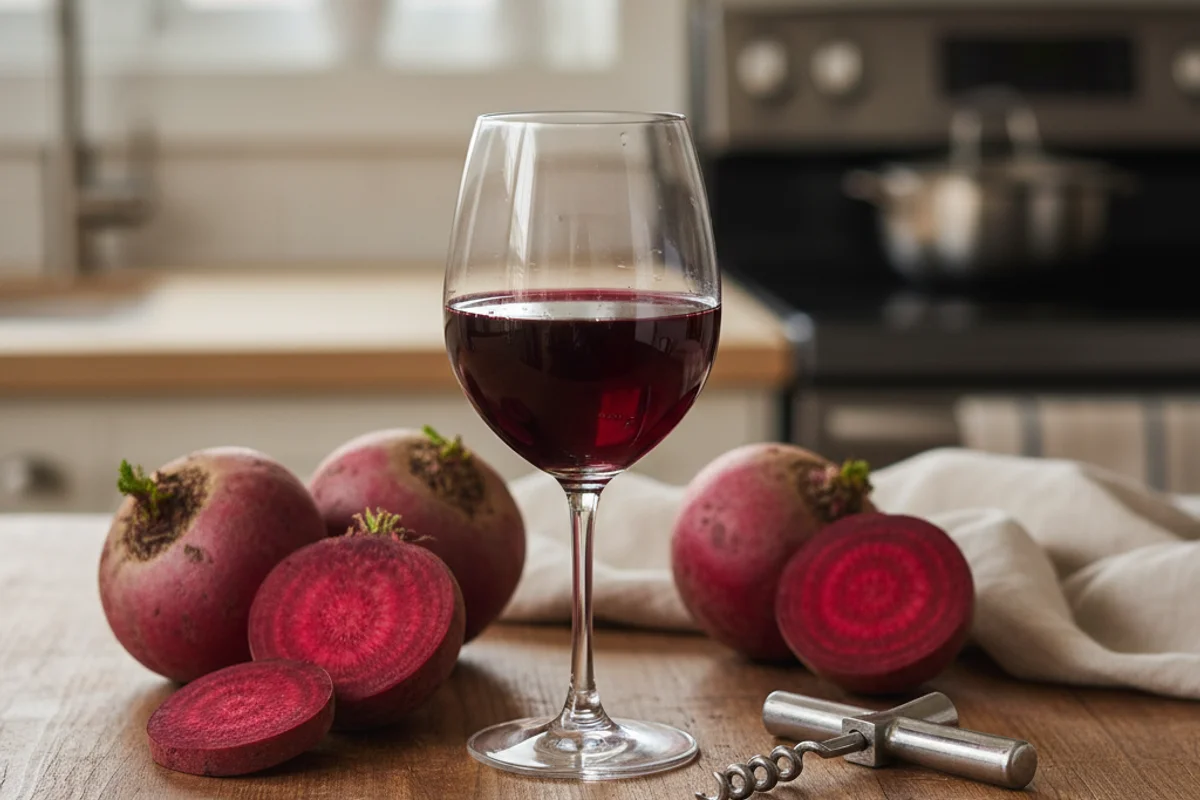
Beets are basically sugar bombs wrapped in earthy, mineral-rich flesh — and that’s exactly what makes them fascinating to ferment. Cook them right and you get a wine with a deep garnet color, a faintly sweet backbone, and a warm spice finish from ginger and clove. This isn’t a grape-wine substitute; it’s its own thing entirely. Give it a full year in the bottle and it transforms from something rough and vegetal into something genuinely worth pouring. Patience is the main ingredient nobody lists.
The beginner trap: Cooking the beets too long turns them mushy and releases excessive starch, which clouds the wine and makes it nearly impossible to clear later.
Ingredients
- 3 lb. fresh beets, unpeeled, scrubbed clean (canned beets will not work here)
- 3 lb. granulated white sugar
- 6 whole cloves
- ½ oz. fresh ginger, shredded (or ¼ tsp. dried ground ginger in a pinch)
- 1 medium lemon, zest and juice
- 1 gallon water, divided
- 1 packet wine yeast (Lalvin EC-1118 or Red Star Côte des Blancs work well)
- 1 tsp. yeast nutrient
Method
- Dice the scrubbed, unpeeled beets into roughly ¼-inch cubes — skin on, since it carries color and tannin.
- Combine the diced beets, lemon zest, and half the water in a large pot; bring to a boil, then reduce heat and simmer until the beets are just tender but still hold their shape, about 20–25 minutes.
- Place the sugar, lemon juice, cloves, and shredded ginger in your primary fermentation vessel (a food-grade bucket works great).
- Strain the hot beet liquid directly over the sugar and spices; discard the solids or save them for eating.
- Add the remaining cold water and stir thoroughly until all the sugar is dissolved.
- Let the must cool to 70°F before adding the yeast and yeast nutrient — adding yeast to hot liquid kills it.
- Cover the vessel loosely with a cloth or loose lid and set it somewhere warm (68–72°F); stir once daily for three days.
- Strain the liquid through a fine-mesh strainer or cheesecloth into a dark glass one-gallon jug (a secondary fermentation vessel); fit an airlock.
- Rack the wine into a clean vessel once it has cleared and fermentation has stopped completely, usually 4–8 weeks.
- Bottle in dark glass, label with the date, and store somewhere dark and cool for at least one year before tasting.
Why this works
Beets are naturally high in sucrose, so you’re not fighting the fruit to get fermentable sugar — you’re building on it. The sugar addition pushes the potential alcohol higher while also feeding the yeast steadily over the primary fermentation window. Simmering the beets (rather than boiling hard) extracts color pigments called betalains without breaking down the cell walls into mush, which keeps the wine clearer. Ginger and clove contribute aromatic compounds that integrate beautifully over a long aging period — what smells sharp at bottling softens into something almost wine-like after twelve months. The dark bottle and dark storage protect those betalain pigments from UV degradation, which would otherwise bleach your gorgeous garnet wine to a washed-out brown.
Notes
Fresh beets from the grocery store or farmers’ market are strongly preferred here — frozen beets tend to go soft quickly during cooking, making it harder to avoid the starchy, mushy texture you’re trying to avoid. If you can’t find fresh ginger, dried ground ginger works as a substitute but use it sparingly. A Campden tablet (potassium metabisulfite) added 24 hours before the yeast is a smart optional step if you want extra protection against wild bacteria.