BEET WINE (3) [Light Bodied]
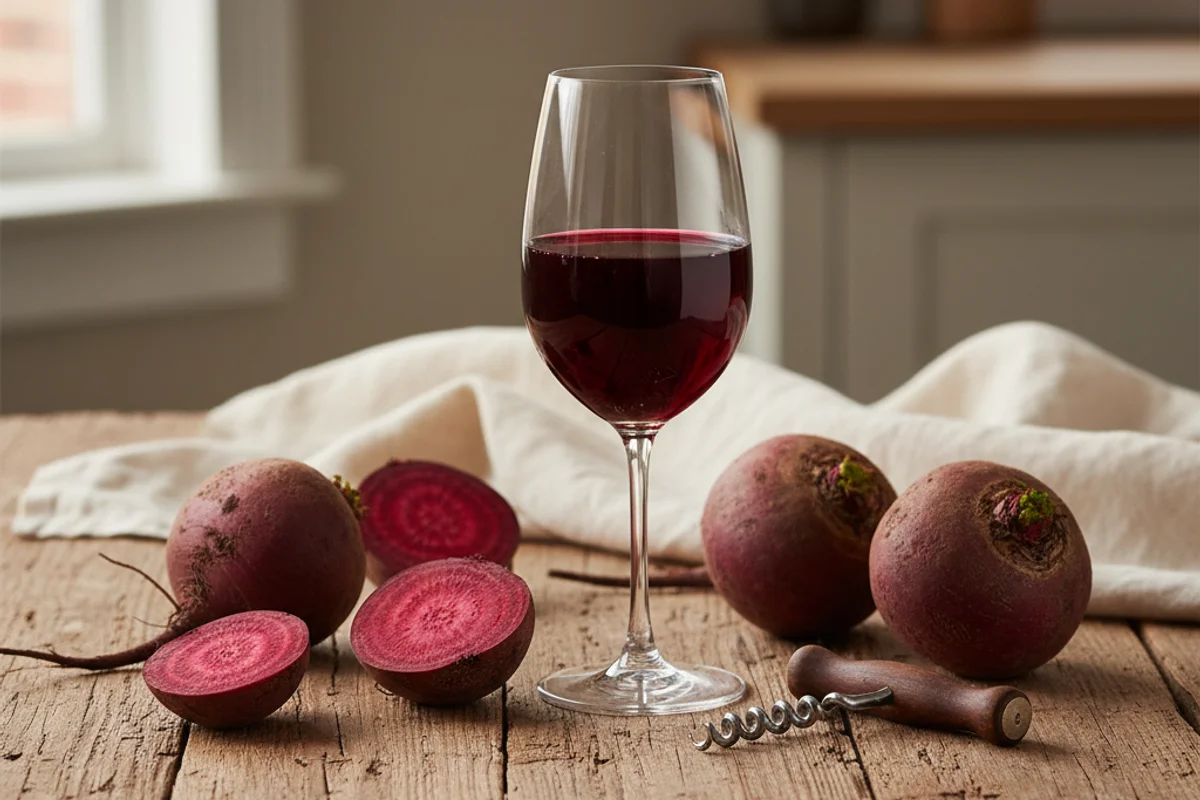
Here’s the thing about beets: they’re basically nature’s wine kit in vegetable form. They’re loaded with sugar, carry a deep earthy sweetness, and throw a color that makes Cabernet jealous. The finished wine is surprisingly delicate — light-bodied, faintly sweet, and complex in a way that catches people off guard when you tell them what’s in their glass. Give it a full year in the bottle and that raw, dirt-cellar edge softens into something genuinely elegant.
The beginner trap: Overcooking the beets turns the juice cloudy and starchy, making it nearly impossible to clear later — pull them from the heat while they’re just tender, not falling apart.
Ingredients
- 2½ lb. fresh beets, washed, peeled, and diced into ¼-inch cubes (fresh or frozen work equally well)
- 2¼ lb. granulated sugar
- 2 tsp. acid blend (find it at any homebrew shop, or substitute 1½ tsp. lemon juice as a rough stand-in)
- ¼ tsp. grape tannin (powdered; available at homebrew shops — or steep a plain black tea bag for 5 minutes as a substitute)
- 1 crushed Campden tablet (potassium metabisulfite; sold at homebrew shops)
- 1 gallon water, divided
- 1 packet wine yeast plus yeast nutrient
Method
- Place the diced beets in a mesh bag (a reusable paint strainer bag works perfectly), tie it closed, and gently boil them in 2 quarts of water until just tender — not mushy.
- Pour the hot beet liquid directly over the sugar in your primary fermenter and stir until the sugar fully dissolves.
- Drop the mesh bag into the liquid, then add the acid blend, grape tannin, and crushed Campden tablet. Cover the vessel and let it rest for 24 hours.
- After 24 hours, stir in the yeast and yeast nutrient, then cover loosely and stir the must once daily for 5 days.
- Lift and gently squeeze the mesh bag to release the juice, then siphon the liquid off the sediment into a dark secondary fermentation vessel and seal it with an airlock.
- Rack (siphon off the sediment) after 3 weeks, then rack again 2 months after that.
- Once the wine runs clear, rack one final time, stir in ½ tsp. wine stabilizer and ¼ lb. of sugar, then bottle in dark glass.
- Store the bottles in a dark place and wait at least one year before opening.
Why this works
Beets are rich in sucrose and betanin, the pigment that gives them their deep red-purple color. Boiling extracts both, but overdoing it breaks down the pectin structure and releases starch — which is why gentle cooking matters. The Campden tablet kills off wild yeast and bacteria in that 24-hour window before your chosen yeast takes over, giving it a clean competitive edge. Acid blend and tannin work together to balance flavor and support clarification: acid keeps the pH in a range where yeast thrive, while tannin helps proteins bind and drop out of suspension over time. The long aging period lets harsh alcohols mellow and allows those earthy beet compounds to round out into something much smoother.
Notes
Frozen beets are a solid choice here — they’re often pre-cleaned and dice easily from a par-thawed state. If you can’t find acid blend, fresh lemon juice adds tartness but introduces additional flavor compounds, so use it sparingly. If the wine refuses to clear after racking, a dose of pectic enzyme (1 tsp. added at the start next time) helps break down residual pectin that can cause long-term haze.