BEETROOT WINE
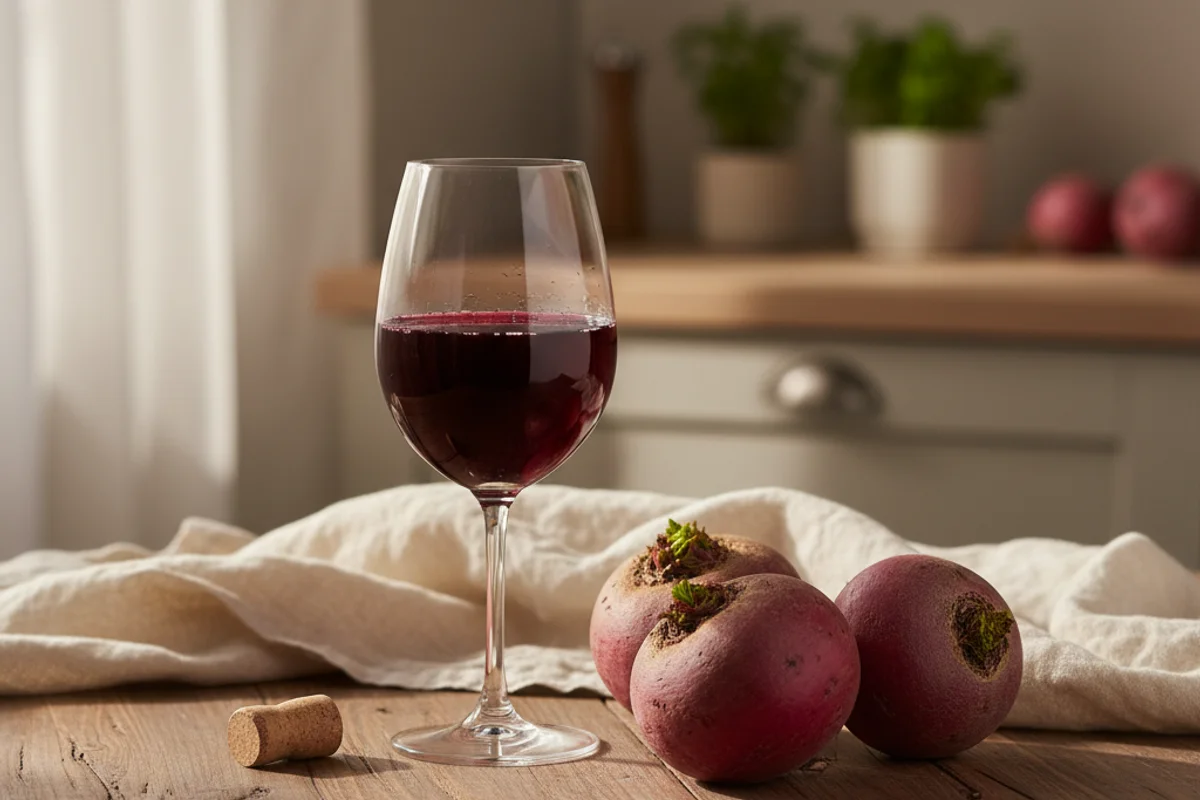
Beets are basically nature’s little sugar bombs wrapped in a package that stains everything it touches. When you ferment them into wine, you get something genuinely surprising: a deep ruby, full-bodied pour with an earthy sweetness that softens with time into something almost savory and rich. The trick is patience — this wine wants at least a year in the bottle before it shows you what it’s capable of. Rush it, and you’ll wonder why you bothered. Wait it out, and you’ll be glad you did.
The beginner trap: New winemakers taste this wine too young and write it off as muddy or earthy — but that flavor fades completely with proper aging, so hold your bottles for at least 12 months before opening one.
Ingredients
- 5 lbs fresh beetroot (fresh or frozen whole beets work; canned beets are not recommended)
- 2 lbs granulated white sugar
- 1 lb light brown sugar
- 2 lemons (zest and juice)
- 6½ pints water, divided
- 1 tsp yeast nutrient
- 1 packet Montrachet wine yeast (Red Star brand, widely available online; Lalvin EC-1118 is a solid substitute)
- 1 Campden tablet (sodium or potassium metabisulfite, sold at homebrew shops or online)
Method
- Scrub the beets thoroughly, then slice them thin — no need to peel them first.
- Add the beet slices, lemon zest, and 1½ quarts of the water to a large pot. Cover, bring to a boil, then reduce heat and hold at a low boil for 20 minutes.
- Remove the beets with a slotted spoon and set them aside (peel before eating, if you want a snack).
- Stir the white sugar, lemon juice, and yeast nutrient into the hot liquid until fully dissolved, then add the remaining water.
- Let the must cool to around 90°F, then transfer it to a sanitized fermenter (secondary vessel), add your activated yeast starter, and fit an airlock.
- Ferment for three weeks, then rack the wine off its sediment into a clean vessel.
- Add the brown sugar and stir gently until dissolved, then top up the vessel and refit the airlock.
- Continue fermentation until the wine is fully dry — expect 30 to 45 more days.
- Rack again, dissolve one finely crushed Campden tablet into a small amount of wine and stir it in, then top up and refit the airlock.
- Bulk age in a dark location for six months.
- Rack into dark bottles and store in a dark place for an additional 12 to 18 months before opening.
Why this works
Beets are loaded with betalains — the pigment compounds responsible for that dramatic red color. These pigments are sensitive to light, which is why dark fermenters and dark bottles aren’t optional here; UV exposure will bleach your wine to a sad, brownish pink. The earthy flavor common in young beet wine comes largely from geosmin, a natural compound produced by soil microbes that clings to the beet. Fermentation breaks it down gradually, and extended aging gives that process time to finish. The two-stage sugar addition — white sugar up front, brown sugar after the first rack — staggers the yeast’s food supply, encouraging a slower, more complete fermentation and a fuller body in the finished wine.
Notes
Frozen beets work well here; thaw completely and use any collected juice as part of your water measurement. If you can’t find Montrachet yeast locally, look for Red Star or Lalvin brands at any homebrew retailer or on Amazon. Dark glass bottles (green or brown) are essential — clear bottles will cause color loss no matter how dark you keep the storage space.