BILLBERRY WINE (1)
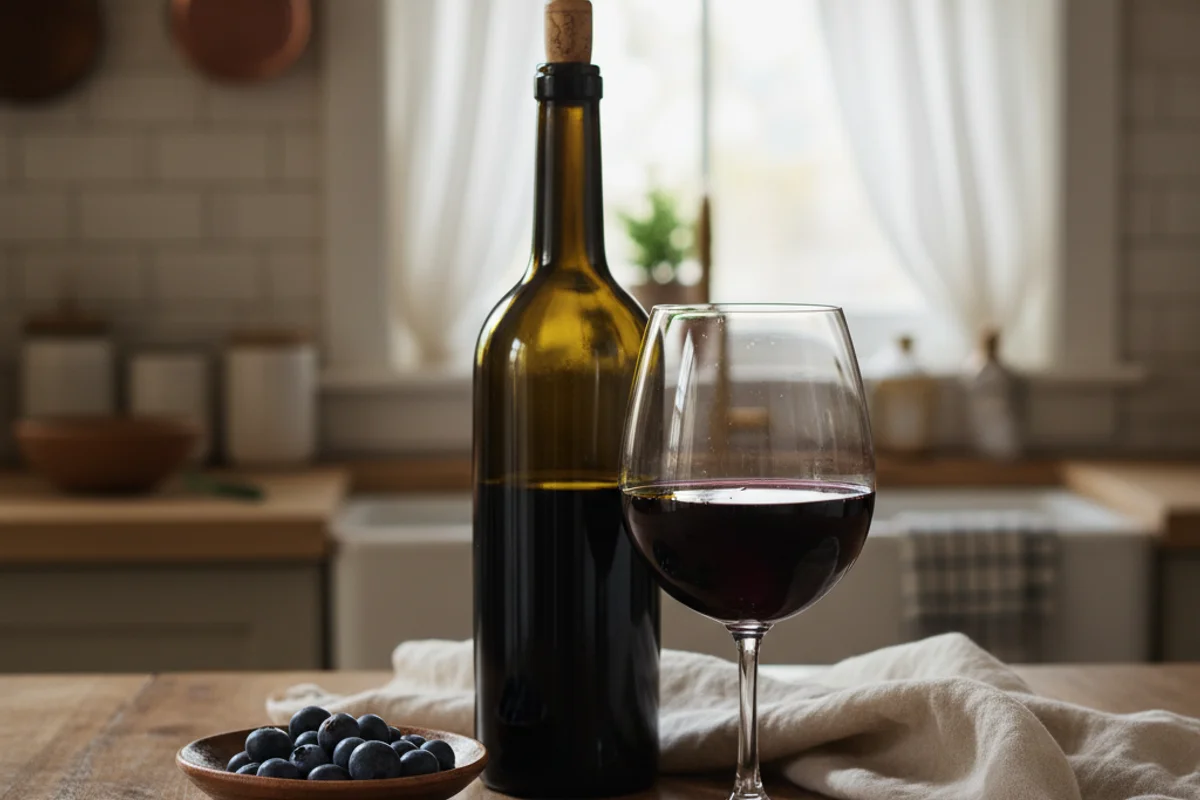
Bilberries look like blueberries that went to art school — smaller, darker, and stained all the way through with deep purple-red pigment. That color isn’t just pretty; it signals a fruit loaded with anthocyanins and tannins that can build a wine with real backbone. Think Burgundy-style earthiness with a bright, tart fruit core. Done right, a bilberry wine at one year of age will surprise anyone who assumed “country wine” meant thin and sweet. This is not that wine.
The beginner trap: Skipping the staggered sugar additions and dumping all the sugar in at once — it raises the osmotic pressure early, stresses the yeast, and risks a stuck fermentation before the fruit has given up its flavor.
Ingredients
- 4 lbs fresh bilberries (fresh or frozen; see Notes)
- 2¾ lbs white granulated sugar, divided into three portions
- 3½ qts water
- 1½ tsp acid blend
- 1 tsp pectic enzyme
- 1 tsp yeast nutrient
- ¼ tsp grape tannin powder
- 1 Campden tablet, crushed
- 1 packet Burgundy wine yeast (Red Star Côte des Blancs or Lalvin RC212 work well)
Method
- Bring the water to a full boil and set it aside while you sort through the berries, discarding any that are soft, moldy, or unripe.
- Place the berries in a mesh straining bag, tie it closed, and crush the berries thoroughly inside the bag while it sits in your primary fermenter.
- Add half the total sugar plus all of the acid blend, tannin powder, and yeast nutrient directly to the primary fermenter.
- Pour the boiling water over the bag and sugar; stir until the sugar fully dissolves, then cover the fermenter.
- Let the must cool to lukewarm (around 70–75 °F), then stir in the crushed Campden tablet and re-cover.
- After 12 hours, add the pectic enzyme and re-cover.
- After another 12 hours, pitch the yeast; cover and allow fermentation to begin.
- Ferment for 5 days, stirring once daily and gently squeezing the bag each time to pull color and flavor from the fruit.
- On day 5, add half of the remaining sugar, stir well to dissolve, and re-cover.
- Ferment 2 more days, then lift and drain the bag — do not squeeze it at this stage.
- Stir in the last portion of sugar until fully dissolved, re-cover, and wait 24 hours.
- Siphon the clearing juice off its sediment into a clean secondary fermenter, top up to the shoulder, and fit an airlock.
- After 3 weeks, rack into a clean vessel, top up, and refit the airlock.
- After 60 more days, rack again; if the wine is clear, bottle it — if not, wait until it drops bright, then bottle.
- Age at least one year before opening.
Why this works
The three-stage sugar addition is doing real work here. Yeast under high-sugar stress early on can stall or throw off-flavors; spreading the sugar out keeps the fermentation environment comfortable and lets the yeast run strong. The Campden tablet on day one knocks out wild yeast and bacteria without cooking the fruit the way boiling would, preserving delicate aromatics. Pectic enzyme breaks down pectin chains in the fruit cell walls — bilberries are pectin-rich — which releases more juice, improves color extraction, and prevents a hazy finished wine. The staggered racking schedule then lets gravity do the clarification work slowly and gently, so you aren’t stripping flavor by filtering.
Notes
Bilberries can be hard to find fresh outside of the UK and Scandinavia — frozen bilberries imported from Europe are a solid substitute and often show up at international grocery stores or online. If you genuinely cannot source bilberries, wild blueberries (smaller and more tart than cultivated ones) are the closest everyday stand-in and will produce a similar style of wine. Acid blend is usually sold at homebrew shops; in a pinch, use ½ tsp tartaric acid and ½ tsp citric acid mixed together.