BIRCH SAP WINE
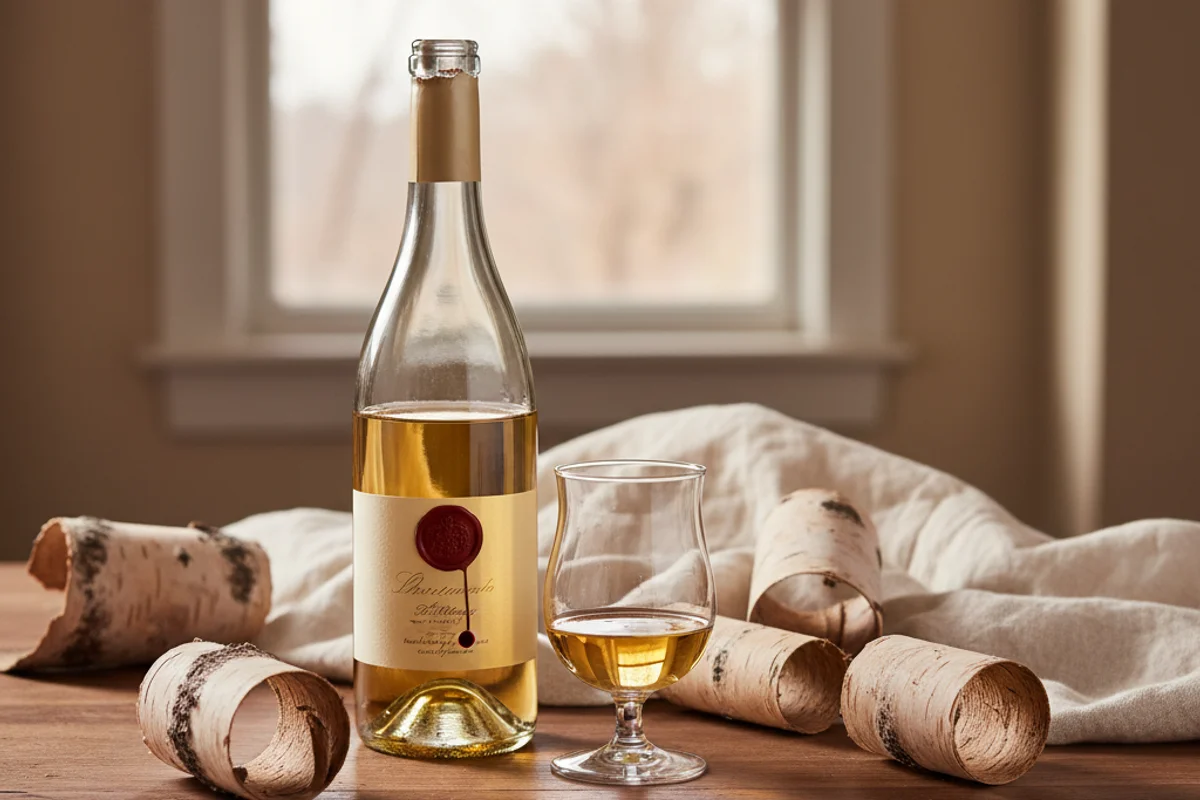
Every spring, just after the maple sap run winds down, birch trees quietly push their own sap upward through the trunk. That sap carries a faint whisper of wintergreen — subtle, clean, and unlike anything you’ve fermented before. Collect a gallon from a healthy tree in late winter or early spring, and you have the base for a pale, delicate wine that tastes like the woods just after snowmelt. It won’t knock you over with fruit or sweetness. It will make you slow down and pay attention.
The beginner trap: Skipping the hydrometer reading before adding sugar — birch sap sugar content varies widely, so guessing will leave your wine either thin and weak or stuck before it finishes.
Ingredients
- 1 gallon fresh birch sap (collected from trees at least 10 inches in diameter)
- 1¾ lbs granulated white sugar (adjust up or down based on your hydrometer reading)
- ½ oz citric acid (or the juice of 3–4 lemons as a grocery-store swap)
- ⅛ tsp grape tannin (or 1 cup strong-brewed black tea, cooled)
- 1 tsp yeast nutrient
- 1 packet Riesling or Graves wine yeast (Lalvin 71B works well as a common substitute)
Method
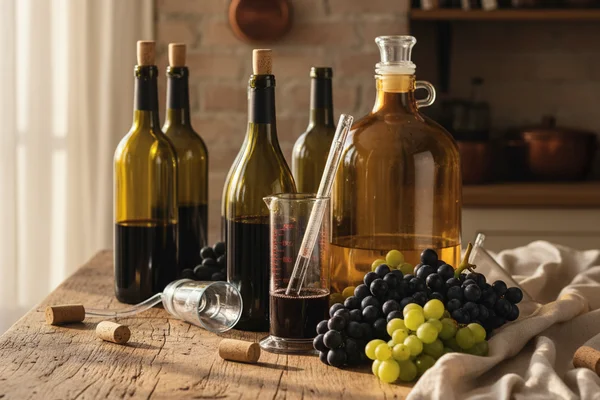
- Before anything else, check the specific gravity of your raw sap with a hydrometer. You’re aiming for a starting gravity of 1.085–1.090 after sugar is added, so adjust the amount accordingly.
- Pour the sap into a non-reactive pot (stainless steel or enamel-coated) with the measured sugar and bring it to a boil, stirring to dissolve.
- Pull the pot off the heat the moment it boils, then stir in the citric acid and yeast nutrient until fully dissolved.
- Let the must cool to below 75°F (room temperature is fine), then stir in the tannin.
- Hydrate or activate your yeast according to the packet instructions, then pitch it into the cooled must.
- Cover the primary fermenter loosely and stir it once a day for 8–10 days.
- Rack into a clean secondary fermenter and fit an airlock; ferment until dry, roughly 6–8 weeks.
- Rack again into a sanitized vessel, refit the airlock, and bulk age for 6 months — check the airlock every few weeks and top up with water if it dries out.
- Taste, sweeten lightly if you prefer an off-dry style, then bottle.
Why this works
Birch sap is mostly water with a small amount of fructose, glucose, and trace minerals — not enough sugar on its own to produce a stable wine, which is why you measure and correct. The wintergreen character comes from methyl salicylate, a natural compound in sweet and yellow birch. It’s volatile, meaning it’s present in early fermentation but softens considerably as alcohol develops and CO₂ scrubs aromatics out of solution. What’s left after six months of bulk aging is a ghost of that flavor — more impression than statement. The long aging period also lets the wine drop any haze and mellow any sharpness from the citric acid, which is why patience here is rewarded more than usual.
Notes
Only sweet birch (Betula lenta) and yellow birch (Betula lutea) carry the wintergreen character; paper birch sap will produce a decent but more neutral wine. If you don’t have access to birch trees, this recipe has no practical grocery-store equivalent for the base — the sap itself is the point. Plug the tap hole firmly with a tapered cork or wooden plug after collecting your gallon; leaving it open can seriously harm the tree.