BLACK CHERRY JUICE WINE
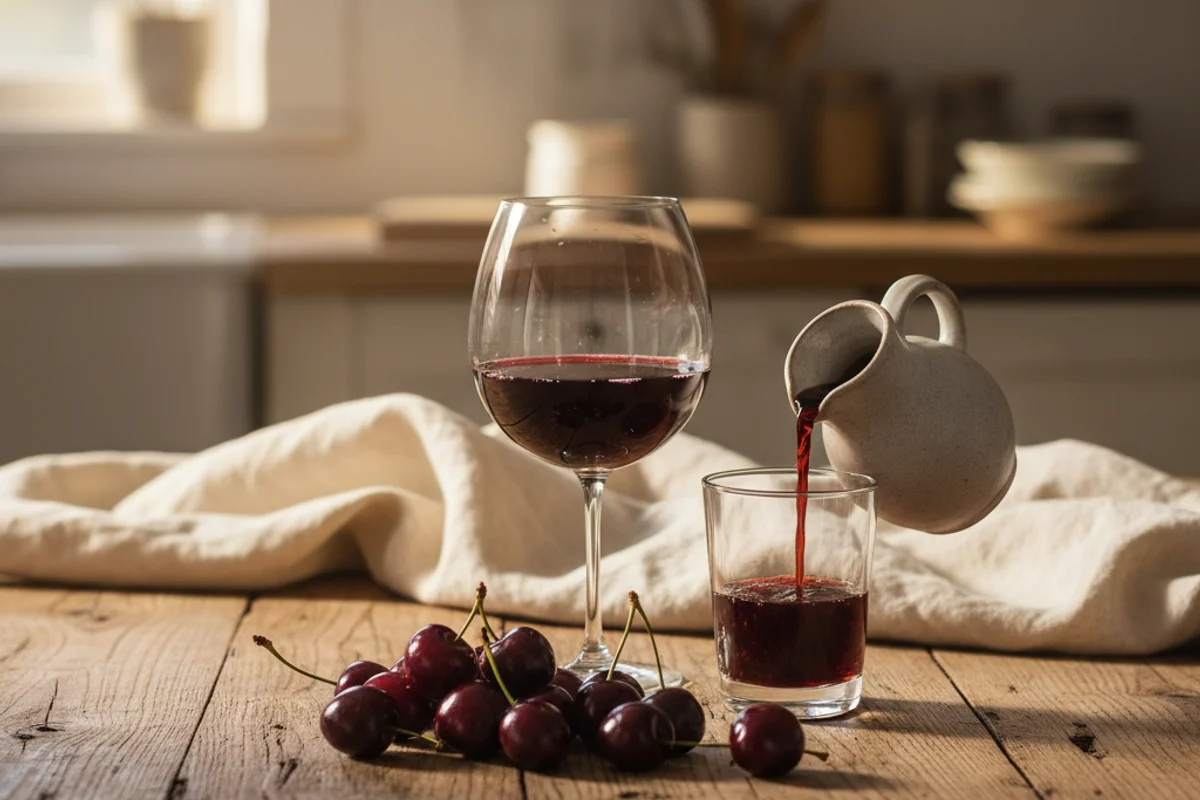
Black cherry juice is one of those rare grocery-store finds that punches well above its weight in the glass. It brings deep, dark fruit flavor, solid natural acidity, and enough body to produce a wine that tastes like it took far more effort than it actually did. The finished product lands somewhere between a light Burgundy and a fruit-forward rosé — dry, complex, and genuinely drinkable. Best of all, you skip the crushing, pressing, and pulp management entirely. The juice does the heavy lifting before you even open the bottle.
The beginner trap: Skipping the hydrometer and guessing on sugar will leave you with a wine that’s either thin and watery or so boozy it tastes medicinal — measure your starting gravity every single time.
Ingredients
- 1 gallon 100% black cherry juice (pure or reconstituted from concentrate)
- 1½ lbs granulated sugar (adjust based on hydrometer reading)
- 1 tsp yeast nutrient
- 1 tsp pectic enzyme
- ⅛ tsp wine tannin (or 1 cooled cup of strong-brewed black tea as a substitute)
- ½ tsp citric acid (or the juice of one lemon)
- 1 packet Lalvin RC212 wine yeast (or any Burgundy-style wine yeast)
Method
- Pour the black cherry juice into your primary fermenter. Float your hydrometer and note the specific gravity — you’re aiming for a starting gravity between 1.085 and 1.090 after adding sugar.
- Add the sugar, pectic enzyme, citric acid, yeast nutrient, and tannin directly to the fermenter. Stir hard for several minutes until the sugar is fully dissolved.
- Cover the fermenter loosely and let it rest for 12 hours. This gives the pectic enzyme time to break down fruit proteins before fermentation kicks off.
- Rehydrate your yeast according to the packet instructions, then add the activated yeast to the must. Cover the fermenter with a cloth or loose lid.
- Stir the must once daily. Keep fermenting until the specific gravity drops to 1.010, then transfer to a sealed secondary fermenter and fit an airlock.
- After 30 days, rack the wine off the sediment into a clean vessel, top it up to minimize headspace, and refit the airlock.
- Wait another 60 days, then rack again. When the gravity reads at or below 0.990, fermentation is complete.
- Stabilize the wine with potassium sorbate and potassium metabisulfite (follow package directions), then sweeten to taste if desired.
- Wait two weeks after stabilizing to confirm fermentation does not restart, then rack into bottles. Store in a cool, dark place for at least 6 months before opening.
Why this works
Black cherry juice is naturally high in anthocyanins — the same pigment compounds that give red wine its color and contribute to its antioxidant profile. Pectic enzyme breaks down pectin chains in the juice, which prevents a stubborn haze from forming in your finished wine. Tannin adds structure and mouthfeel that juice-based wines often lack compared to their whole-fruit counterparts. The RC212 yeast was originally developed for Pinot Noir; it handles high-sugar musts without stress and preserves the dark fruit character rather than fermenting it into something thin and sharp. Together, these additions turn a bottle of grocery-store juice into something that actually develops with age.
Notes
Reconstituted concentrate works just as well as fresh juice — look for brands with no added sugar or preservatives, since potassium sorbate in commercial juice will inhibit or kill your yeast. If you can’t find wine tannin at a homebrew shop, a cup of strong black tea stirred into the must is a reliable everyday substitute. This wine genuinely improves after 12 months in the bottle, so try to resist opening it early.