BLACK CHERRY WINE (1)
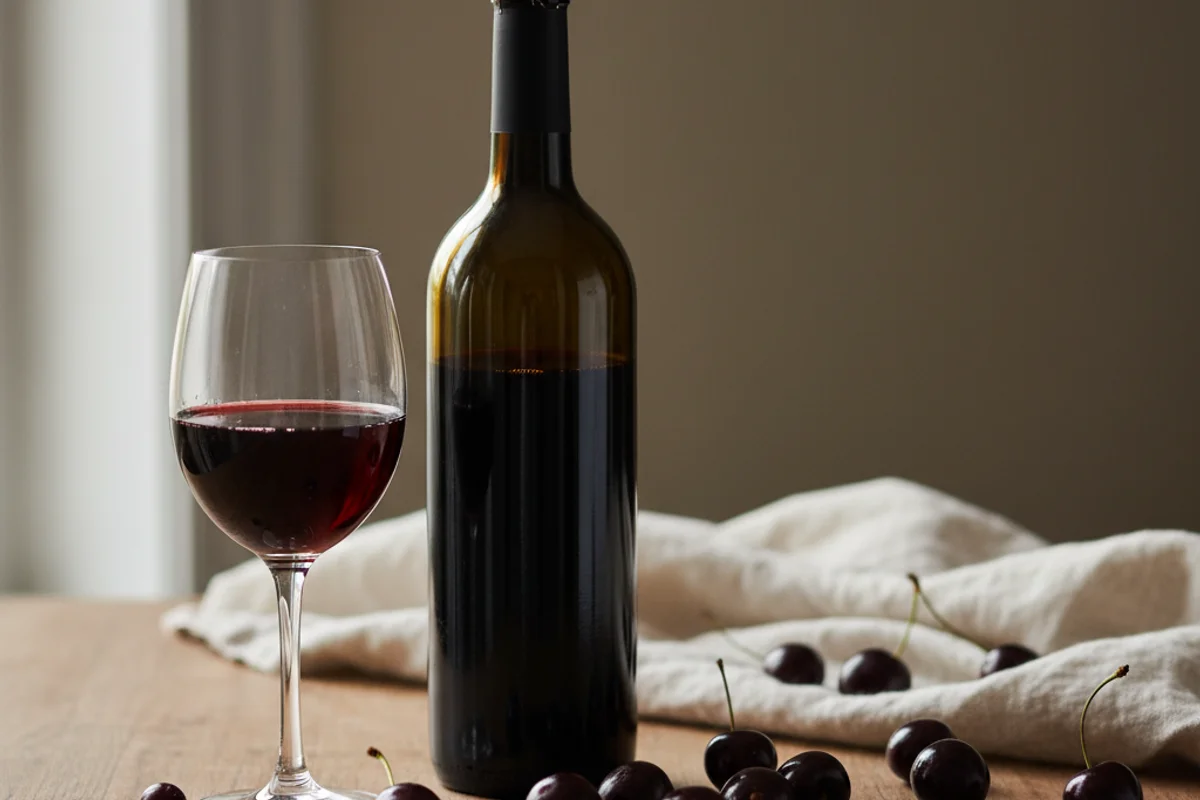
Black cherries bring something most fruit wines can’t fake: a deep, almost brooding flavor with enough natural tannin to give the finished wine real structure. Think dark fruit jam, a whisper of almond from the pits, and a color that looks like it came from a professional winery. This is a fruit-forward, medium-bodied country wine that rewards patience — a six-month wait is the minimum, but a full year turns something good into something genuinely impressive.
The beginner trap: Skipping the four-day maceration or cutting it short — that’s where the color and body come from, and rushing it leaves you with a thin, pale wine that tastes like watered-down cherry juice.
Ingredients
- 6–8 lbs black cherries, fresh or frozen, washed and destemmed
- 2½ lbs granulated white sugar
- 5½ pints (about 11 cups) water
- 1½ tsp pectic enzyme (found at homebrew shops or online)
- ½ tsp citric acid (or substitute 1 tbsp fresh lemon juice)
- 1 Campden tablet, crushed (potassium or sodium metabisulfite)
- 1 tsp yeast nutrient
- 1 packet wine yeast (Lalvin EC-1118 or Red Star Côte des Blancs work well)
Method
- Wash and destem the cherries, discarding any that are bruised or moldy. Chop or crush the fruit — you don’t need to remove the pits, but throw away any that are cracked or broken open.
- Place the crushed fruit in a sanitized primary fermentation bucket and add the water. Stir in the crushed Campden tablet, cover loosely, and wait 24 hours.
- After 24 hours, stir in the pectic enzyme. Cover and let the fruit macerate for four full days, stirring once daily.
- Strain the fruit through a fine mesh strainer, cheesecloth, or jelly bag, squeezing firmly to pull out as much juice as possible. Discard the solids.
- Stir the sugar, citric acid, and yeast nutrient into the juice until fully dissolved.
- Pour the must into your secondary fermenter (a 1-gallon or larger glass carboy). Prepare your yeast according to packet instructions, then add it to the must. Fit the airlock and move the vessel to a warm spot around 70°F.
- After the vigorous initial fermentation slows — typically 14 to 21 days — rack the wine off the sediment into a clean vessel. Top up with cold water to minimize headspace, refit the airlock, and move to a cooler location around 60°F.
- Continue fermenting until the wine is fully dry (no more airlock activity). Rack once more, then bottle.
- For a sweeter wine: Before bottling, stabilize with ½ tsp potassium sorbate plus a fresh Campden tablet, then stir in ¼ to ½ cup of a simple sugar-water syrup to taste.
- Age at least 6 months before tasting; 12 months is better. Drink within 18 months for peak flavor.
Why this works
The four-day cold maceration is doing two jobs at once. First, the Campden tablet knocks out wild yeast and bacteria that would compete with your chosen wine yeast. Second, soaking the crushed fruit in water extracts anthocyanins — the pigment molecules responsible for that deep ruby color — along with flavor compounds and light tannins locked inside the skins. Pectic enzyme breaks down pectin in the fruit’s cell walls, which releases more juice and prevents a pectin haze in the finished wine. The small addition of citric acid nudges the pH into a range where your wine yeast thrives and unwanted microbes don’t. Together, these steps stack the deck heavily in your favor before fermentation even begins.
Notes
Frozen black cherries (thawed completely before use) work extremely well here — freezing ruptures the cell walls and actually makes juice extraction easier than fresh fruit. If you can’t find citric acid at a homebrew shop, the baking aisle of most grocery stores stocks it, or use fresh lemon juice as a backup. If your finished wine tastes flat or thin, it likely came from underripe fruit or an abbreviated maceration — both are worth correcting on your next batch.