BLACK CHERRY WINE (2)
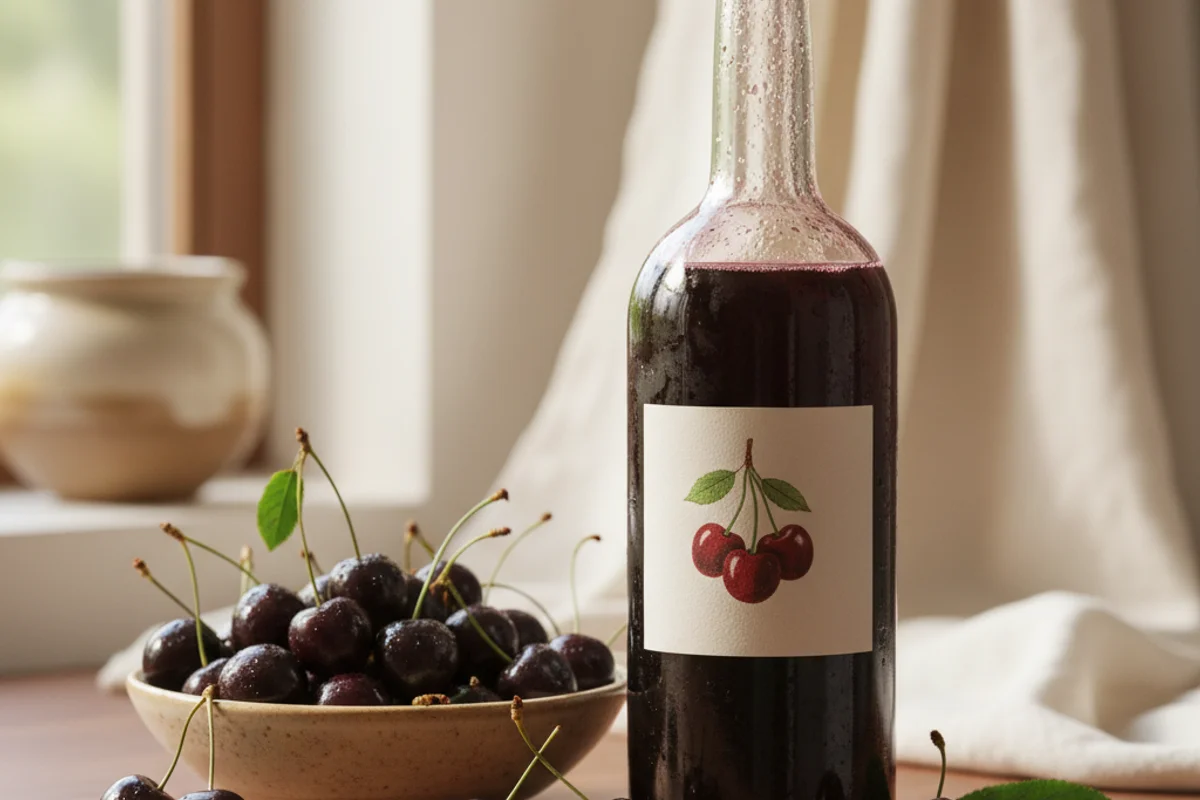
Black cherries bring something most fruit wines don’t: a deep, almost brooding flavor that sits somewhere between tart and earthy, with just enough sugar to round it out. The golden raisins aren’t a throwaway addition — they’re doing real structural work, adding body and a faint caramel undertone that keeps this wine from tasting thin. Give it six months in the bottle and you’ll have something that drinks more like a light red than a fruit wine. That’s the goal.
The beginner trap: Skipping the pectic enzyme — or adding it too early — leaves you with a hazy, cloudy wine that never fully clears, no matter how long you wait.
Ingredients
- 4 lbs black cherries, fresh or frozen, pitted and chopped
- 1 lb golden raisins, minced (regular raisins work fine)
- 2½ lbs granulated sugar
- 1 tsp pectic enzyme
- 6 pints (12 cups) water
- 1 tsp yeast nutrient
- 1 packet wine yeast (Lalvin 71B or EC-1118 are solid choices)
Method
- Wash, destem, and pit the cherries, discarding any that are soft or damaged. Chop the cherries and mince the raisins.
- Bring the water to a boil. Place the fruit and sugar in your primary fermenter and pour the boiling water over them, stirring until the sugar fully dissolves.
- Let the must cool to 70°F. Add the pectic enzyme and yeast nutrient, stir well, and cover the fermenter loosely.
- Wait 12 hours, then prepare and pitch your yeast starter into the must.
- Cover the fermenter well and move it to a warm spot (65–75°F). Let it ferment for 14 days, stirring daily.
- Strain the must through a fine mesh strainer or nylon bag, pressing the pulp firmly to extract all the liquid. Transfer to your secondary fermenter (glass carboy or jug).
- Top up to the shoulder of the vessel to minimize headspace, then fit an airlock.
- Rack the wine after three weeks, then again three weeks after that.
- Taste the wine — it should be medium dry at this point. If you want it sweeter, stabilize first (use potassium sorbate plus a Campden tablet), then stir in a simple syrup made from sugar and water, adding a little at a time until it tastes right.
- Bottle the wine and wait at least 6 months before opening a bottle.
Why this works
Black cherries are naturally high in pectin — the same stuff that makes jam gel. That’s great for jam, but in wine it causes stubborn cloudiness. Pectic enzyme (also called pectinase) breaks down those pectin chains so the particles can clump together and settle out, leaving you with a clear, bright wine. The golden raisins pull double duty: they add fermentable sugars and also contribute glycerol, which gives the finished wine a fuller, rounder mouthfeel. Boiling water poured over the fruit acts as a quick, chemical-free sanitizer and helps break down the fruit cell walls so more flavor and color are released into the must before fermentation even begins.
Notes
Frozen black cherries from the grocery store work extremely well here — they’re picked at peak ripeness and the freeze-thaw cycle actually breaks down the fruit cells better than fresh chopping does. If you can’t find golden raisins, regular dark raisins or even a handful of dried cranberries will substitute without dramatically changing the result. If your wine is still hazy after the second racking, a fining agent like bentonite (available at any homebrew shop) will help it clear.