BLACK CHERRY WINE (3)
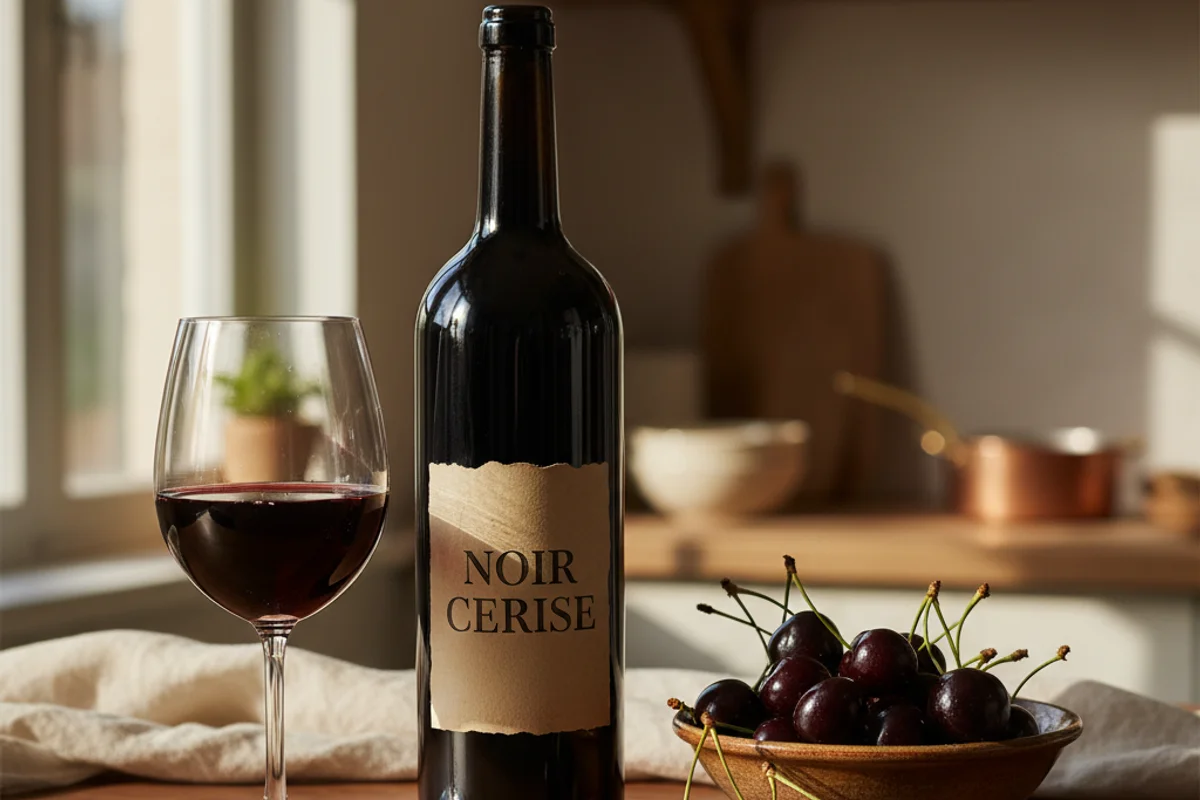
Black cherries bring something darker and more complex to the glass than their sweet cousins — think deep ruby color, a faint almond-like note from the skins, and enough natural sugar to build real body. This recipe extracts every bit of that color and flavor through a quick stovetop simmer, then ferments cool and slow to keep those delicate aromatics intact. The result is a wine that drinks well at six months but turns genuinely impressive closer to a year and a half.
The beginner trap: Skipping the cool fermentation temperature — fermenting too warm blows off the subtle cherry aromatics before they ever make it into the bottle.
Ingredients
- 6 lbs black cherries, fresh or frozen, pitted and stemmed
- 2½ lbs granulated white sugar
- 6 pints (12 cups) water, divided
- 1 tsp pectic enzyme
- ½ tsp citric acid (or 1½ tsp lemon juice as a backup)
- 2 g bentonite (a common fining clay, sold at homebrew shops)
- 1 packet wine yeast plus yeast nutrient
Method
- Pit and stem the cherries, discarding any that are soft, moldy, or blemished. Chop the fruit roughly and place it in a large pot with 1 pint of water.
- Bring the pot to a low boil, then reduce heat and simmer covered for 15 minutes, stirring a few times. Remove from heat and let it cool completely.
- Pour the cooked fruit into a nylon straining bag (or a fine-mesh strainer lined with cheesecloth) set over a large bowl. Let it drain freely, then soak the bag in 2 pints of cold water for 15–20 minutes.
- Squeeze the bag firmly to pull out every last drop of juice and color, then discard the pulp.
- Combine both batches of juice with the sugar, pectic enzyme, citric acid, and yeast nutrient in a large bowl or food-safe bucket. Add the remaining water and stir until the sugar fully dissolves.
- If you have an acid testing kit, check total acidity and adjust down to around 0.85% if needed. Pour the must into your fermentation vessel and cover loosely with a clean cloth.
- After 12 hours, prepare your bentonite according to package directions and stir it in along with your activated yeast starter. Fit an airlock.
- Move the fermenter to a cool spot — ideally 55–60°F (13–16°C) — and let fermentation run its course.
- Rack the wine every three weeks until no new sediment appears in the bottom of the vessel. Bottle and store in a dark place.
- Taste at 6 months, but plan to wait closer to 18 months for the wine to really show what it can do.
Why this works
The quick stovetop simmer does two jobs at once: it breaks down the cell walls in the fruit to release more juice and pigment, and it pasteurizes the must so wild microbes don’t compete with your wine yeast. Pectic enzyme then breaks down the pectin released during cooking — without it, your finished wine could end up hazy no matter how long you wait. Bentonite, a negatively charged clay, attracts positively charged proteins floating in the must and drags them to the bottom, giving you a clearer wine faster. Fermenting cool slows the yeast down intentionally, which preserves the volatile aromatic compounds that would otherwise evaporate during a fast, hot ferment.
Notes
Frozen black cherries work just as well as fresh and are often easier to find year-round — freezing also pre-ruptures the fruit cells, so you may get even better color extraction. If you can’t find bentonite at a homebrew shop, unflavored gelatin (about ¼ tsp dissolved in warm water) works as a substitute fining agent. Store finished bottles on their sides in a dark, cool space — light is the enemy of that gorgeous deep red color.