BLACK HAW WINE
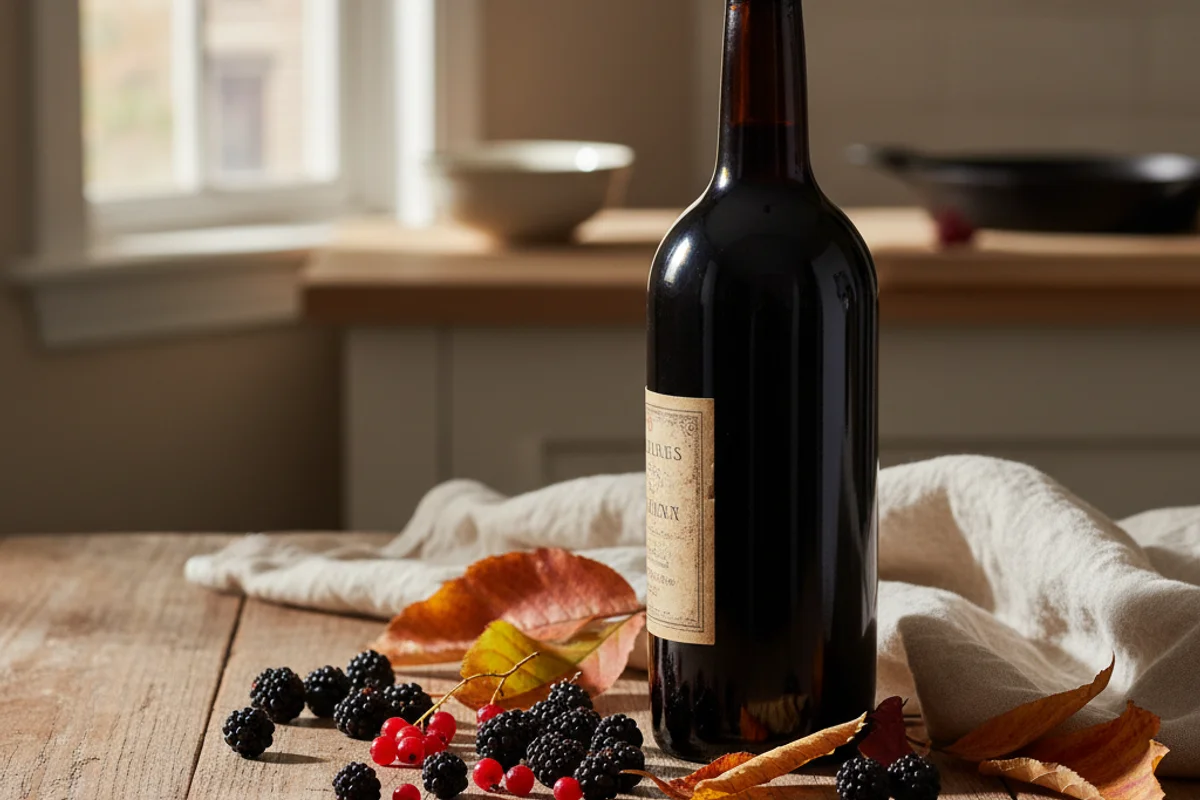
Black haw berries are the wild card of backyard winemaking. These small, bluish-black fruits from native Viburnum shrubs taste like a cross between a dried plum and a wild blueberry — earthy, lightly sweet, and just tannic enough to keep things interesting. Left on the bush too long, they shrivel into what foragers call “wild raisins.” That’s not a bad thing. A touch of frost actually concentrates their sugars and rounds out the flavor. The result in the glass: a medium-bodied country wine with dark fruit character and a quietly complex finish.
The beginner trap: Skipping the pectic enzyme means you’ll end up with a hazy wine that refuses to clear, no matter how long you wait.
Ingredients
- 3 lbs ripe black haw berries, fresh or frozen
- ½ lb black raisins or Zante currants, chopped
- 2½ lbs granulated sugar
- 7 pts (3.5 quarts) water
- 1 tsp acid blend (available at homebrew shops; lemon juice is a rough substitute)
- ¼ tsp pectic enzyme
- 1 tsp yeast nutrient
- 1 packet wine yeast (Lalvin 71B or EC-1118 work well)
Method
- Bring the water to a boil and stir in the sugar until fully dissolved. Remove from heat.
- Wash the berries and chop the raisins or currants. Place everything together in a nylon straining bag, tie it closed, and set it in your primary fermenter.
- Use a piece of hardwood or a clean potato masher to crush the berries through the bag. Pour the hot sugar water over the bag, cover the fermenter, and let it cool to room temperature.
- Once cool, stir in the acid blend, pectic enzyme, and yeast nutrient. Cover and let it sit for 12 hours.
- Activate your yeast according to the packet directions, then add it to the must.
- Ferment for 10 days, stirring and gently squeezing the bag once daily to extract color and flavor.
- Lift out the straining bag, give it a gentle squeeze, then discard the pulp. Transfer the liquid to a clean secondary fermenter and attach an airlock.
- Top up the fermenter with a little water or extra must if needed once active fermentation slows down.
- After 30 days, rack the wine into a clean vessel, top up, and refit the airlock. Repeat every 30 days until the wine runs clear and shows no new sediment over a full 30-day period.
- Stabilize with potassium sorbate and potassium metabisulfite, sweeten to taste if desired, wait 10–14 days, then rack into bottles. Age at least 6 months before drinking.
Why this works
Black haw berries are loaded with pectin — the same stuff that makes jams gel. That’s great for preserves, but it’s the enemy of a clear wine. Pectic enzyme breaks down those pectin chains so they can’t hold onto haze particles. The raisins pull double duty: they add body and a subtle sweetness without making the wine taste jammy, because their sugars ferment out while their flavor compounds stay behind. The 10-day primary with daily bag squeezing maximizes color and tannin extraction, which gives this wine the structure it needs to age well and reward your patience at the six-month mark.
Notes
Frozen black haw berries work just as well as fresh — freezing actually ruptures the cell walls and helps release more juice. If you can’t find black haw, this recipe adapts well to serviceberries (saskatoons) or even fresh blueberries. Acid blend is available at any homebrew retailer; in a pinch, use 2 tablespoons of fresh lemon juice per teaspoon called for.