Black Raspberries
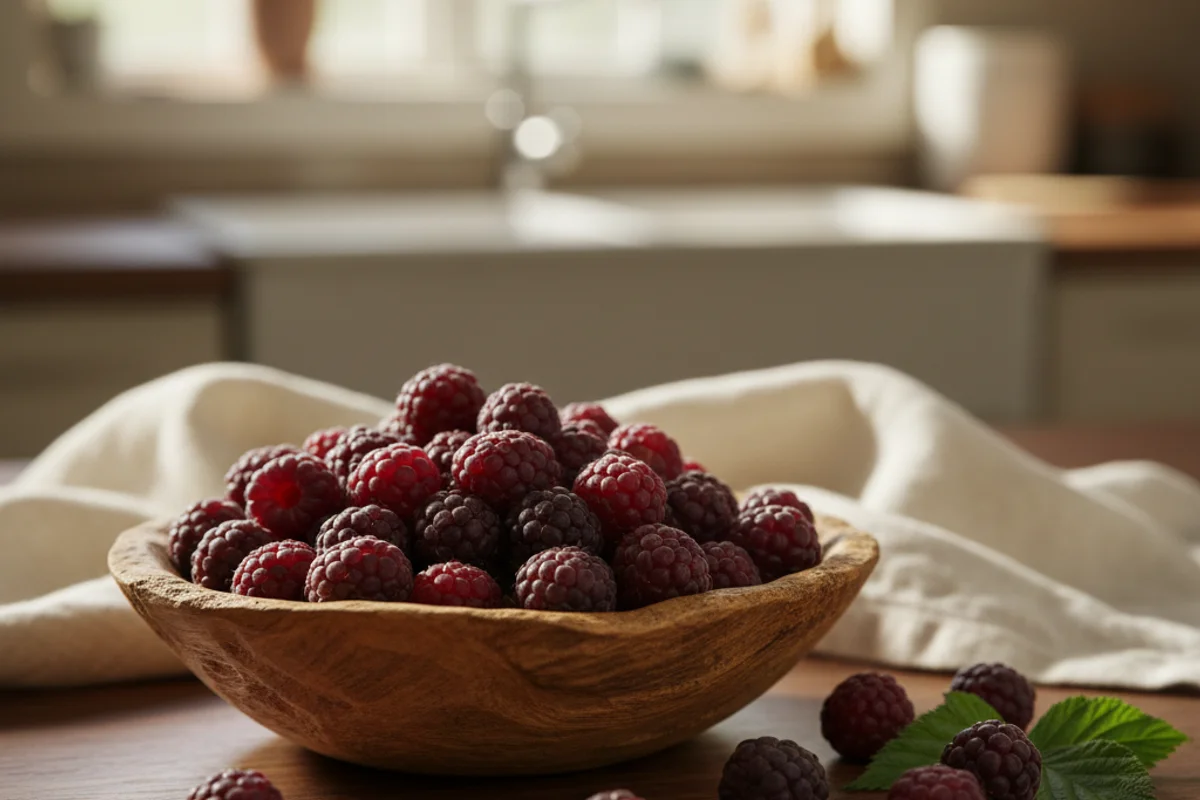
Black raspberries sit in a strange, wonderful middle ground — deeper and earthier than red raspberries, less jammy than blackberries, with a floral top note that disappears fast if you mishandle them. Turn them into wine and you get something surprisingly elegant: dark ruby in the glass, fragrant on the nose, and complex enough to serve with dinner. This recipe makes one gallon and works equally well dry or sweet, depending on your mood at bottling time.
The beginner trap: Squeezing the fruit bag to get more juice — it forces bitter compounds and harsh tannins into your must and muddies the wine’s flavor.
Ingredients
- 3–4 lbs black raspberries, fresh or frozen
- 2¼ lbs granulated white sugar
- 7 pints water
- ½ tsp acid blend (or 1 tsp lemon juice as a substitute)
- ⅛ tsp grape tannin (or 1 plain black tea bag, steeped and cooled)
- ½ tsp pectic enzyme
- 1 tsp yeast nutrient (found at homebrew shops or online)
- 1 Campden tablet, crushed
- 1 packet Lalvin RC-212 wine yeast (or any Burgundy-style wine yeast)
Method
- Wash and destem the berries. Place them in a nylon mesh straining bag, tie it closed, set it in the bottom of your primary fermenter, and crush the berries through the bag with your hands.
- Combine the water and sugar in a pot and bring to a boil, stirring until the sugar fully dissolves. Pour the hot syrup directly over the bagged berries to lock in color and pull out flavor.
- Stir in the acid blend, grape tannin, and yeast nutrient. Let the must cool to around 70°F.
- Once cool, add the crushed Campden tablet. Cover the fermenter tightly with plastic wrap secured with a large rubber band and wait 12 hours.
- After 12 hours, stir in the pectic enzyme. Cover again and wait another 12 hours.
- Add the wine yeast according to the packet instructions. Re-cover the fermenter.
- Stir the must once daily for seven days, keeping it covered between stirs.
- Lift the fruit bag out and let it drip-drain over the fermenter for about an hour. Do not squeeze the bag. Discard the pulp.
- Transfer the liquid to a glass secondary fermenter (carboy) and fit an airlock. Use a dark carboy or wrap the outside with a brown paper bag to protect the color.
- After two months, rack the wine into a clean, sanitized carboy and refit the airlock. Repeat after another two months.
- Wait one more month, then stabilize the wine with a fresh Campden tablet and potassium sorbate. Wait an additional month, then sweeten to taste if desired.
- Wait two weeks to confirm fermentation has not restarted, then bottle in dark glass. Age at least six months before drinking. Serve chilled.
Why this works
Black raspberries are loaded with anthocyanins — the pigment molecules that give them their deep color. Pouring boiling sugar-water over the fruit does two things at once: it cracks cell walls to release more juice, and the heat helps bind those pigments to the liquid so they don’t fade later. The staggered addition of Campden tablet first, then pectic enzyme twelve hours later, is intentional. Sulfites from the Campden tablet can neutralize pectic enzyme if they’re added at the same time, so giving the sulfite a head start to off-gas protects the enzyme’s ability to break down fruit pectin. Less pectin means a clearer, brighter finished wine. The long, slow aging — a full year from start to bottle — lets volatile harsh notes blow off and allows the fruit character to settle into something genuinely refined.
Notes
Frozen black raspberries work just as well as fresh here, and in many cases even better — freezing ruptures the cell walls ahead of time, so you get more juice with less effort. If you can’t find acid blend at a homebrew shop, a small amount of tartaric acid (sold as “cream of tartar” substitute in baking aisles) or fresh lemon juice will work in a pinch. If your finished wine looks hazy, a second dose of pectic enzyme during fermentation usually solves the problem.