BLACK TEA WINE
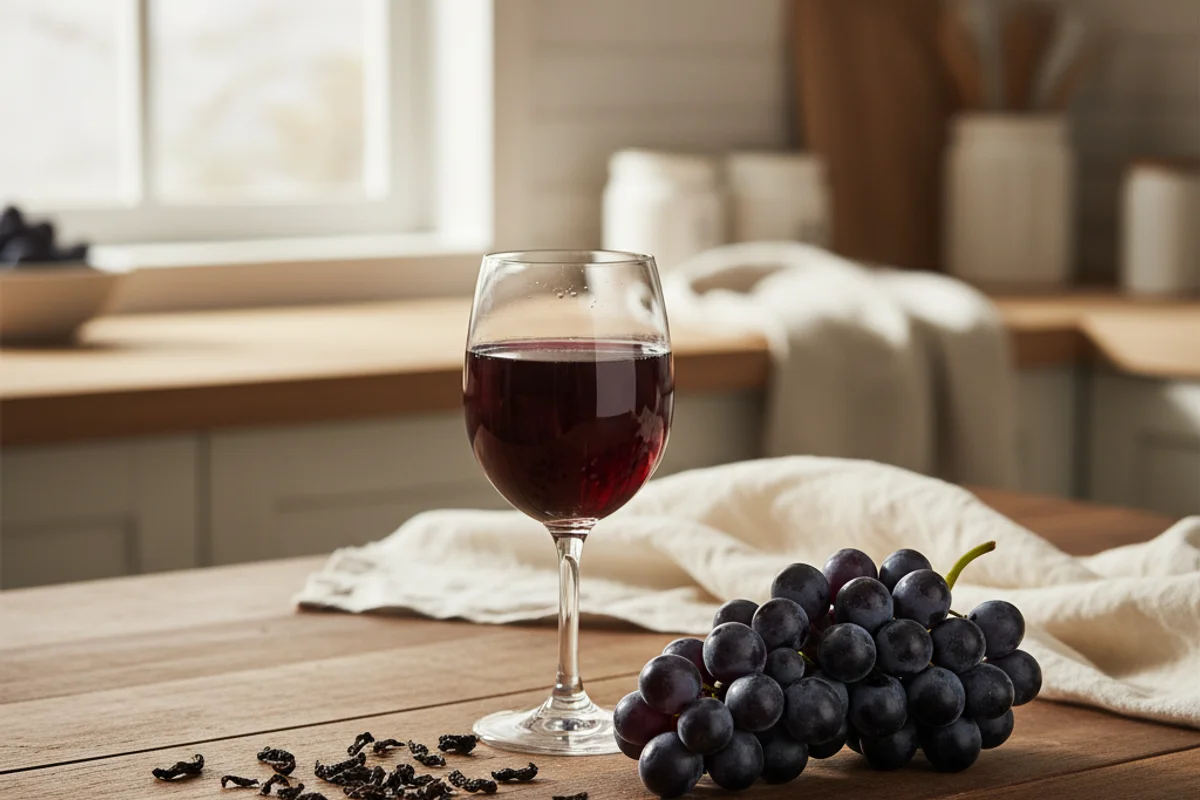
Black tea brings something most fruit wines can’t fake: genuine tannic structure. Those same compounds that give a strong cup of breakfast tea its mouth-drying grip translate directly into a wine with backbone and depth. Add grape concentrate for body and sugar for fuel, and you get a finished wine that’s dry, clean, and surprisingly complex — closer to a light red than anything you’d pour from a kettle. Choose red grape concentrate for a copper-amber result; white concentrate keeps things pale and crisp.
The beginner trap: Steeping the tea too long (or at too high a temperature when adding the yeast) extracts bitter tannins that no amount of aging will fix — brew it hot, but let it cool completely before moving forward.
Ingredients
- 6 pints water
- 4 tablespoons loose-leaf black tea (or 8–10 standard tea bags)
- 2 lbs granulated white sugar
- 1 can (11 oz) frozen grape juice concentrate, red or white (Welch’s works fine)
- 2 tsp citric acid (find it in homebrew shops or online; lemon juice is a weak substitute)
- 1 tsp yeast nutrient
- 1 packet wine yeast (Lalvin EC-1118 or any all-purpose wine yeast)
Method
- Bring the water to a full boil, then pour it over the tea and sugar. Stir until the sugar dissolves completely.
- Let the tea steep and cool to room temperature — this takes a couple of hours, so be patient.
- Strain out the tea leaves (or remove the bags) and pour the liquid into your primary fermenter.
- Add the grape concentrate, citric acid, and yeast nutrient. Stir well to combine everything evenly.
- Sprinkle in the yeast, cover the fermenter loosely, and let it ferment until the specific gravity drops below 1.020.
- Transfer the wine to a secondary fermenter (a glass carboy works great), fit an airlock, and let fermentation finish to dryness.
- Once the wine is clear and fully dry, rack it off the sediment, top up the vessel, and refit the airlock.
- Wait 45 days, then rack again. At this point, stabilize with potassium sorbate and potassium metabisulfite if you plan to back-sweeten.
- Let the wine rest another 3–4 weeks, sweeten to taste if desired, then bottle.
Why this works
Black tea is loaded with polyphenols — specifically tannins and catechins — that do real winemaking work. Tannins bind to proteins and help the wine clarify faster, while also providing that pleasant astringency that keeps a dry wine from tasting flat. Grape concentrate adds fermentable sugar, body, and a small boost of natural acidity and flavor compounds that plain sugar water simply can’t supply. Citric acid brings the pH into a range where your yeast is comfortable and spoilage organisms are not. Together, these ingredients create a fermentation environment that’s stable, efficient, and produces a wine with actual structure rather than just sweetened booze.
Notes
Red grape concentrate will give the wine a warm amber or light rosé color; white concentrate produces a pale straw-gold. Loose-leaf tea gives you more control over strength, but regular grocery-store black tea bags (Lipton, Tetley, or similar) work perfectly — just scale up slightly. If your finished wine tastes harsh or overly astringent after aging, it likely over-extracted; blend in a small amount of finished white wine to soften it.