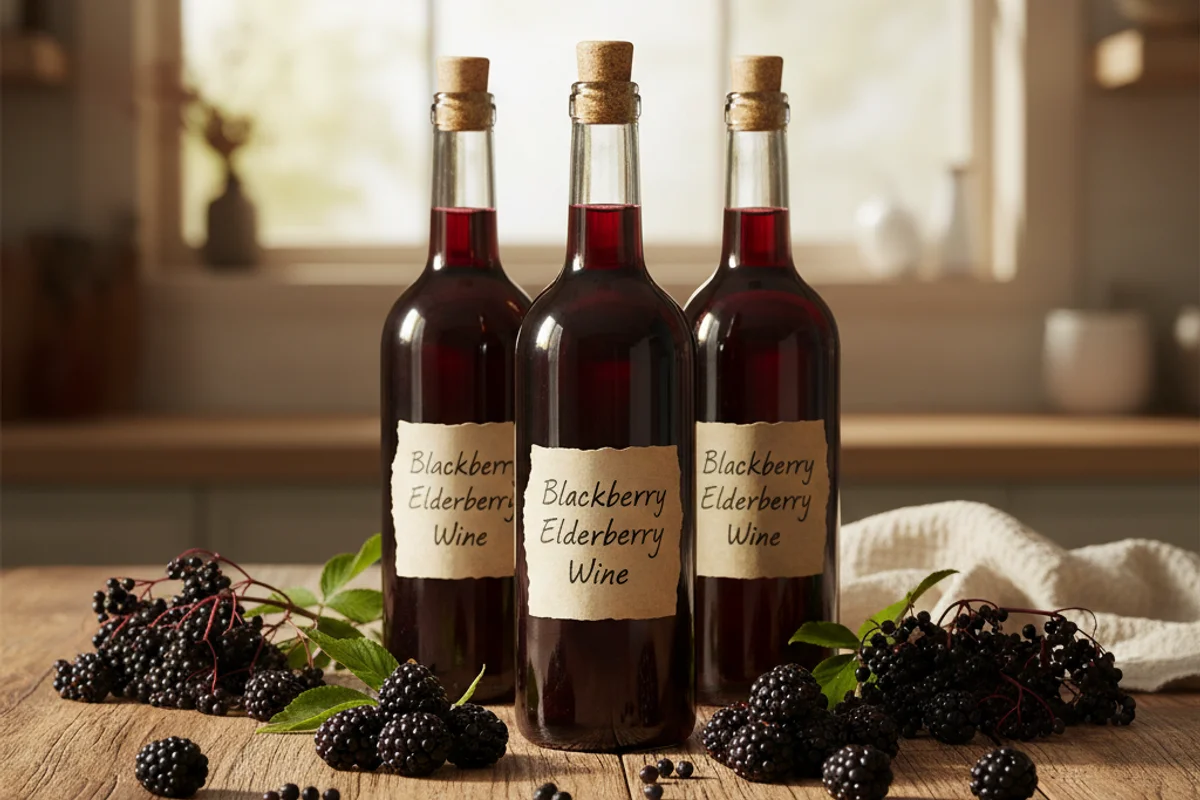
BLACKBERRY-ELDERBERRY WINE (2)
Blackberries bring jammy, sun-warmed fruit to the glass. Dried elderberries bring something older and stranger — a deep, almost inky backbone with floral whispers that fresh fruit rarely delivers. Together they build a red wine with real structure: dark color, layered aroma, and a finish that earns the year of patience you’ll give it. This is a one-gallon recipe that punches well above its batch size.
The beginner trap: Skipping the full four rackings — every two months — leaves haze and off-flavors in the bottle that no amount of aging will fix.
Ingredients
- 4 lb blackberries, fresh or frozen
- 1/4 lb dried elderberries (find these at homebrew shops or online; dried cranberries are not a substitute)
- 2⅓ cups granulated white sugar
- Water to make 1 gallon total
- 1 tsp pectic enzyme (sold at homebrew stores; helps clear the wine)
- ½ tsp acid blend (a tartaric/malic/citric mix; substitute 1 tsp fresh lemon juice if needed)
- 1 tsp yeast nutrient
- 1 packet wine yeast (Lalvin EC-1118 or Red Star Côte des Blancs work well)
Method
- Bring 3 quarts of water to a boil. While that heats, wash and sort the blackberries, place them in a nylon mesh straining bag, tie it closed, and set it in your primary fermenter (a food-grade bucket works fine). Mash the fruit through the bag with clean hands or a potato masher.
- Add the dried elderberries to the boiling water, reduce heat, and simmer for 20 minutes to extract color and flavor.
- Pour the sugar directly into the primary fermenter with the bag of blackberries (untie the bag first so the liquid can flow through). Pour the hot elderberry water through the bag, retie it, and stir until the sugar fully dissolves.
- Cover the fermenter and let everything cool to lukewarm — around 70–75 °F (21–24 °C).
- Stir in the acid blend, pectic enzyme, and yeast nutrient. Re-cover and wait 12 hours before adding yeast.
- Sprinkle or pitch the yeast, re-cover, and squeeze the fruit bag gently twice a day for 7 days to pull out color and flavor.
- After 7 days, lift the bag, squeeze it gently to recover the liquid, and discard the solids. Pour the wine into a 1-gallon glass jug (secondary fermenter) and fit an airlock.
- Once active fermentation slows — usually 5 to 7 days — top the jug up to the shoulder with water or a similar wine to minimize headspace, and reseat the airlock.
- Rack (siphon) the wine into a clean jug every 2 months, topping up each time, for a total of 4 rackings.
- Bottle the finished wine and age at least 6 months before opening; 12 months is better.
Why this works
Dried elderberries are doing heavy lifting here. Unlike fresh elderberries — which need careful handling and can cause stomach upset raw — dried ones are safe to simmer and contribute concentrated tannins, anthocyanin pigments, and aromatic compounds that fresh blackberries alone can’t produce. The simmering step extracts those compounds without boiling off delicate aromatics. Pectic enzyme breaks down the pectin that naturally clouds berry wines, so your finished bottle goes clear without filtration. The staggered addition — pectic enzyme first, yeast 12 hours later — matters because enzyme activity drops sharply once fermentation starts and alcohol builds up.
Notes
Frozen blackberries work beautifully here and are often cheaper year-round; thaw them fully before mashing. If you can’t find acid blend, a teaspoon of fresh lemon juice is a workable stand-in, though the balance won’t be as precise. This wine is deeply tannic young — resist the urge to open it early.