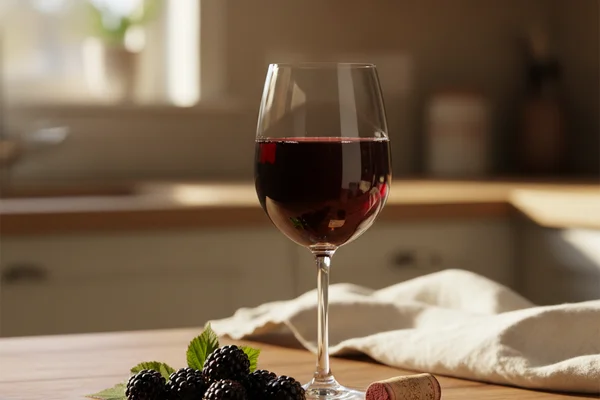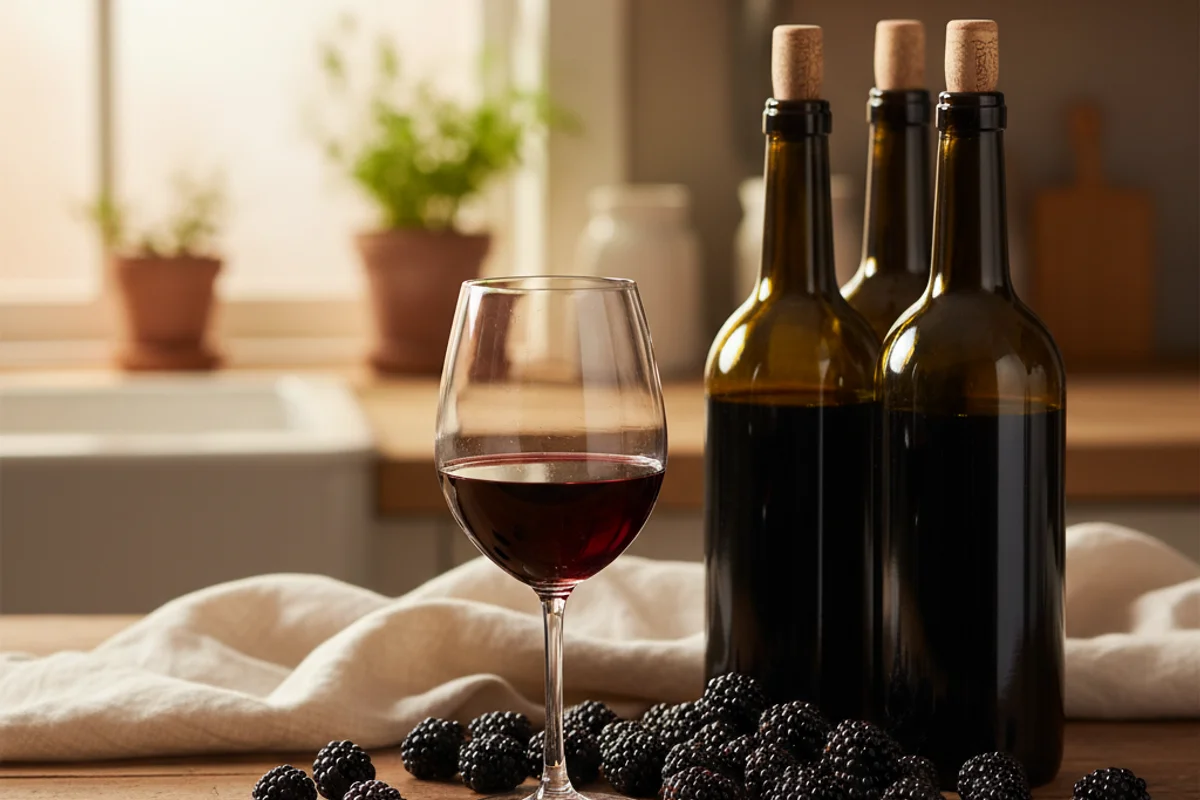
BLACKBERRY WINE (4) [Light Bodied Sweet]
There’s a reason blackberry wine has been made in home kitchens for centuries — the fruit is loaded with natural sugar, deep color, and enough tannin to give a light-bodied wine real backbone without any fuss. This version leans sweet and bright, letting the berry’s jammy, slightly tart character do the heavy lifting. It’s a slow build: five months of patient waiting before you even think about bottling, and another six to twelve before the wine really finds itself. Good things, and all that.
The beginner trap: Skipping the overnight steep means you’ll leave a lot of flavor and color locked inside the fruit and end up with a thin, pale wine.
Ingredients
- 3 lb. blackberries, fresh or frozen
- 2¾ lb. granulated sugar
- 7 pints (3.5 quarts) water
- 1 packet wine yeast (Lalvin 71B or EC-1118 work well)
- 1 tsp. yeast nutrient
Method
- Wash fresh blackberries thoroughly in a colander; if using frozen, thaw completely first. Crush the berries in a large bowl, then transfer them to your primary fermentation vessel.
- Add the water to the crushed fruit and stir well. Cover the vessel loosely and let the mixture steep overnight at room temperature.
- Strain the liquid through a fine-mesh nylon bag or sieve directly onto the sugar. Discard the spent pulp.
- Stir the juice and sugar together until the sugar is fully dissolved.
- Add the yeast and yeast nutrient, stir once more, and cover the vessel loosely. Move it to a warm spot — 70–75°F — and stir the must daily for one week.
- After a week, transfer the wine to a secondary fermentation vessel (a dark glass carboy, or a clear one wrapped in brown paper or a dark cloth). Top up with water to the shoulder of the vessel and fit an airlock.
- Move the carboy to a cool, dark place — 60–65°F — and leave it undisturbed for three months.
- Rack the wine off the sediment into a clean vessel, refit the airlock, and let it rest for another two months.
- Rack once more, then bottle in dark glass. Age at least six months before tasting; one full year delivers the best result.
Why this works
The overnight steep is essentially a cold maceration — water breaks down the berry cells and pulls out anthocyanins (the pigments that give blackberries their deep purple-red color), along with flavor compounds and natural acids. Straining onto the sugar rather than adding sugar later means the sugar dissolves faster because the warm liquid acts as a solvent. Fermentation in two stages — warm primary, cool secondary — is intentional: yeast is active and hungry during the first week, so warmth speeds things up. Once the big fermentation slows, cooler temperatures encourage the yeast to work cleanly and drop sediment more efficiently, which means a clearer, better-tasting finished wine.
Notes
Frozen blackberries are an excellent choice here — freezing ruptures cell walls and actually improves juice yield, so you may get even more color and flavor than with fresh fruit. If you can’t find yeast nutrient at a homebrew shop, look for it online; Fermaid-O is a reliable grocery-adjacent brand. Wrapping a clear carboy tightly in a brown paper bag is a perfectly valid substitute for dark glass — light degrades color and flavor over a long secondary fermentation, so block it out by whatever means you have.