Blackberry Wine
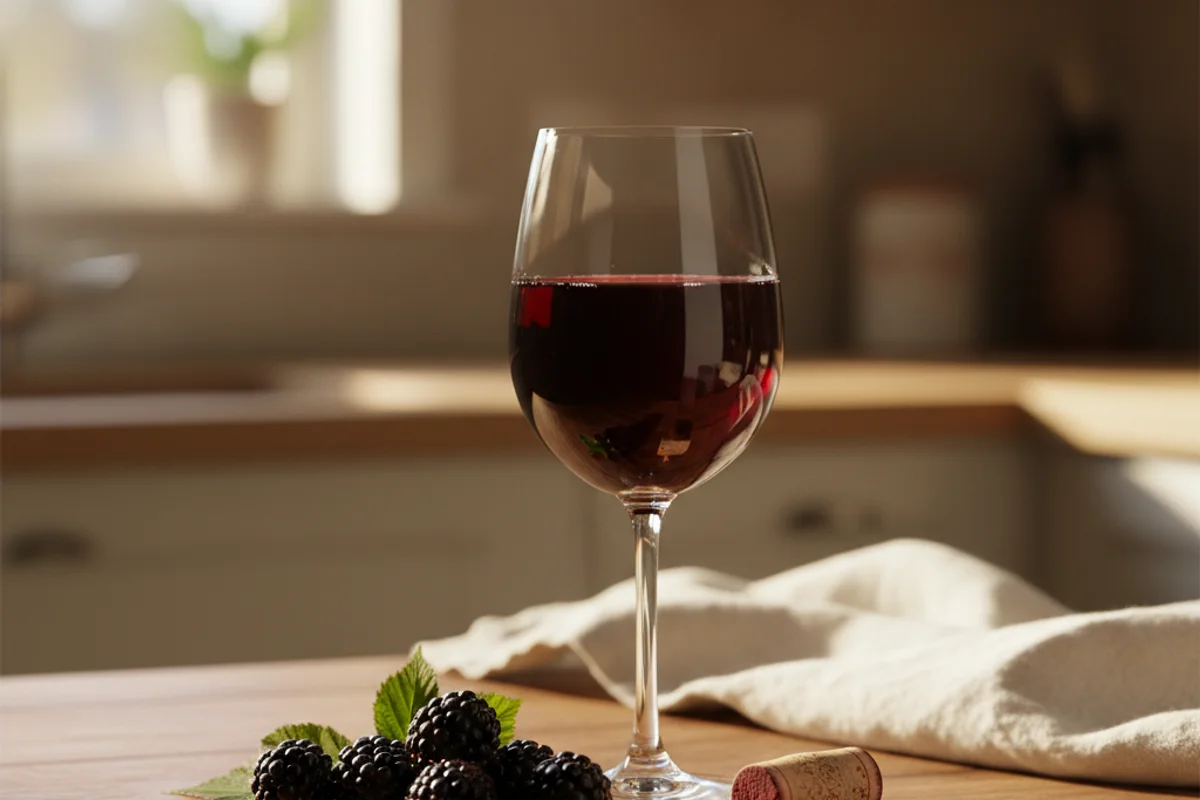
Blackberries are one of those fruits that seem almost angry at being fruit. They stain everything, fight back with thorns, and pack enough tannin, acid, and dark berry flavor to make a wine that can genuinely compete with a rustic red. The juice runs deep purple-black and smells like summer at the end of a dirt road. Done right, blackberry wine has body, grip, and a finish that lingers. It’s one of the best reasons to make fruit wine at all.
The beginner trap: New winemakers underestimate how much tannin blackberries bring on their own, then add too much grape tannin or oak and end up with something harsh and drying instead of structured and smooth.
Ingredients
- 3 lbs (1.36 kg) blackberries, fresh or frozen
- 1¾ lbs (795 g) granulated white sugar
- 1½ tsp acid blend (or juice of 2 lemons as a substitute)
- ½ tsp pectic enzyme
- ¼ tsp potassium metabisulfite (or 1 Campden tablet, crushed)
- ½ tsp yeast nutrient
- ¼ tsp grape tannin (or 1 cup strong-brewed black tea, cooled)
- 1 packet wine yeast (Lalvin 71B or EC-1118 work well)
- Water to make 1 gallon (3.8 L) total volume
Method
- Crush the blackberries in a sanitized fermentation bucket, then stir in the sugar, acid blend, yeast nutrient, grape tannin, and potassium metabisulfite. Add enough water to reach 1 gallon total.
- Cover loosely and let the must sit for 24 hours. This gives the sulfite time to do its job before yeast goes in.
- Stir in the pectic enzyme and wait another 12 hours. Pectic enzyme needs to work before fermentation heats up or it loses effectiveness.
- Sprinkle the yeast over the surface of the must and stir gently to combine. Cover with a cloth or loose lid.
- Stir the must once or twice daily for 5–7 days, pressing the berry pulp down each time. Check for active bubbling as a sign fermentation is running.
- Strain the must through a fine mesh bag or cheesecloth into a sanitized 1-gallon glass jug, pressing the pulp firmly to extract all the juice.
- Fit the jug with an airlock and move it somewhere with a stable temperature around 65–75°F (18–24°C). Let it ferment until bubbling slows significantly, usually 3–4 weeks.
- Rack the wine into a clean jug, leaving the sediment behind. Top up with a small amount of water or similar wine to minimize headspace.
- Rack again after another 4–6 weeks, then again if more sediment forms. The wine is ready to bottle once it runs clear and fermentation is fully done.
- Bottle in clean, sanitized bottles and wait at least 6 months before opening — a full year is better and the wine will reward your patience.
Why this works
Blackberries are naturally high in anthocyanins — the pigment molecules responsible for that deep purple-red color. Those same compounds are also antioxidants, which means they help protect your wine during aging. The fruit also carries malic and citric acids, giving it structure, but the acid level can vary widely by variety and ripeness. That’s why you measure and adjust rather than assume. Pectic enzyme is non-negotiable here: blackberries are loaded with pectin, a natural gelling agent that will leave your finished wine looking like cloudy purple syrup if you skip it. The enzyme breaks pectin chains apart before fermentation locks everything in. Yeast strain choice matters too — 71B metabolizes some malic acid, softening the wine slightly, while EC-1118 pushes fermentation hard and dry, giving you a cleaner but sharper base.
Notes
Frozen blackberries work extremely well here — freezing ruptures cell walls and actually improves juice extraction. Thaw them completely before crushing. If you can’t find acid blend, the lemon juice substitute works but adds a slight citrus note; taste as you go. If your finished wine tastes flat, a pinch more acid blend after fermentation (added to taste) can bring it back into focus.