BLACKHAWK BERRY WINE
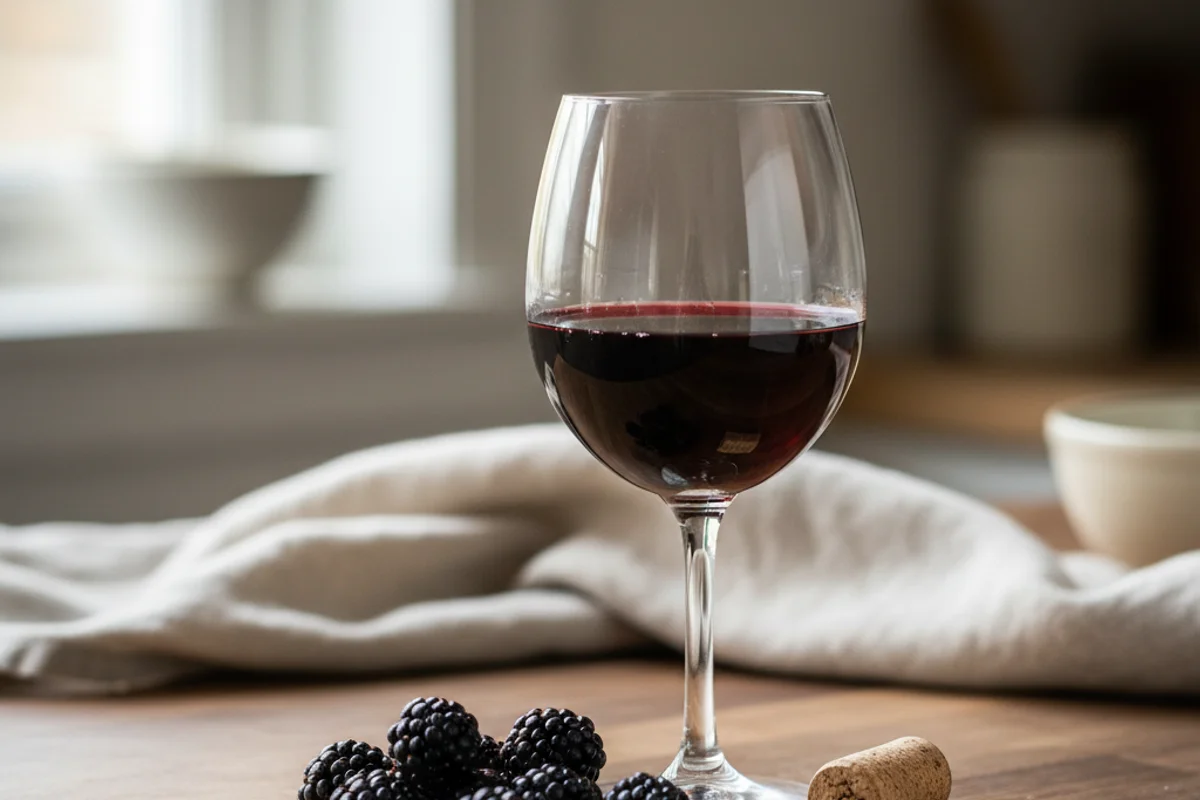
Blackhawk berries are a raspberry variety that punches well above its grocery-store profile — deep red, boldly aromatic, with a tartness that softens beautifully after a year in the bottle. What starts as an almost aggressively fruity must transforms into something genuinely elegant: a medium-bodied red with floral top notes and a long, jammy finish. This is a slow-burn recipe. The waiting is annoying. The payoff is not.
The beginner trap: Rushing the racking schedule — skipping or combining the three racking stages leaves your wine cloudy and harsh instead of clear and smooth.
Ingredients
- 4 lb. Blackhawk berries (a raspberry variety; standard red raspberries work well as a substitute — fresh or frozen)
- 2½ lb. granulated sugar
- 7 pints (3.5 quarts) water
- 1 Campden tablet, crushed
- ½ tsp. pectic enzyme
- ½ tsp. acid blend (or 1½ tsp. lemon juice as a rough substitute)
- 1 tsp. yeast nutrient
- 1 packet wine yeast (Lalvin 71B or EC-1118 work well)
Method
- Wash the berries thoroughly and load them into a nylon straining bag (a mesh laundry bag works in a pinch). Mash and squeeze the fruit over your primary fermenter until you’ve extracted as much juice as possible.
- Tie the bag closed and drop it into the primary fermenter with the juice. Add the sugar, water, crushed Campden tablet, acid blend, and pectic enzyme. Stir until the sugar fully dissolves.
- Cover the fermenter loosely and let it sit for 24 hours. This rest gives the Campden tablet time to neutralize wild yeasts and bacteria before your chosen yeast takes over.
- After 24 hours, sprinkle in the wine yeast and yeast nutrient. Cover and let ferment for 5 days, stirring once daily and pressing the bag gently each time to keep extraction going.
- On day 6, lift out the straining bag and press it firmly to squeeze out every last drop. Discard the solids.
- Siphon the liquid off its sediment into a secondary fermenter made of dark glass — or wrap a clear glass carboy in brown paper or a dark cloth. Top up with water to the shoulder of the vessel and fit an airlock.
- Move the carboy to a cool, dark spot (60–65°F) and leave it for one month.
- Rack (siphon) the wine off its sediment into a clean vessel. Repeat this racking two months later, then again three weeks after that.
- After the final racking, bottle in dark glass and store somewhere cool. Wait at least one year before opening.
Why this works
Three things are doing the heavy lifting here. First, the Campden tablet releases sulfur dioxide, which knocks out wild microbes and oxidation before you pitch your yeast — giving your chosen strain a clean runway. Second, pectic enzyme breaks down pectin in the cell walls of the fruit. Without it, raspberry pectin forms a stubborn haze that no amount of settling will fix. Third, the three-stage racking schedule isn’t busywork. Each time you move the wine off its lees (dead yeast and fruit solids), you’re removing compounds that, left in contact with the wine, produce off-flavors. Patience here is literally an ingredient.
Notes
Frozen raspberries are an excellent substitute for fresh Blackhawk berries — freezing ruptures cell walls and actually improves juice extraction. Acid blend is sold at homebrew shops; if you can’t find it, fresh lemon juice is a workable stand-in, though less precise. If your finished wine is still hazy after the final racking, a fining agent like bentonite (available at homebrew stores) will clear it up within a week.