BLUEBERRY WINE (1) [Full Bodied]
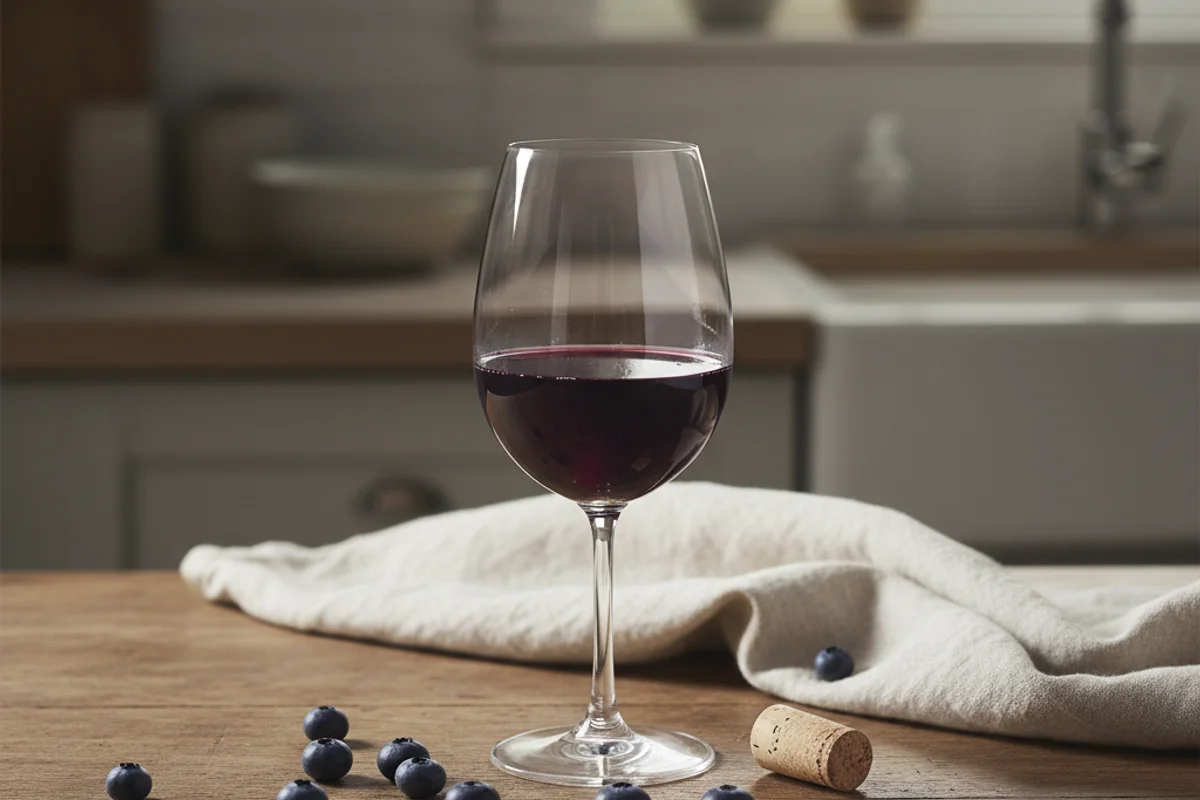
Blueberries are stubborn little flavor bombs. Crush them open and you get deep purple juice loaded with tannins, anthocyanins, and enough natural acidity to make your tongue stand at attention. This recipe leans into that intensity, using raisins to add body and a subtle dried-fruit complexity that rounds out the sharp berry edges. The result is a full-bodied wine with real structure — dark, rich, and worth the wait. Give it a full year and it will reward your patience with something that tastes like it cost three times what it did.
The beginner trap: Rushing the bottle — blueberry wine tastes harsh and unbalanced at six months, so pull the cork before a full year and you’ll swear the recipe is broken.
Ingredients
- 2 lb. blueberries, fresh or frozen
- 1 lb. raisins (plain, not oil-coated — check the label)
- 2 lb. granulated white sugar
- 1 gallon water
- 1 Campden tablet, crushed
- ½ tsp. pectic enzyme
- 1½ tsp. acid blend (or substitute 2 tsp. fresh lemon juice per tsp. as a rough stand-in)
- ½ tsp. yeast energizer (or substitute ½ tsp. bread yeast nutrients in a pinch)
- 1 packet wine yeast (Lalvin 71B or EC-1118 both work well)
Method
- Bring the water to a full boil, then pull it off the heat and let it rest while you prep the fruit.
- Wash the blueberries, then crush them thoroughly — a potato masher or clean hands both work fine.
- Combine the crushed blueberries, raisins, sugar, Campden tablet, acid blend, pectic enzyme, and yeast energizer in your primary fermentation vessel.
- Pour the hot water over everything and stir until the sugar fully dissolves.
- Cover the vessel loosely with a clean cloth and let it cool to 70–75°F — this takes a few hours; don’t rush it.
- Once cooled, sprinkle in the wine yeast and stir gently to incorporate.
- Stir the must once daily for 5–6 days, until the specific gravity drops to around 1.040.
- Strain out the fruit pulp through a mesh bag or cheesecloth and press it firmly to extract every drop of juice.
- Siphon the liquid into a 1-gallon secondary fermentation vessel and fit it with an airlock.
- Rack the wine into a clean vessel after three weeks to separate it from the sediment.
- Rack again after three months, then wait until the wine is fully clear and stable before racking one final time into bottles.
- Age for at least one full year before opening — longer is better.
Why this works
Blueberries are high in pectin, which is the same stuff that makes jam gel. Left alone, pectin creates a permanent haze in your finished wine that no amount of racking will fix. The pectic enzyme breaks those pectin chains apart early in fermentation, so clarity is achievable later. The raisins pull double duty: they add fermentable sugars and also contribute tannins and body-building compounds called glycerols. Together, those elements give the wine a weight and texture that straight blueberry juice alone can’t achieve. The long aging time matters too — anthocyanins (the pigments that make blueberries blue-red) slowly bind with tannins to form more stable color compounds and softer flavors.
Notes
Frozen blueberries are actually a great choice here — freezing ruptures the cell walls, so you get better juice extraction without as much crushing effort. Avoid raisins coated in vegetable oil (common in some store brands), as the oil can interfere with fermentation and head retention. If you can’t find acid blend at a homebrew shop, it’s available online; lemon juice is a workable substitute but will shift the flavor profile slightly toward citrus.