BLUEBERRY WINE (2) [Full Bodied Semi Sec]
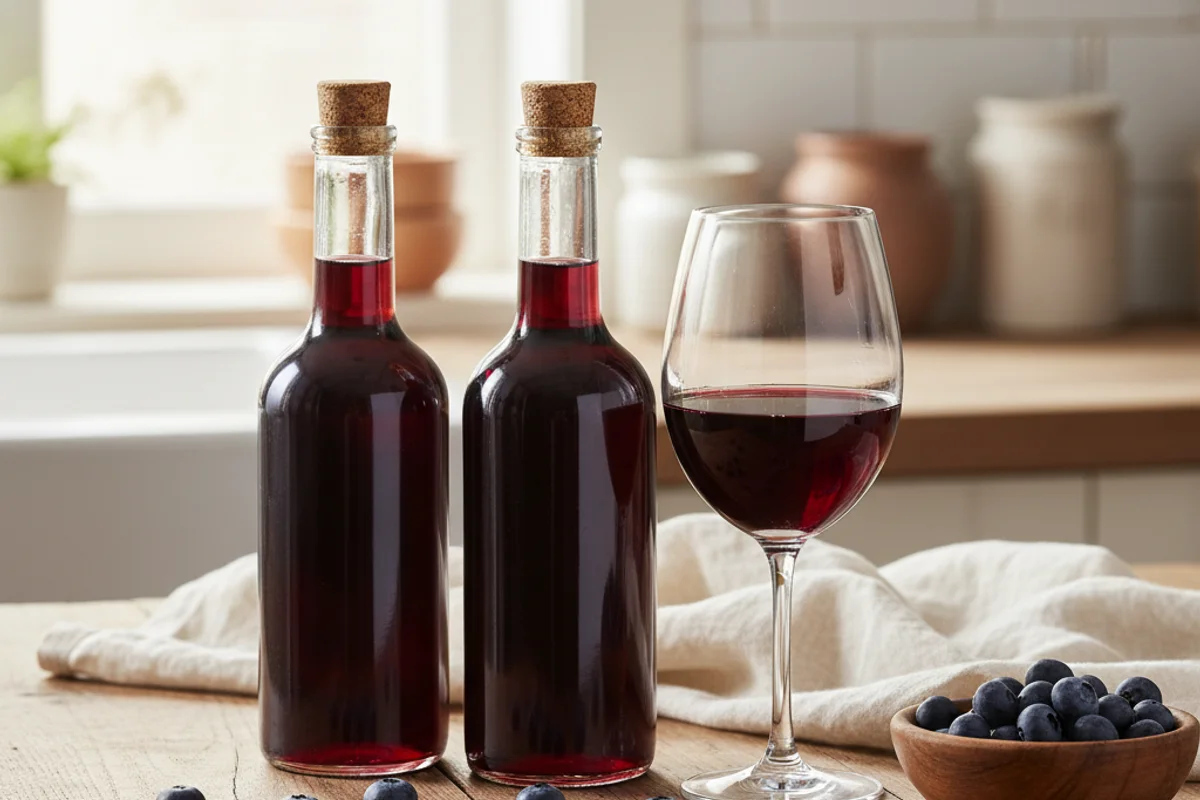
Blueberries are loaded with deep color, bold tannins, and enough anthocyanins to stain everything you own — but they’re notoriously short on the kind of grape-like body that makes a wine feel complete in your mouth. This recipe bridges that gap with a small hit of red grape concentrate added at the very end, rounding out the finish without burying the fruit. What you get is a semi-dry wine with dark berry aromatics, a satisfying weight on the palate, and just enough sweetness to keep it interesting. Give it a full year in the bottle and it transforms from promising to genuinely impressive.
The beginner trap: Adding the red grape concentrate too early — before the wine is fully clear and stable — can restart fermentation and throw off your final sweetness level.
Ingredients
- 2 lb. blueberries, fresh or frozen
- 1¾ lb. granulated sugar
- 7 pt. water (about 3.5 quarts)
- ½ pt. red grape concentrate (about 1 cup; found at homebrew shops or online)
- 1½ tsp. acid blend (tartaric/malic mix; found at homebrew shops)
- ½ tsp. pectic enzyme (Pectinase; found at homebrew shops)
- ½ tsp. yeast energizer (diammonium phosphate works; found at homebrew shops)
- ½ tsp. wine stabilizer (potassium sorbate; found at homebrew shops)
- 1 Campden tablet, crushed (potassium metabisulfite; found at homebrew shops)
- 1 packet wine yeast (Lalvin 71B or EC-1118 work well)
Method
- Rinse the blueberries, then crush them inside a nylon mesh straining bag and lower the bag into your primary fermentation bucket, letting the juice drain through.
- Add the water, sugar, acid blend, pectic enzyme, yeast energizer, and crushed Campden tablet. Stir thoroughly until the sugar fully dissolves.
- Cover the bucket loosely and let it sit undisturbed for 24 hours so the Campden tablet can sanitize the must.
- Sprinkle in the wine yeast, re-cover, and stir the liquid daily while squeezing the bag gently to pull color and flavor from the fruit pulp.
- Monitor with a hydrometer; when the specific gravity drops to 1.030 (roughly 5 days), lift and press the bag to extract remaining juice, then discard the pulp.
- Siphon the liquid off its sediment into a glass carboy and fit an airlock.
- Rack into a clean carboy after 3 weeks, then rack again 2 months after that.
- Once the wine is completely clear and stable, rack one final time, stir in the wine stabilizer and red grape concentrate, then bottle.
- Store the bottles for at least one year before drinking.
Why this works
Blueberries are high in pectin, which is why pectic enzyme is non-negotiable here — without it, you’ll end up with a hazy wine that refuses to clear no matter how long you wait. The Campden tablet knocks out wild yeast and bacteria at the start, giving your chosen yeast a clean runway. Red grape concentrate is held back until the very end for a good reason: it contains residual sugars. If you add it while active yeast are still present, they’ll ferment those sugars dry and you’ll lose the semi-sweet character entirely. Adding it after stabilization with potassium sorbate prevents the yeast from reactivating, locking in that soft, rounded finish.
Notes
Frozen blueberries actually work better than fresh here — the freeze-thaw cycle ruptures cell walls, releasing more juice and color with less crushing effort. If you can’t find acid blend at a local homebrew shop, order it online; there’s no reliable grocery-store substitute. Potassium sorbate (wine stabilizer) is sometimes sold as “wine conditioner” when pre-mixed with sugar syrup — use plain potassium sorbate for this recipe to keep your sweetness level under control.