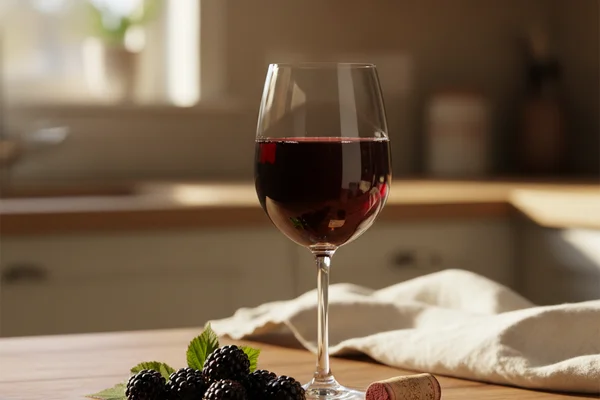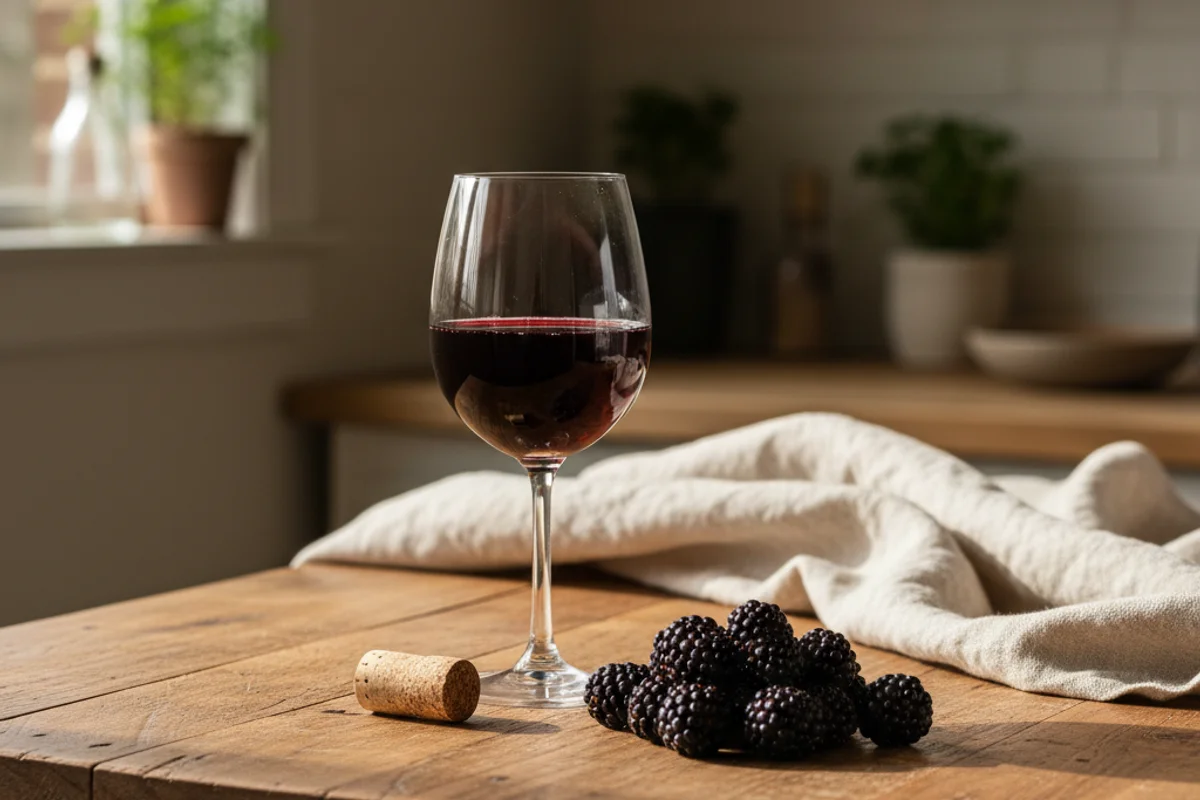
BRAZOS BLACKBERRY WINE [Heavy Bodied Dry]
Brazos blackberries are a Texas thorned variety known for growing fat, deeply pigmented, and almost aggressively flavorful along creek bottoms and fence lines. That intensity translates directly into the glass — this wine finishes dark, tannic, and dry, with the kind of fruit depth that takes a full year to fully settle into itself. Think less “blackberry jam” and more “blackberry forest floor after rain.” Patience is the whole game here. The fruit does the heavy lifting; your job is mostly to stay out of the way and give it time.
The beginner trap: Skipping or shortening the aging phase — this wine tastes harsh and unfinished at six months and genuinely good only closer to twelve.
Ingredients
- 5–6 lb. Brazos blackberries, fresh or frozen (any ripe, deeply colored blackberry variety works)
- 2½ lb. granulated white sugar
- 7 pints (3.5 quarts) water
- ½ tsp. pectic enzyme (found at homebrew shops or online)
- 1 packet wine yeast (Red Star Montrachet or Lalvin 71B are solid choices)
- 1 tsp. yeast nutrient (found at homebrew shops or online)
Method
- Select only fully ripe, deep black berries — slightly past-peak fruit is fine and actually adds body. Rinse them well in a colander, then crush them by hand or with a potato masher in a large bowl or food-grade bucket.
- Transfer the crushed fruit to your primary fermentation vessel (a food-grade plastic bucket works perfectly). Pour 7 pints of boiling water over the crushed fruit.
- Cover the vessel loosely with a clean cloth and let the fruit steep for two full days at room temperature.
- Strain the liquid through a fine mesh strainer or nylon bag into a clean container, pressing the fruit pulp firmly to extract as much juice as possible. Discard the solids.
- Pour the strained juice over the sugar and stir until the sugar is fully dissolved.
- Stir in the pectic enzyme, cover the vessel, and let it rest for 24 hours.
- Add the wine yeast and yeast nutrient, stir well, then cover loosely and leave to ferment for 5–6 days, stirring once each day.
- Transfer the wine into a dark glass secondary fermentation vessel (a one-gallon jug or carboy), filling it to the shoulder. If your vessel is clear glass, wrap it in a brown paper bag or dark cloth to block light. Fit an airlock.
- Move the vessel to a cool, dark location (ideally 60–65°F) and leave it undisturbed for three months.
- Rack the wine — siphon it off the sediment into a clean vessel — then let it rest another two months.
- Rack one final time, then bottle in dark glass. Store the bottles in a dark place for at least six months before tasting, and aim for a full year before calling it ready.
Why this works
Boiling water does two things at once: it extracts color and flavor compounds from the fruit cell walls faster than cold water would, and it kills off wild yeast and bacteria that could compete with your chosen wine yeast. The two-day steep gives those deep pigment molecules — called anthocyanins — time to fully leach out, which is what makes this wine so dark and rich. Pectic enzyme breaks down pectin, a natural thickener in fruit, so your finished wine clears properly instead of staying hazy. The long aging period allows harsh tannins and raw alcohol to mellow and integrate, turning a rough young wine into something genuinely smooth and complex.
Notes
Frozen blackberries work very well here — freezing ruptures the cell walls, which actually makes extraction easier and faster. Any ripe blackberry variety from the grocery store or farmers market is a perfectly good substitute for the harder-to-find Brazos variety. If pectic enzyme isn’t available locally, it’s inexpensive and easy to find through online homebrew retailers like MoreBeer or Amazon.