BROOM WINE (3) [Dry]
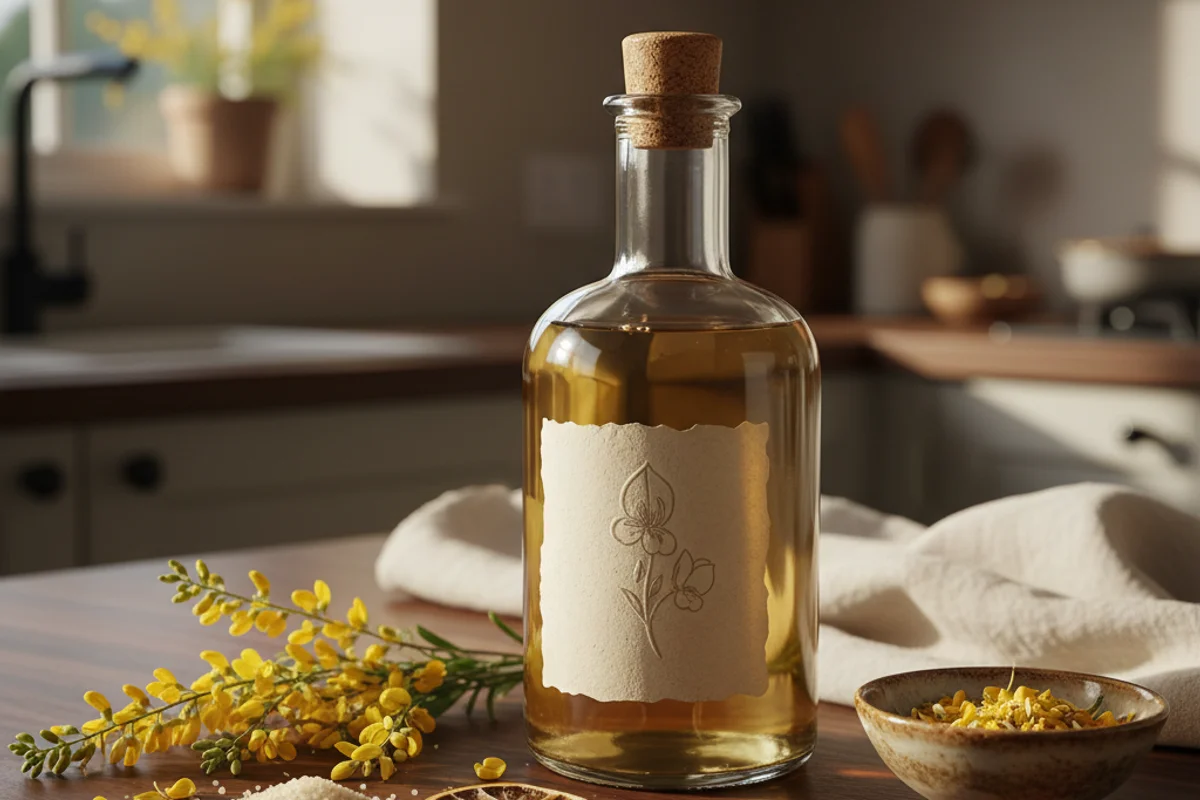
Scotch broom flowers pack a surprising punch for something most people walk past without a second glance. This dry flower wine leans golden and delicate, with a faint herbal edge softened by citrus brightness from fresh orange and lemon. Think of it as a countryside cousin to elderflower wine — less floral perfume, more meadow-in-the-wind. It takes patience: six months minimum before the flavors knit together, but the result is a genuinely interesting table wine that starts a lot of good conversations.
The beginner trap: Adding the flowers while the water is still hot will cook off their delicate aromatic compounds and leave you with a flat, dull wine — wait until the liquid cools to 70°F before anything living (or floral) goes in.
Ingredients
- 1 gallon broom flower heads, freshly picked and stripped from stems
- 2 lb. granulated sugar
- 2 oranges, peel (no white pith) and juice
- 1 lemon, peel (no white pith) and juice
- 1 tsp. yeast nutrient
- 1 gallon water (used in two stages)
- 1 packet wine yeast (Lalvin EC-1118 or any general-purpose wine yeast)
Method
- Bring 6 pints of water to a boil, add the sugar, and stir until fully dissolved. Remove from heat.
- Place the orange and lemon peel in a large, clean crock or food-grade bucket, then pour the hot sugar water over the peel.
- Let the liquid cool completely to 70°F — do not rush this step.
- Once cooled, add the broom flower heads, the orange and lemon juice, yeast nutrient, and yeast.
- Cover the vessel tightly with a cloth or lid and keep it in a warm spot for seven days, stirring once each day.
- Strain the liquid through a fine mesh strainer or cheesecloth into a clean 1-gallon fermentation jug, topping up with water to just below the neck.
- Fit an airlock and leave the jug in a warm place for three months.
- Rack the wine off the sediment (lees) into a fresh clean jar using a siphon, then leave it undisturbed for another three months.
- Rack one final time, then bottle. Wait until the six-month mark before opening your first bottle.
Why this works
Sugar dissolved in hot water creates a stable, ready-to-ferment base — but heat is the enemy of volatile aromatic compounds in the flower heads. Cooling to 70°F first protects those compounds while still giving the yeast a hospitable environment to get started. The citrus peel adds pectin and tannin structure that a pure flower wine would otherwise lack, while the juice brings acid balance, keeping fermentation lively and the finished wine crisp rather than flabby. The long secondary aging period lets harsh fusel alcohols mellow and allows esters — the fruity, floral aroma molecules — to fully develop.
Notes
Scotch broom (Cytisus scoparius) is the plant used here — confirm your identification before harvesting, as lookalikes exist. If you can’t forage broom flowers, this method works reasonably well with other edible dry flowers such as dandelion or gorse. Dried citrus peel from the spice aisle can substitute for fresh peel in a pinch, but fresh juice is worth using.