ELDERFLOWER WINE
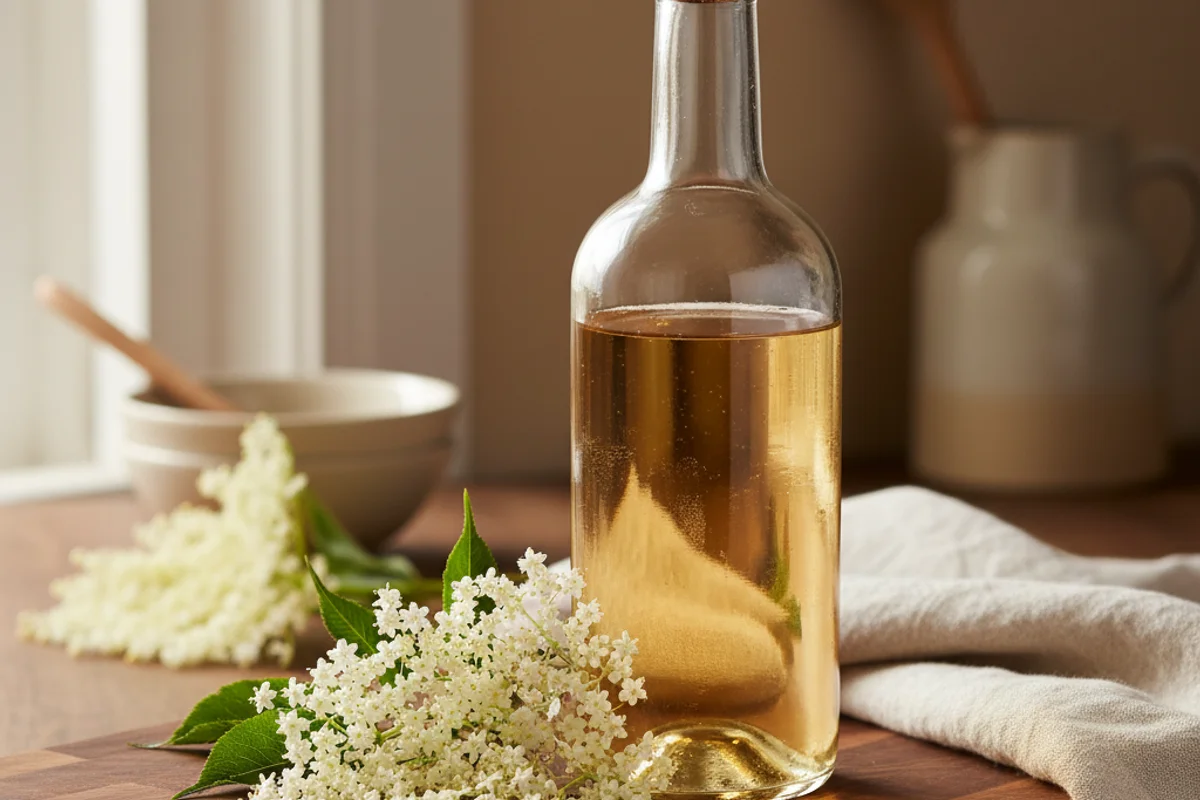
Elderflower wine sits in a category all its own. The blossoms of the elder shrub carry a heady, almost-honeyed scent with a faint muscat quality — somewhere between a floral perfume and a dry white wine. Pick them on a warm morning when the tiny cream-colored clusters are fully open, and you have maybe a week before that magic fades. What you’re really doing here is capturing a smell in a bottle, then waiting patiently while fermentation turns it into something worth drinking.
The beginner trap: Using too many flowers — more blossoms means more of the bitter, green compounds from the stems, and the result is a wine that smells great but tastes like a florist’s trash can.
Ingredients
Recipe 1 — Classic Elderflower
- 1½ pints fresh elderflowers, stripped from stems
- 2 lbs granulated white sugar
- 7 pints water
- 1½ tsp acid blend (or 2 tsp lemon juice as a substitute)
- 1 Campden tablet, crushed
- 1 tsp yeast nutrient
- 1 packet wine yeast (Lalvin 71B or EC-1118 work well)
Recipe 2 — Elderflower with Grape Body
- 1 pint fresh elderflowers, stripped from stems
- 12 oz can frozen white grape juice concentrate, thawed
- 2 lbs granulated white sugar
- 6½ pints water
- 1½ tsp acid blend (or 2 tsp lemon juice)
- 1 Campden tablet, crushed
- 1 tsp yeast nutrient
- 1 packet wine yeast
Method
- Bring the water to a full boil. While it heats, pull the flower clusters from their green stems — stems add bitterness, so be thorough.
- Rinse the flowers gently in cool water to remove any insects or dust, then place them in your primary fermenter along with the sugar (and grape concentrate if making Recipe 2).
- Pour the boiling water over everything and stir until the sugar dissolves completely. Cover the fermenter with a clean cloth and let it cool to room temperature.
- Once cool, stir in the acid blend, crushed Campden tablet, and yeast nutrient. Re-cover and leave it alone for 24 hours.
- Sprinkle in the yeast, stir gently, and cover again. Ferment for six days at room temperature, stirring once daily.
- Strain out the flowers through a fine mesh strainer or cheesecloth, then transfer the liquid to a clean secondary fermenter (a 1-gallon glass jug works great) and fit an airlock.
- When the specific gravity drops to 1.005, rack the wine off the sediment into a clean vessel, top it up to minimize headspace, and refit the airlock.
- After three more months, add a stabilizer (½ tsp potassium sorbate plus a fresh Campden tablet), sweeten to taste if desired, wait ten days, then rack into bottles.
- Age at least six months before opening — this wine needs time to settle into itself.
Why this works
Elderflowers owe their signature scent to a group of aroma compounds called monoterpenes — specifically linalool and others in that family. These are the same compounds that give muscat grapes their floral character. Hot water pulls them out of the blossoms quickly, which is why the pour-over method works here instead of a cold steep. The 24-hour Campden rest knocks out wild yeast and bacteria without cooking off those delicate aromatics. Fermentation then locks the volatile compounds into the finished wine, where they become more stable over time — which is exactly why six months of bottle aging transforms a sharp young wine into something genuinely elegant.
Notes
Fresh elderflowers are the real deal here, but dried elderflowers (available online or at homebrew shops) can substitute at about ½ cup dried per 1½ pints fresh — just watch the quantity carefully, as dried flowers are more concentrated. If you can’t find acid blend at a local homebrew store, fresh lemon juice works in a pinch. Recipe 2 produces a rounder, more approachable wine for people who find the straight floral version too austere — it’s a good starting point if you’re making this for guests.