CALAMONDIN WINE
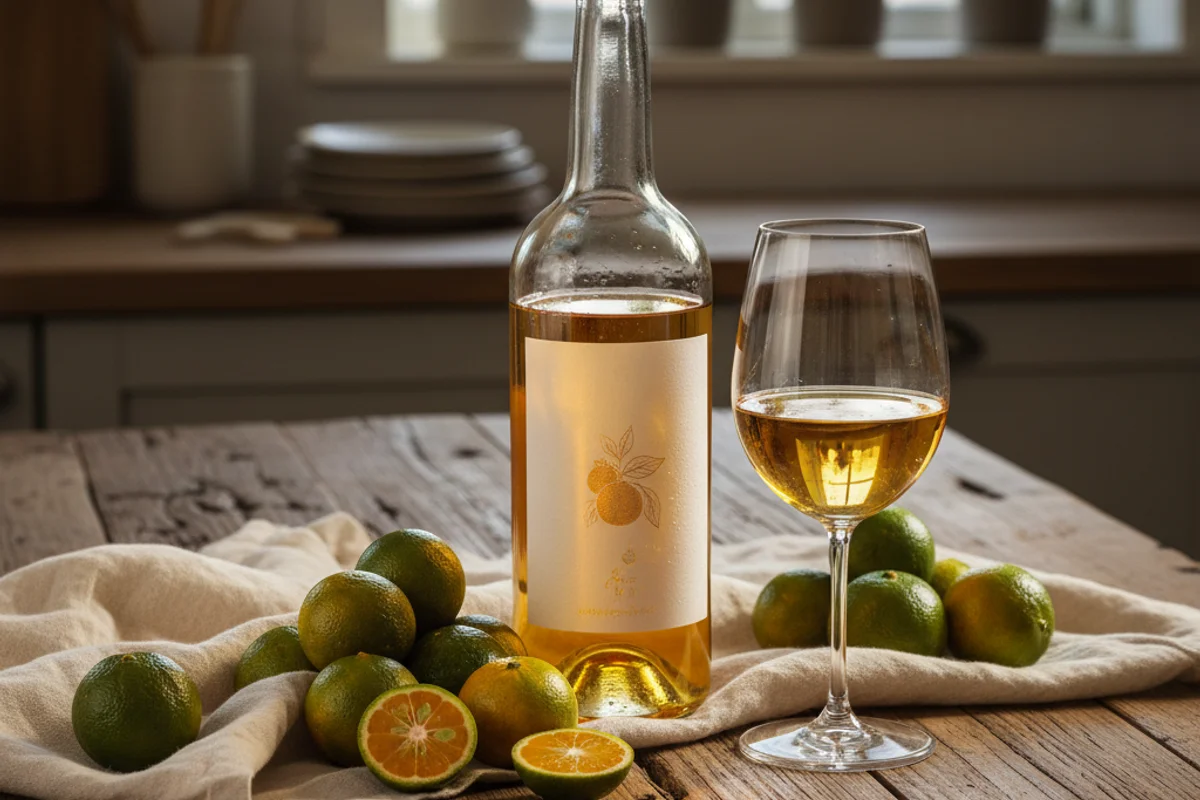
Think of a kumquat and a sour mandarin getting together and deciding to make something small, tart, and surprisingly fragrant. That’s the calamondin — a tiny citrus fruit with juice that bites back and a rind that smells almost candy-sweet. It’s common in Florida and Southeast Asian gardens, and it makes a wine that punches well above its size. Bright acidity, floral top notes, and a finish that lingers like a good lemon curd. White grape concentrate fills out the body so the citrus has something to lean on.
The beginner trap: Skipping the zest step or rushing the 4–6 month aging period will leave you with a wine that tastes thin and one-dimensional — the aromatics need time to knit together.
Ingredients
- 12–15 ripe calamondins (fresh or frozen; see Notes)
- 2 lbs granulated white sugar
- 11.5 oz can Welch’s 100% white grape juice frozen concentrate (or any 100% white grape frozen concentrate)
- 6 pints (12 cups) water
- ¼ tsp pectic enzyme
- 1 tsp yeast nutrient
- 1 packet wine yeast (Lalvin EC-1118 or similar)
Method
- Bring the water to a boil and stir in the sugar until fully dissolved. Remove from heat.
- Wash all the fruit well. Zest 10 of the calamondins, place the zest in a fine-mesh bag or jelly bag, and tie it closed.
- Put the bag of zest into your primary fermenter and pour the hot sugar water over it. Cover and let cool to room temperature.
- While the must cools, juice all the calamondins. Strain out seeds and pulp, then set the juice aside covered.
- Once the must is at room temperature, stir in the strained calamondin juice, white grape concentrate, yeast nutrient, and pectic enzyme.
- Cover and let the must rest for 12 hours.
- Activate your yeast according to packet directions, then add it to the must.
- Ferment in the primary for 24–36 hours, stirring every few hours to keep the zest bag submerged and to off-gas CO2.
- Squeeze the zest bag gently to extract flavor, then remove and discard it. Transfer the liquid to a sanitized secondary fermenter (carboy) and fit with an airlock.
- Top up with water if needed once active fermentation slows.
- After 60 days, rack into a clean carboy, top up, and refit the airlock.
- Rack again every 30 days until the wine is clear and no new sediment forms over a full 30-day period.
- To finish: stabilize with potassium sorbate and potassium metabisulfite, sweeten to taste if desired, wait 10–14 days to confirm no re-fermentation, then rack into bottles.
- Age at least 4–6 months before opening.
Why this works
Raw calamondin juice is loaded with pectin — the same stuff that makes jam gel. Left alone, pectin clouds your wine permanently and dulls the flavor. Pectic enzyme breaks those long pectin chains apart early in fermentation, giving you a clearer finished wine and letting the fruit aromatics come through clean. The 12-hour rest before adding yeast gives the enzyme time to do its work before alcohol (which slows enzyme activity) builds up. The white grape concentrate isn’t just filler — it adds fermentable sugar, body, and mild tannins that help the final wine hold its shape over the long aging period.
Notes
Fresh calamondins can be hard to find outside Florida and specialty Asian grocery stores. Frozen calamondin juice, sold in many Latin and Filipino markets, works well — use about ¾ to 1 cup of juice in place of the fresh-squeezed amount, and buy a few fresh kumquats for zest if you need it. For a drier table wine, add no back-sweetening; for a dessert-style finish, sweeten to your palate after stabilizing.