Canadian Serviceberry
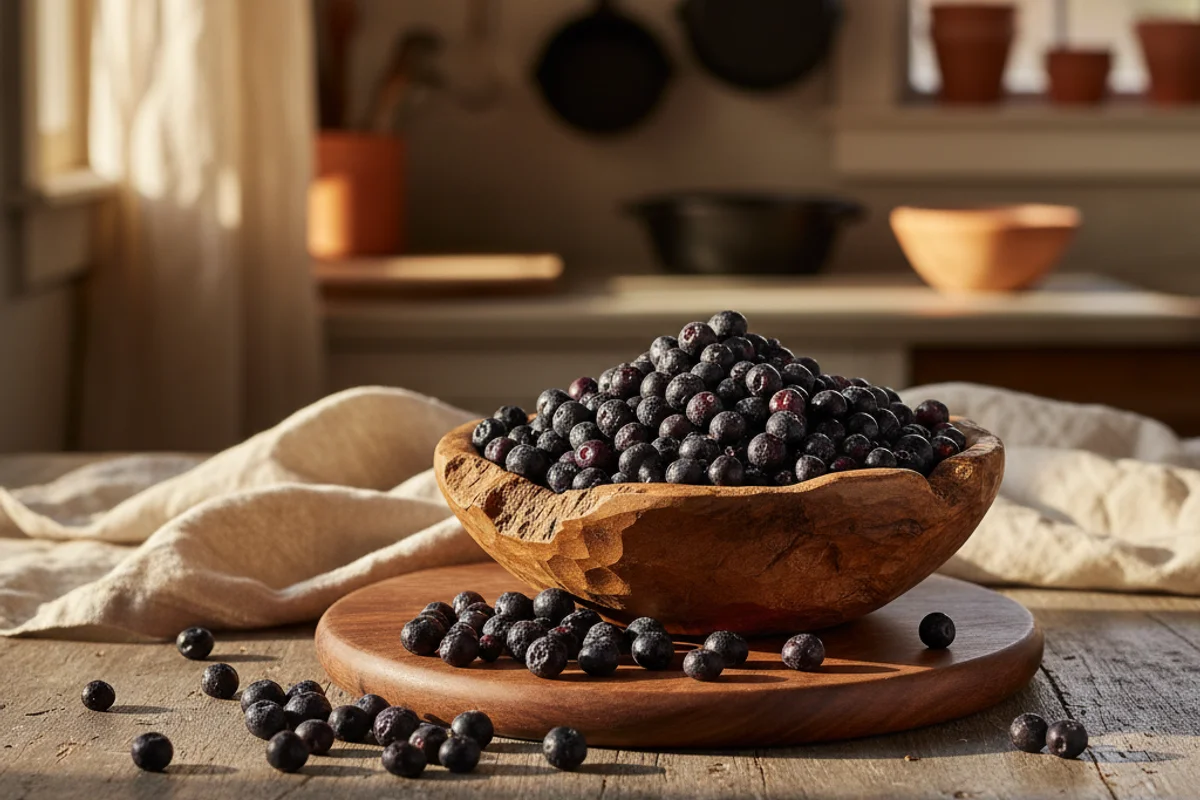
Think of the Canadian serviceberry as nature’s secret blueberry — small, dark purple, and packed with a sweet, almost almond-like depth that most people never get to taste because the birds always win the race. Also called Juneberry or shadbush, this eastern North American fruit ripens just as summer gets serious. It makes a semi-dry wine with a clean, fruity character that drinks well young but rewards patience. Three months gets you in the door; a year gets you something worth bragging about.
The beginner trap: Skipping the pectic enzyme — or adding it too early — leaves you with a stubbornly cloudy wine that no amount of waiting will fix.
Ingredients
- 4 lbs Canadian serviceberries (fresh or frozen)
- 1¼ lbs granulated white sugar
- 1½ tsp acid blend (or 1 tsp citric acid + ½ tsp tartaric acid)
- 1 tsp pectic enzyme
- 1 tsp yeast nutrient
- 1 Campden tablet, crushed fine
- 1 sachet wine yeast (Lalvin 71B or EC-1118 work well)
- Water to make 1 gallon
Method
- Wash and destem the berries, then crush them inside a fine-mesh nylon straining bag and place the bag in your primary fermenter.
- Add the sugar, acid blend, Campden tablet, and 3 quarts of water; stir well until the sugar fully dissolves, then cover with a clean cloth and set in a warm spot.
- After 12 hours, open the cover and stir in the pectic enzyme; re-cover and wait another 12 hours.
- Sprinkle in the yeast and yeast nutrient, stir to combine, then re-cover.
- Stir the must twice a day for 5 days, pressing the bag below the surface each time and giving it a gentle squeeze to release juice and CO₂.
- On day 5, lift the bag and let it drain by gravity for a full hour, then squeeze it gently one last time — slow and easy keeps the wine clear.
- Pour the drained juice back into the primary, cover again, and wait 24 hours for sediment to settle.
- Siphon the clear liquid into a clean 1-gallon secondary (glass jug or carboy), leaving 3 inches of headspace for foam, and fit an airlock.
- Move the fermenter somewhere cooler; when vigorous bubbling slows down (10–14 days), top up to the shoulder of the jug with water, reserved juice, or white grape juice.
- Ferment for 2 more weeks, then rack into a clean secondary and refit the airlock.
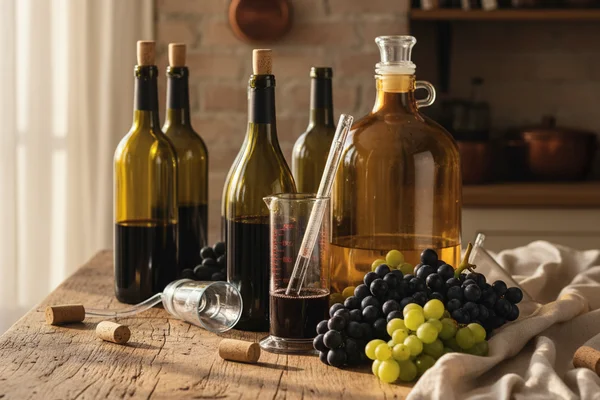
- Rack again after 30 days, then once more after another 30 days; if the wine is clear, bottle it — if not, add a fining agent (store-bought gelatin works), wait 10 days, then rack and bottle.
Why this works
Serviceberries are high in pectin — the same stuff that makes jam gel — and that pectin clouds wine like fog on a cold morning. Pectic enzyme (pectinase) breaks those long pectin chains into smaller pieces that drop out of solution, giving you a clear, bright wine. The timing matters: add it too soon and the Campden tablet’s sulfur dioxide disables it before it can do its job. Waiting 12 hours after adding the Campden lets the SO₂ off-gas enough that the enzyme can work. The two-stage racking schedule at the end clears out dead yeast cells (lees) that can turn the flavor muddy if left in contact with the wine too long.
Notes
Frozen serviceberries are an excellent choice — freezing ruptures the cell walls and actually improves juice extraction. If you can’t find acid blend at a homebrew shop, lemon juice can fill in a pinch (use about 2 tablespoons), though the flavor profile will shift slightly. If the wine is still hazy after two full racking cycles, Sparkolloid (sold at homebrew stores) is a reliable fining agent that plays nicely with fruit wines.