CANNED APPLE WINE
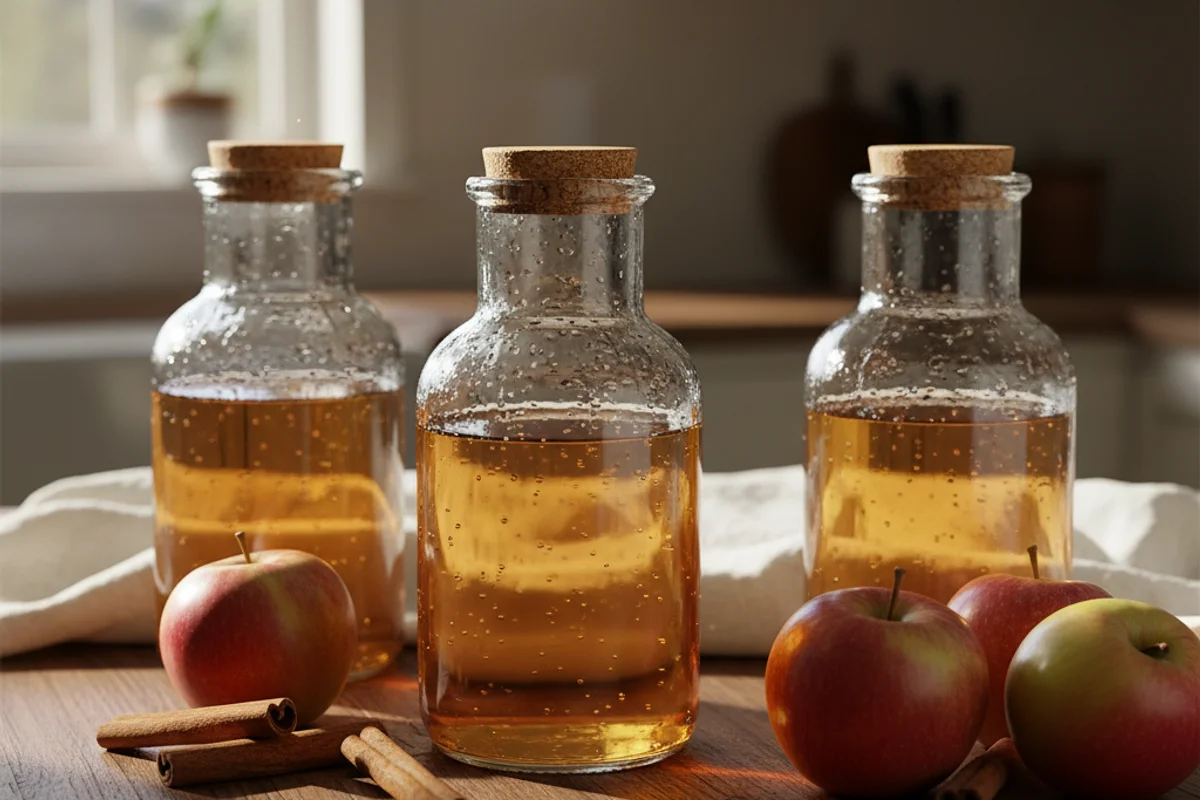
Canned apples are already cooked, already softened, and already sitting in sweet syrup — which means half your prep work is done before you even open a jar. That syrup isn’t waste; it’s flavor you saved on purpose. The finished wine lands somewhere between a dry table wine and a soft, orchard-forward sipper. Use plain canned apples for a clean result, or reach for a jar of spiced home-canned apples if you want something that begs to be warmed on a cold night.
The beginner trap: Blending the apples into a smooth purée makes straining a nightmare and clouds the wine — pulse them just enough to break them into rough chunks, then stop.
Ingredients
- 4 pints canned apples (home-canned or store-bought, plain or lightly spiced)
- 1 lb 14 oz (about 3¾ cups) granulated white sugar
- 2 tsp citric acid (or the juice of 2 large lemons)
- 1 tbsp powdered pectic enzyme
- ¾ tsp grape tannin (or 1 cup unsweetened strong black tea)
- 1 Campden tablet, crushed (potassium or sodium metabisulfite)
- 1 tsp yeast nutrient
- Water to make 1 gallon total
- 1 packet sherry wine yeast (or Lalvin EC-1118 champagne yeast)
Method
- Bring 1 quart of water to a boil, dissolve the sugar completely, then cover and let it cool to room temperature.
- Drain the canned apples and set the syrup aside in a sealed container in the refrigerator. Remove any whole spices (cinnamon sticks, cloves, allspice berries) from the apples before blending.
- Pulse the drained apples in a blender on the lowest setting — 3 or 4 short bursts — until roughly chopped. You want chunks, not applesauce.
- Pour the cooled sugar-water into your primary fermenter along with 1 more quart of plain water, the chopped apples, citric acid, pectic enzyme, grape tannin, crushed Campden tablet, and yeast nutrient. Stir well, cover, and leave it alone for 12–16 hours.
- Activate your yeast according to the packet instructions, add it to the must, and cover the fermenter loosely.
- Stir the must once a day for 10–14 days, until active bubbling slows down noticeably.
- Strain the must through a fine-mesh nylon straining bag into your secondary fermenter, squeezing the bag only gently to avoid pressing in bitter sediment.
- Add 1 cup of the reserved canning syrup, then top up with water until the liquid sits at the mid-shoulder of the carboy with about 4 inches of headspace. Fit the airlock.
- After 45 days, rack the wine into a clean carboy, top up with water or finished apple wine to leave no more than ¾ inch of headspace, and refit the airlock.
- Rack again every 45 days until the wine runs clear. Add a fresh crushed Campden tablet at the 2nd and 4th rackings.
- Once the wine is clear, rack into a clean vessel, stabilize with potassium sorbate (follow package dosage), and bulk age for 60 more days.
- Sweeten to taste, then bottle. Age at least 6 months before drinking; if you used spiced apples, try a glass warmed at the 9-month mark.
Why this works
Apples are loaded with pectin — the same stuff that makes jam set — and pectin turns wine cloudy. Pectic enzyme (pectinase) breaks those long pectin chains apart so they can’t hold haze in suspension. That’s why you add it at the start and why a second dose fixes stubborn cloudiness later. The reserved canning syrup pulls double duty: it adds residual fruit flavor and a small bump of fermentable sugar to keep the yeast working steadily in the secondary. Campden tablets (sulfite) at racking inhibit wild yeast and bacteria without stopping your chosen yeast cold, keeping the wine stable between transfers.
Notes
Store-bought tinned apples (the kind in juice or light syrup) work fine here — just use the liquid in the can as your reserved syrup. If you’re using spiced home-canned apples, remove all whole spices before blending; the flavor has already soaked into the fruit, so leaving the spices in the must will push the wine toward bitter and over-spiced. If EC-1118 is all you can find locally, it will work, but sherry yeast gives a rounder, more mellow result with apple fruit.