CANTALOUPE WINE
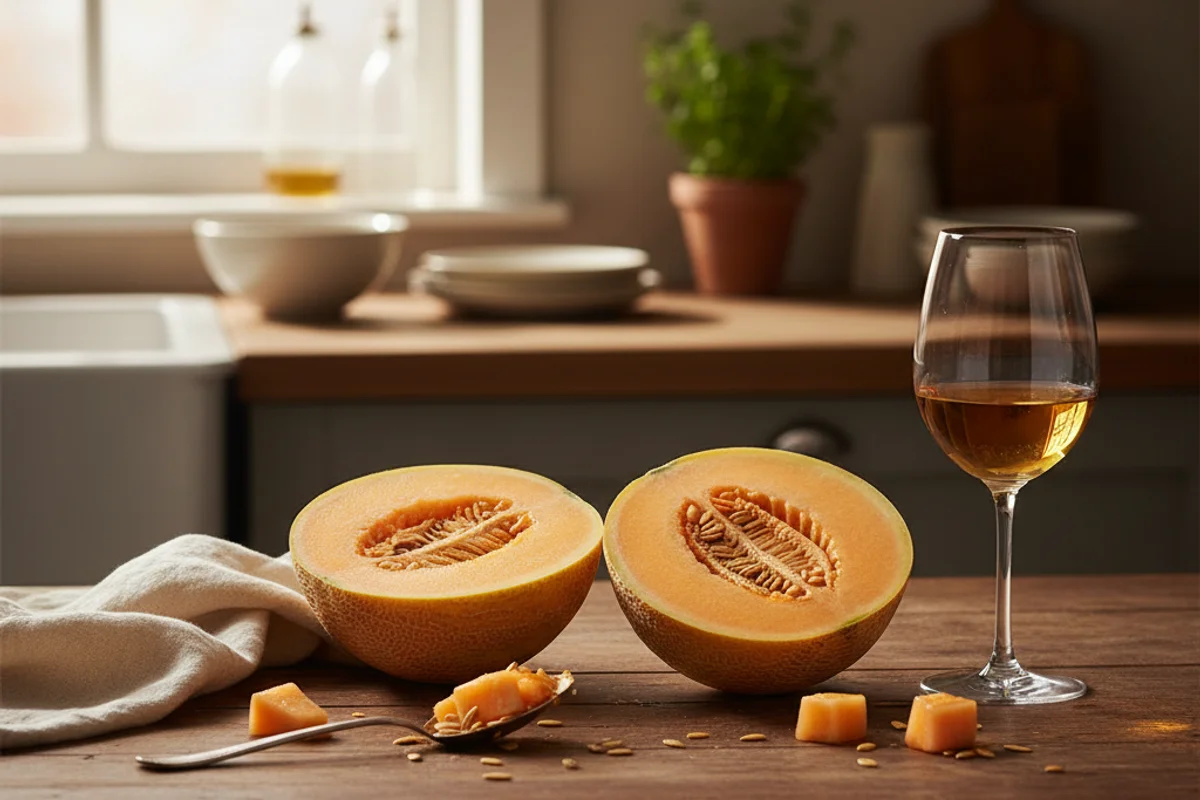
Cantaloupe is about 90% water and pure summer nostalgia — that floral, musky sweetness you get when you cut into a truly ripe one. Capture that in a bottle and you have something genuinely special. Miss the window, and you get thin, watery wine that tastes like disappointment. This recipe is unforgiving in the best possible way: get the fruit right, follow the steps, and the reward is a pale amber wine that smells like a farmers market and drinks like a dream.
The beginner trap: Using underripe or out-of-season supermarket cantaloupe — the fruit must be deeply fragrant and fully ripe, or no amount of technique will save it.
Ingredients
- 5 very ripe, fragrant cantaloupes
- 1 cup golden raisins, finely chopped
- 4 lemons, peeled and thinly sliced
- 1 lb 10 oz granulated white sugar
- 6 pints (3 quarts) water
- ¼ tsp wine tannin (or 1 cup strongly brewed plain black tea, cooled)
- 1 tsp yeast nutrient
- 1 packet Montrachet wine yeast (or any dry white wine yeast)
Method
- Peel each cantaloupe down to bare orange flesh, then cut it in half over your primary fermenter to catch every drop of juice. Cut the flesh into small chunks.
- Place the cantaloupe chunks (seeds included), lemon slices, and chopped raisins into a nylon straining bag, tie it closed, and squeeze and mash the fruit with your hands until well crushed.
- Bring 1 quart of the water to a boil and stir in the sugar until fully dissolved. Pour the hot syrup into the primary fermenter.
- Add the remaining water, tannin, and yeast nutrient to the fermenter and stir to combine. Let the must cool to room temperature if needed.
- Activate your yeast according to the packet instructions, then add it to the must. Cover the fermenter loosely.
- Once or twice daily for 7 days, squeeze the straining bag firmly with clean hands to extract juice and keep the fruit wet and active.
- After 7 days, squeeze the bag as dry as you can, then discard the solids. Recover the fermenter and stir the liquid daily for another 7 days.
- Rack the wine into a clean secondary fermenter (carboy) and fit an airlock. If the volume falls below one gallon, add sterilized glass marbles to raise the level — do not top up with water.
- Rack again every 30 days until the wine runs clear and leaves no sediment behind.
- Stabilize with potassium sorbate and potassium metabisulfite, then bottle. Wait at least 6 months before opening.
Why this works
Cantaloupe’s signature aroma comes from a group of volatile compounds called esters and aldehydes that develop only when the fruit is fully ripe. Heat and time destroy them fast, which is why you work with fresh fruit quickly and avoid boiling the must itself. The raisins add body and a small boost of natural tannin, while the lemon provides acid balance — cantaloupe on its own is low-acid and would produce a flat, flabby wine without help. Montrachet yeast is a steady, low-foaming strain that ferments cleanly at a range of temperatures, which helps preserve those delicate fruit aromatics rather than blowing them off during a hard, hot ferment.
Notes
Frozen cantaloupe chunks can work in a pinch — freezing actually breaks down cell walls and improves juice extraction — but the aroma will be noticeably softer than fresh. If you can’t find wine tannin at a homebrew shop, a cup of cooled, strongly brewed black tea is a reliable everyday substitute. Do not use instant tea.