Carambola (Star Fruit) Wine
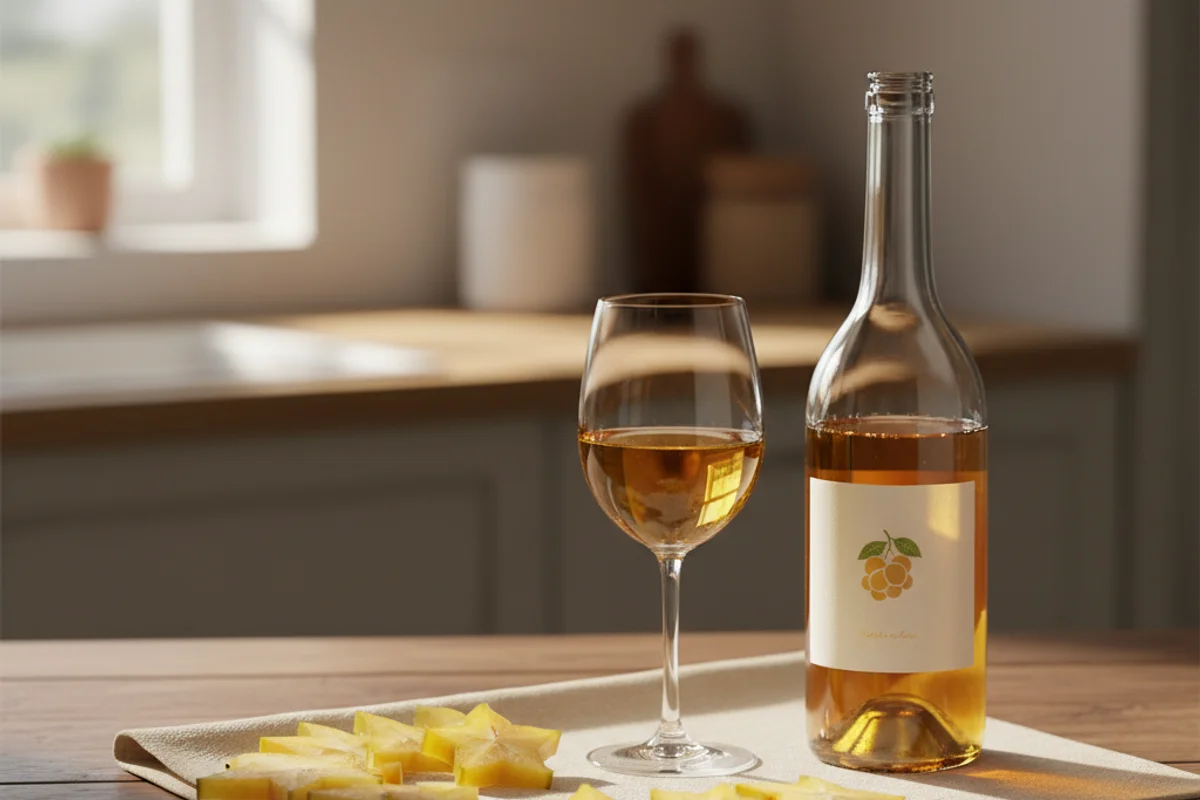
Star fruit is basically a fruit that looks like it was designed by a committee — five-ribbed, waxy, and almost too pretty to ferment. Slice it crosswise and you get perfect little stars. What you can’t see is the flavor: a bright, tropical blend of citrus and pear with a mild tartness that translates beautifully into a light, aromatic white wine. The frozen white grape concentrate fills in the body that star fruit alone can’t quite deliver, and the result is something genuinely surprising in the glass.
The beginner trap: Skipping the brief sugar addition at the end — even if you prefer dry wines — robs star fruit of its best quality, since a small touch of sweetness unlocks the full tropical flavor.
Ingredients
- 2½ to 4 lbs. star fruit (fresh or frozen), sliced thin
- 11 oz. frozen white grape juice concentrate (Welch’s 100% White or any grocery-store brand)
- 10 oz. superfine granulated sugar (regular white sugar works, just stir longer)
- Juice of 1 large lemon, or 1 tsp. acid blend
- ½ tsp. pectic enzyme
- ½ tsp. ascorbic acid (plain vitamin C powder)
- 1 Campden tablet, crushed and dissolved (plus 1 more for later)
- 1 tsp. yeast nutrient
- 6¾ pints (about 3.4 quarts) water
- 1 packet Champagne, Sauternes, or Hock wine yeast
Method
- Slice the star fruit thin and load it into a nylon straining bag; tie the bag closed and place it in your primary fermenter.
- Add water, sugar, grape concentrate, lemon juice, yeast nutrient, and the first crushed Campden tablet to the primary; stir well to dissolve, then cover with a clean cloth.
- Wait 12 hours, then stir in the pectic enzyme and re-cover.
- Wait another 12 hours, then add your activated yeast and re-cover the fermenter.
- Once fermentation is clearly active, gently squeeze the fruit bag once a day to pull flavor from the pulp.
- When the specific gravity reaches 1.010–1.020, pull the bag out and let it drip-drain without squeezing; transfer all the liquid to a clean secondary fermenter and fit an airlock.
- When fermentation slows nearly to a stop, rack the wine into a clean vessel, top up to minimize headspace, and refit the airlock.
- Rack again after 30 days, then continue racking every 45–60 days until the wine is clear and drops no sediment for a full 30-day stretch.
- Add the second Campden tablet and the ascorbic acid, wait 30 days, then rack one final time.
- Stabilize the wine with potassium sorbate, then sweeten to taste — even a small addition brings out the star fruit’s tropical character noticeably.
- Wait 10–14 days after sweetening, then bottle; give the wine at least 6 months to mature before drinking.
Why this works
Star fruit is low in tannin and has a mild flavor profile, which means fermentation alone can strip it of its personality. Two things rescue it here. First, the frozen white grape concentrate adds fermentable sugar, body, and a neutral grape backbone that supports the star fruit rather than competing with it — think of it as a flavor scaffold. Second, the ascorbic acid added near the end acts as an antioxidant, protecting the delicate aromatic compounds that give the wine its tropical brightness. Without it, exposure to oxygen during the multiple racking steps can flatten those top notes before the wine ever hits a glass. The pectic enzyme is equally important: star fruit contains pectin, and without an enzyme to break it down, the finished wine can stay stubbornly hazy no matter how long you wait.
Notes
Frozen star fruit works well in this recipe — thaw it completely before slicing and bagging. If star fruit is hard to find at your grocery store, check Latin or Asian markets, where it is far more common. The Champagne or Sauternes yeast keeps the fruity esters intact; avoid bread yeast, which produces off-flavors that clash with this style.