CAROB WINE
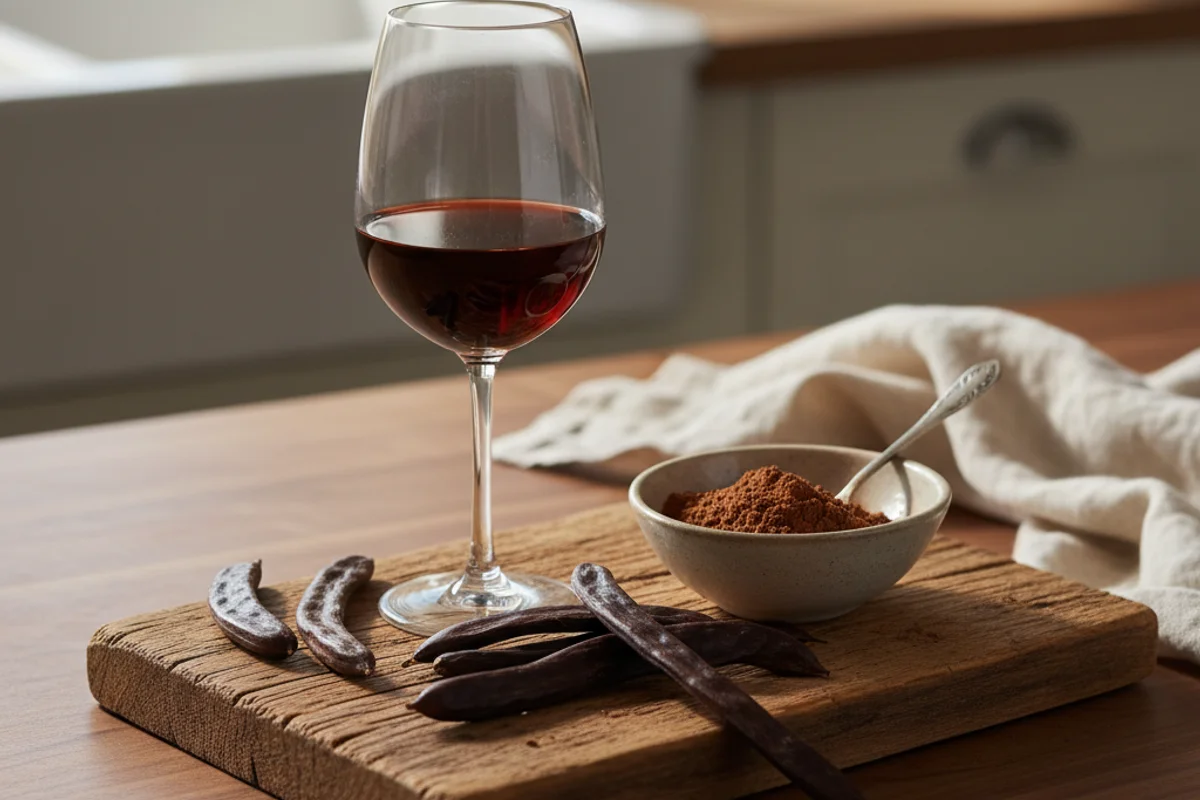
Carob has been feeding people and livestock for over five thousand years, yet almost nobody thinks to ferment it. That’s a shame. The green pods are loaded with natural sugar and carry a rich, chocolate-adjacent sweetness — somewhere between dark cocoa and dried fig — with a faint earthiness underneath. Fermented with golden raisins for body and a touch of acid for balance, carob makes a wine that is genuinely surprising: dark, mellow, and complex enough to reward a few months of patience in the bottle.
The beginner trap: Skipping the full 10-day primary fermentation stir schedule — carob pods are dense and will under-extract if you don’t keep breaking up the cap twice a day.
Ingredients
- 4 lbs green carob pods (fresh; dried pods can substitute but expect less sweetness)
- 1 lb golden raisins, chopped or minced (regular raisins work in a pinch)
- 1¾ lbs granulated white sugar
- 7¼ pts water (about 3.6 quarts)
- 1½ tsp acid blend
- 1 tsp pectic enzyme
- 1 tsp yeast nutrient
- 1 Campden tablet, crushed
- 1 packet wine yeast (Lalvin 71B or EC-1118 work well)
Method
- Chop the carob pods into ½-inch pieces and chop or mince the golden raisins. Add both to your primary fermenter.
- Bring the water and sugar to a boil, stir until the sugar fully dissolves, then pour the hot syrup over the pods and raisins.
- Cover the fermenter and let the must cool to room temperature (around 70–75°F).
- Add the acid blend, yeast nutrient, and crushed Campden tablet. Stir, re-cover, and wait 12 hours.
- Add the pectic enzyme, stir well, re-cover, and wait another 12 hours.
- Activate your yeast according to the packet instructions, then pitch it into the must. Cover and set aside.
- Stir the must twice daily for 10 days, pushing the pod pulp back under the liquid each time.
- Strain the must through a nylon straining bag into your secondary fermenter, squeezing the pulp firmly. Discard the solids.
- Fit an airlock and let the wine sit undisturbed for 30 days.
- Rack into a clean vessel, top up to reduce headspace, refit the airlock, and wait another 30 days.
- Rack again, stabilize with a Campden tablet and potassium sorbate, then sweeten to taste if desired. Refit the airlock and wait 2 weeks.
- Rack into bottles and store in a cool, dark place. Allow at least 3–6 months before opening.
Why this works
Carob pods are rich in sugars — mostly sucrose, glucose, and fructose — but they’re also packed with tannins and large polysaccharide molecules that can make the finished wine hazy and pectin-locked. That’s why pectic enzyme is non-negotiable here: it breaks down those pectin chains so the wine can clear properly and the flavor compounds can fully release into solution. The golden raisins pull double duty, adding fermentable sugar and mouthfeel-building glycerol as they ferment. Acid blend corrects what the pods lack — carob is naturally low in tartaric and malic acids — keeping the finished wine lively rather than flat and dull.
Notes
Green carob pods can be hard to find at grocery stores; check Middle Eastern or Mediterranean markets, or look for dried carob pods (sold as a snack food) as a backup — just reduce the sugar slightly since dried pods are more concentrated. If you can only find carob powder (the cocoa substitute sold in health food aisles), this recipe is not designed for it and results will differ significantly. This wine is an honest unknown — age it at least six months before judging it.