Carrot Whiskey
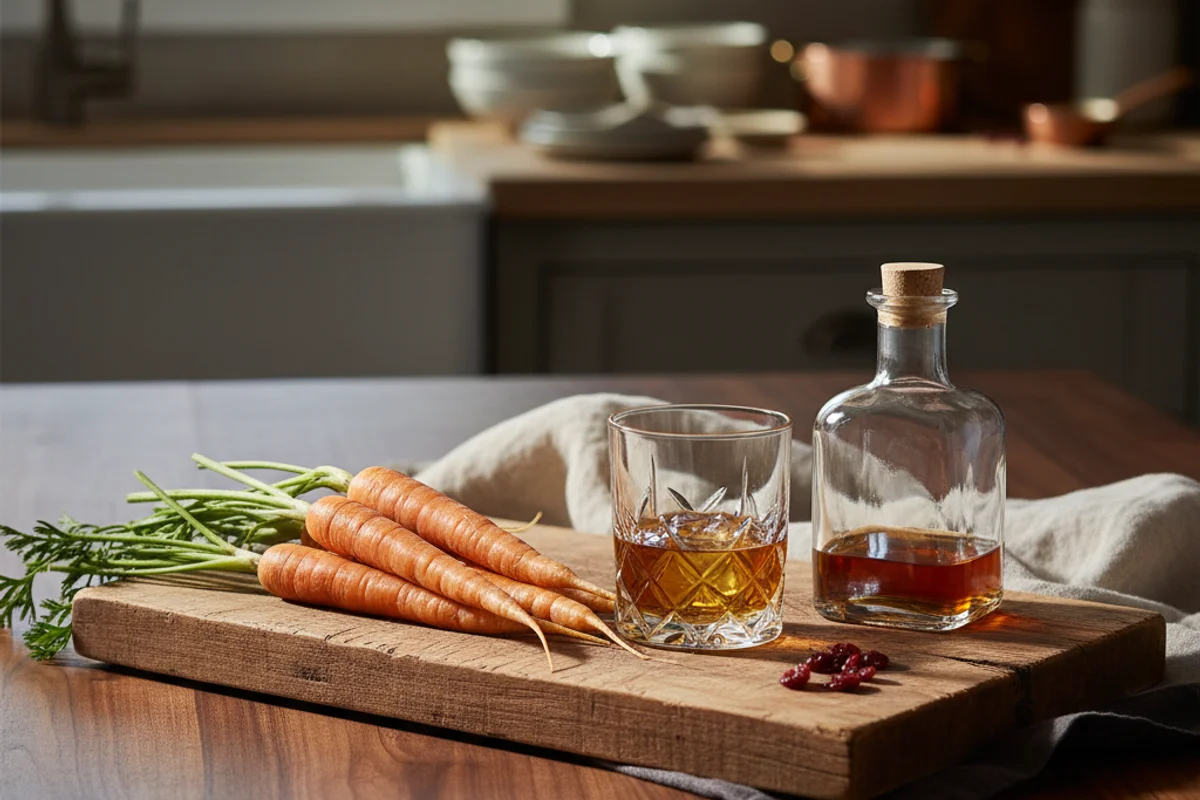
Don’t let the name fool you — there’s no distillation happening here, no barrel aging, no corn mash. What you get instead is a deep amber country wine with a richness that earned the “whiskey” label from a 1940s London newspaper columnist who clearly knew how to sell a headline. Wheat adds body and a faint grain character. Citrus keeps it from going flat. Carrots bring sweetness and an earthy warmth that, after a full year in the bottle, rounds into something genuinely surprising.
The beginner trap: Skipping the full year of bottle aging — this wine tastes raw and sharp at six months, but time transforms it completely.
Ingredients
- 6 lbs carrots, scrubbed (not peeled)
- 3 lbs granulated white sugar, divided into three portions (1½ lbs, ¾ lb, ¾ lb)
- 1 lb whole wheat berries (found in the bulk or health food aisle)
- 1 tbsp raisins, roughly chopped
- 2 oranges, thinly sliced
- 2 lemons, thinly sliced
- 7 pints (3.5 quarts) water
- 1 packet wine yeast (Lalvin EC-1118 or similar)
Method
- Scrub the carrots well but leave the skins on — that’s where a lot of the color and flavor live. Place them in 7 pints of water, bring to a boil, then simmer until just tender, about 25–30 minutes.
- While the carrots cook, add the first 1½ lbs of sugar to your primary fermenter. Lay the orange and lemon slices on top of the sugar.
- When the carrots are done, strain out the solids and pour the hot carrot water directly over the sugar and citrus. Stir until the sugar fully dissolves, then let the must cool to lukewarm (around 70–75°F).
- Add the chopped raisins and wheat berries to the cooled must. Sprinkle the wine yeast over the surface — no need to stir it in yet.
- Cover the fermenter with a clean cloth secured with a rubber band. Stir the must once daily for 6 days.
- On day 6, add the second portion of sugar (¾ lb), stir well to dissolve, and continue stirring daily for 8 more days.
- On day 14, add the final ¾ lb of sugar, stir to dissolve, and keep fermenting with daily stirs for another 10 days.
- On day 24, strain the liquid through a fine mesh strainer or cheesecloth into your secondary fermenter (a 1-gallon glass jug works well). Fit with an airlock.
- Rack the wine into a clean vessel after 30 days, then rack again 30 days after that.
- Bottle the wine and store it somewhere cool and dark. Wait at least one full year before opening.
Why this works
Sugar addition in three stages — called step feeding — keeps the yeast from getting overwhelmed by high sugar concentrations up front. Yeast cells stressed by too much sugar early on can stall out or produce off-flavors. By spreading the sugar load over 24 days, you keep fermentation steady and give the yeast time to do clean work. The wheat berries contribute starch and protein, which break down slowly and add body to what would otherwise be a thin vegetable wine. The citrus peels release pectin and acid, balancing sweetness and helping clarification over time. Age does the rest — long bottle conditioning allows harsh fusel alcohols to mellow and the flavors to knit together into something cohesive.
Notes
Wheat berries are sold at most health food stores and many larger grocery chains in the bulk section — Bob’s Red Mill also packages them. If you can’t find whole wheat berries, cracked wheat (bulgur) can work in a pinch, though it may make straining messier. The raisins are a small addition but they matter: they provide nutrients for the yeast and a subtle dried-fruit background note. Don’t skip them.