CHAMBOURCIN WINE
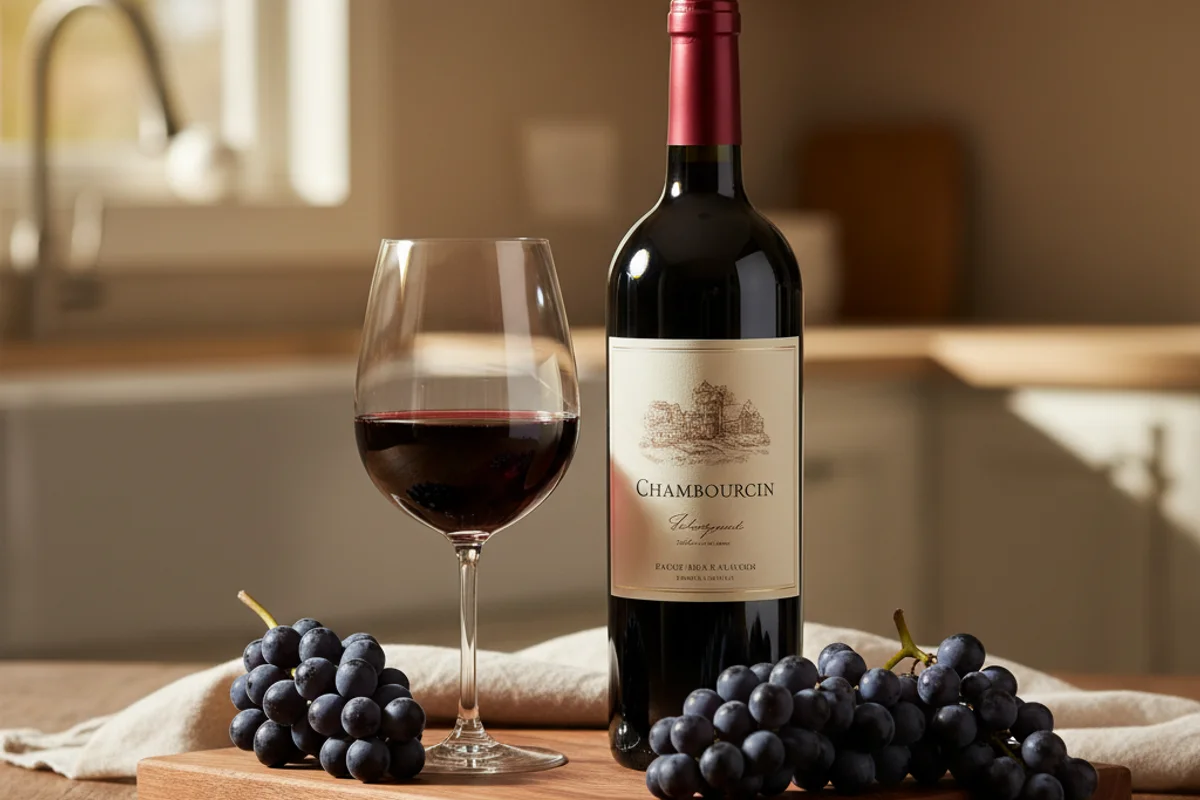
Chambourcin is a French-American hybrid that punches well above its weight. Born from Rhône Valley genetics and bred for tough North American winters, it delivers deep, inky color and a clean berry aroma without the “foxy” funk that haunts some native American grapes. Low tannins mean this wine finishes soft and approachable — but don’t mistake soft for simple. Given a malo-lactic fermentation and some time in the cellar, Chambourcin builds real complexity. This recipe targets a medium-sweet finish, landing around 1.002–1.006 on your hydrometer.
The beginner trap: Skipping malo-lactic fermentation (MLF) — or rushing it — leaves a harsh, high-acid wine that no amount of back-sweetening will fully fix.
Ingredients
- 65–75 lbs fresh Chambourcin grapes (destemmed and crushed)
- 4 tsp pectic enzyme
- ¾ tsp potassium metabisulfite (campden powder), divided
- 3–3½ tsp yeast nutrient
- 3 tbsp oak powder (Oak-Mor or any powdered wine-grade oak)
- 1 packet malo-lactic culture (available at homebrew shops or online)
- 1 packet Premier Cuvée wine yeast (Red Star brand, widely available)
Method
- Sort through your grape clusters and remove any spoiled, moldy, or underripe fruit. Crush and destem the grapes into your primary fermenter.
- Stir in the pectic enzyme and ¼ tsp potassium metabisulfite. Mix well, cover the fermenter, and let it rest overnight.
- The next day, check your must’s sugar (hydrometer) and acid (test kit). Adjust as needed, then stir in the yeast nutrient and oak powder.
- Rehydrate your yeast according to the packet instructions, then pitch it into the must and stir to combine.
- Cover the fermenter and punch down the grape cap twice daily to keep mold from forming and to extract color and flavor.
- Once free sulfur in the must drops below 15 ppm (test with a free SO₂ kit — 10 ppm is ideal), pitch the malo-lactic culture directly into the fermenting must.
- When the specific gravity reaches 1.000, scoop or strain the solids into a press and press out the remaining juice. Transfer everything to a 5-gallon glass carboy and fit an airlock.
- After one month, rack the wine into a clean, sanitized carboy. Leave the sediment behind.
- Track your MLF progress with a paper chromatography kit (inexpensive, available online). When MLF is complete, rack again and stir in ¼ tsp potassium metabisulfite.
- Rack two more times, six weeks apart. After the fourth and final racking, add the remaining ¼ tsp potassium metabisulfite.
- Allow the wine to clear on its own. If it’s still hazy after six more weeks, rack once more, stabilize with potassium sorbate, and wait 30 days before proceeding.
- Back-sweeten to a specific gravity of 1.002–1.006, tasting as you go. Bottle and cellar at least six months before opening.
Why this works
Two big processes are running in parallel here, and understanding them helps you not mess them up. Primary fermentation is yeast converting sugar to alcohol — straightforward. But Chambourcin’s naturally high malic acid makes the wine taste sharp and green if you stop there. Malo-lactic fermentation is a secondary bacterial process that converts harsh malic acid into softer lactic acid, the same mild acid found in milk. That’s why the timing matters: you need your free SO₂ low enough that the bacteria can survive, but the wine stable enough that spoilage organisms don’t move in first. Get that window right, and you end up with a soft, layered red that actually benefits from the grape’s lean tannin profile.
Notes
Chambourcin grapes are grown across the mid-Atlantic, Midwest, and parts of the South — check local vineyards or farm stands in late September and October. Oak-Mor powder can be swapped for any food-grade powdered oak or oak chips from a homebrew supplier; if using chips, use about 2 oz and remove them before racking. If your wine stubbornly refuses to clear, a bentonite fining agent (a common, inexpensive clay-based clarifier sold at homebrew shops) will get the job done.