CHARDONNAY WHITE WINE
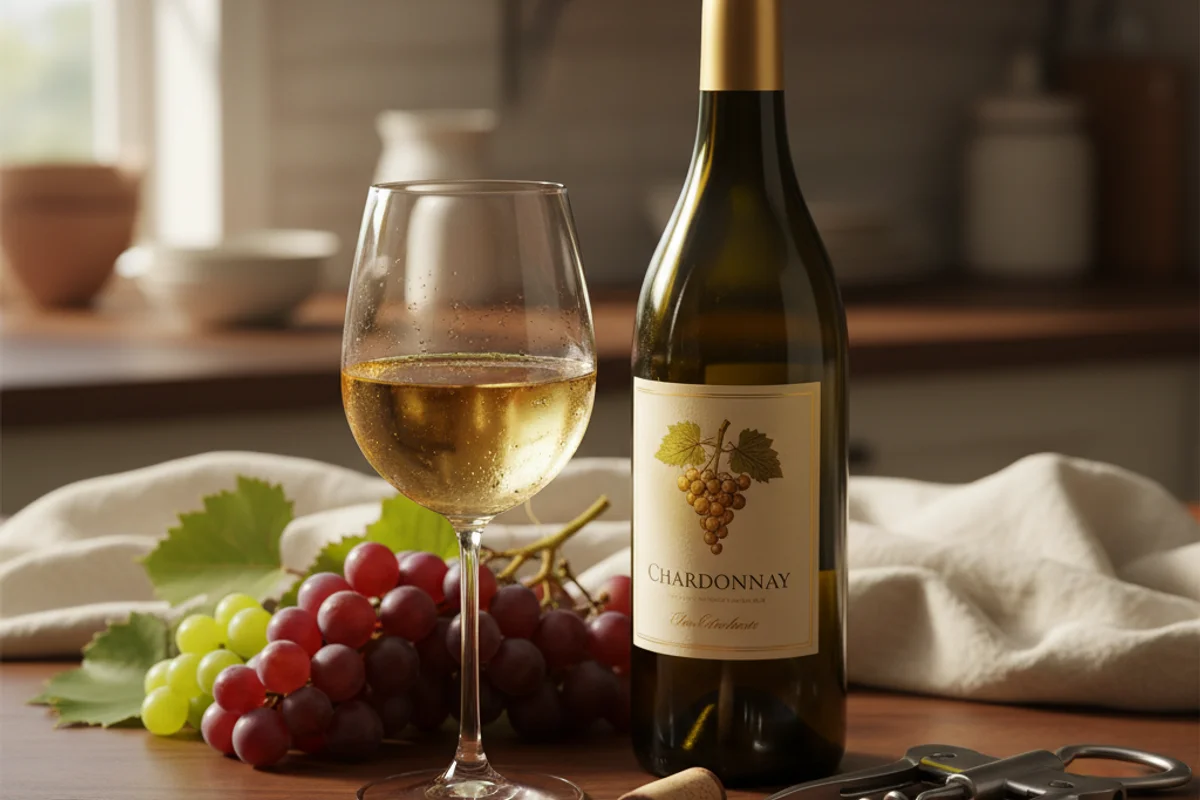
Think about what makes a great Chardonnay — that toasty, buttery richness with just enough fruit underneath to remind you it came from a grape. That profile doesn’t happen by accident. It comes from three deliberate moves: a cool, slow fermentation, a dose of oak, and a bacterial process that softens sharp malic acid into something round and creamy. Fresh Chardonnay grapes give you all the raw material you need. The winemaking is where the magic gets dialed in.
The beginner trap: Skipping or mistiming the malo-lactic culture — add it on day five of active fermentation, not after, or you may never get that signature buttery softness.
Ingredients
- 70 lbs fresh Chardonnay grapes
- ¾ tsp potassium metabisulfite (KMeta), divided — sold at homebrew shops or online
- 1 tsp pectic enzyme
- 2½–3 tsp yeast nutrient
- 3 tbsp oak powder (French or American; medium toast for buttery style)
- 1 packet malo-lactic (ML) culture
- 1 packet wine yeast — White Labs Chardonnay liquid yeast, or dry Burgundy-style yeast such as Lalvin BM4×4 or EC-1118 as a backup
Method
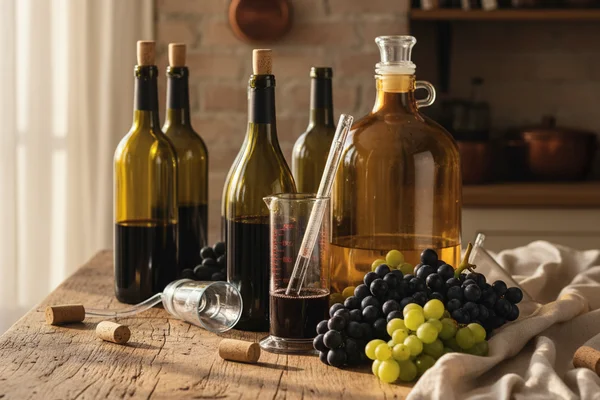
- Crush the grapes — destemmed or whole-cluster both work. Stir in pectic enzyme, cover the must, and let it rest 4–6 hours.
- Press the grapes and move the juice into a sanitized 6½-gallon carboy or primary fermenter.
- Stir in ¼ tsp potassium metabisulfite. Cover tightly or attach an airlock, then let the juice settle for 6 hours or overnight.
- Test and adjust sugar (target starting gravity: 1.090–1.095) and acid if needed. Stir in yeast nutrient, activated yeast, and oak powder.
- Cover the fermenter and move it to a cool spot around 65°F to begin fermentation.
- On day five of vigorous fermentation, stir in the malo-lactic culture.
- Once specific gravity drops to 1.000 or below, rack the wine into a clean secondary carboy.
- Move the carboy to a cooler spot — 55–60°F — and leave it undisturbed for 6 weeks.
- Rack again, add ¼ tsp potassium metabisulfite, top up to minimize headspace, and reattach the airlock. Repeat every 6 weeks until the wine is clear; fine after the third racking if it still looks hazy.
- Once clear, keep the wine cool for 2 weeks (or 4 weeks if you used a fining agent).
- Filter if desired, adjust sweetness if needed, then rack into bottles. Wait at least 3 months before opening the first one.
Why this works
Two processes are doing the heavy lifting here. First, the pectic enzyme breaks down pectin in the grape skins, which means cleaner juice and better clarity later. Second — and this is the heart of a buttery Chardonnay — malo-lactic fermentation (MLF) converts sharp-tasting malic acid into softer lactic acid, while also producing a compound called diacetyl. Diacetyl is the same molecule that makes butter taste like butter. Adding the ML culture during active primary fermentation gives it the warm, nutrient-rich environment it needs to thrive. The cool secondary phase then slows everything down, letting the wine knit together without oxidizing, while the oak powder adds vanilla and toast notes that round out the whole picture.
Notes
If fresh Chardonnay grapes are hard to find, frozen must from a winemaking supply store is a solid substitute — it skips the crush and press steps entirely. Oak powder is available at homebrew shops; if you can’t find it, 2–3 oz of sanitized oak cubes work the same way, just drop them into the secondary. If your finished wine tastes flat or thin, your ML culture may not have completed its job — a paper chromatography test kit (under $15 online) can confirm whether MLF is actually done before you bottle.