CHICKWEED WINE
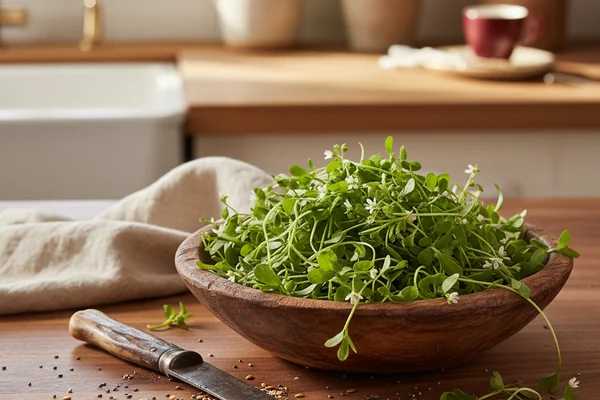
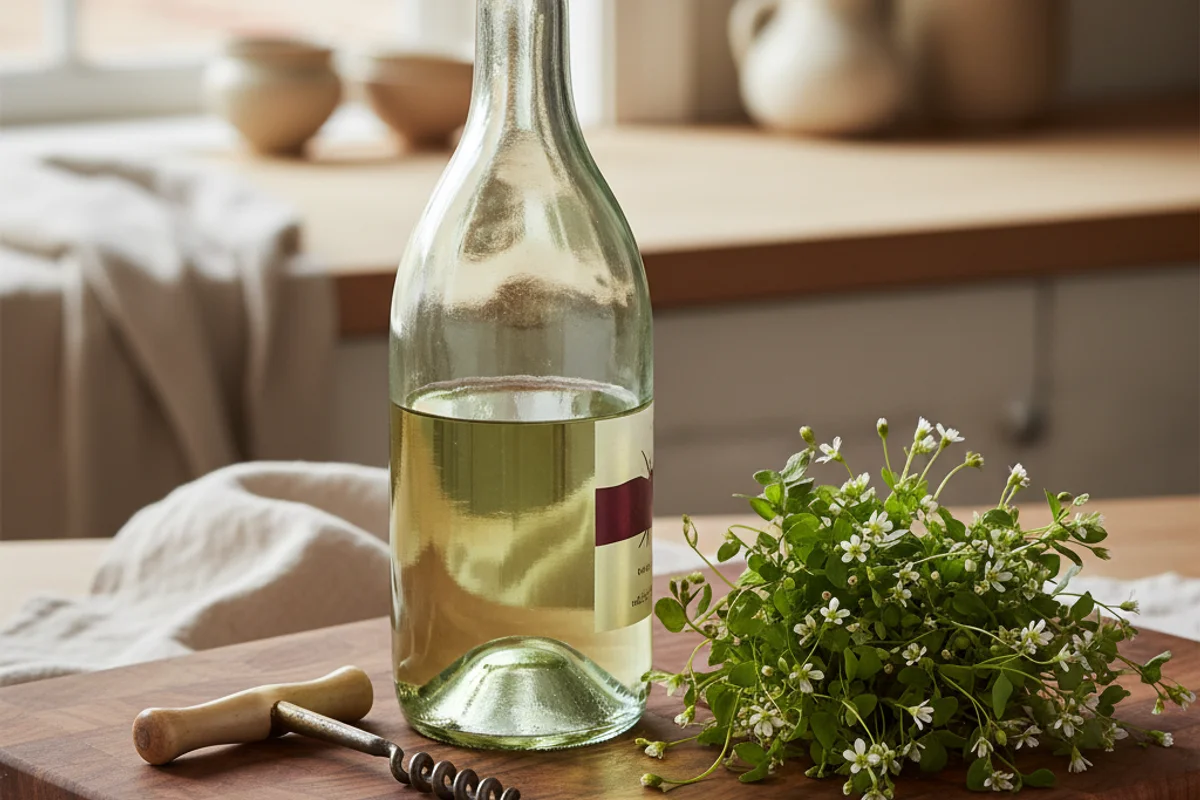
That weed choking out your lawn? It has a name — Stellaria media — and it belongs to the carnation family. Chickweed grows low and sprawling, with tiny white flowers that look like ten petals when there are really only five, each one split down the middle. Birds eat it. Chickens eat it. People toss it in salads. And with a quart of the stuff, a couple of citrus fruits, and enough patience to wait out a full year of aging, you can turn it into a surprisingly delicate country wine with a clean, faintly herbal character.
The beginner trap: Skipping the full year of aging and cracking a bottle early — this wine tastes thin and rough at six months and genuinely pleasant at twelve or more.
Ingredients
- 1 quart fresh chickweed (whole plant, roots removed), washed
- 2 lbs granulated white sugar
- 1 orange, zest thinly peeled and juiced
- 1 lemon, zest thinly peeled and juiced
- 1 tsp yeast nutrient
- Water to make 1 gallon
- 1 packet wine yeast (Lalvin EC-1118 or Fleischmann’s bread yeast in a pinch)
Method
- Bring 1 gallon of water to a full boil.
- Place the washed chickweed and the thin citrus peels together in your primary fermenter (a food-safe bucket works fine).
- Pour the boiling water over the chickweed and peels, then let the mixture cool to room temperature.
- Strain out and discard all the plant material and peels — you want only the infused liquid.
- Stir in the sugar and the juice from both the orange and lemon until the sugar fully dissolves.
- Add the yeast nutrient, then sprinkle in the wine yeast. Cover the fermenter loosely with a clean cloth or towel.
- Let it ferment at room temperature for 7 days, stirring once daily.
- Transfer the wine to a 1-gallon glass jug (secondary fermenter) and fit an airlock.
- Rack the wine into a freshly sanitized jug every 30 days until it runs clear and drops no new sediment over a full 30-day period.
- Stabilize with potassium sorbate (½ tsp) and potassium metabisulfite (¼ tsp), sweeten to taste if desired, then rack into bottles and seal.
- Age at least 1 year before opening — 2 years produces noticeably better results.
Why this works
Chickweed carries very little sugar or acid on its own, so this recipe borrows both from citrus. The orange and lemon peels release aromatic oils and bitter compounds into the hot-water infusion, building a faint backbone that plain chickweed alone can’t provide. The juice adds tartaric and citric acid, which keeps fermentation healthy and gives the finished wine enough structure to age without going flat. Sugar drives alcohol production and body. The long racking schedule slowly removes dead yeast cells — called lees — that would otherwise leave the wine cloudy and slightly off-flavored. Time does the rest: slow oxidative aging in the bottle knits everything together into something that actually resembles wine rather than herbal water.
Notes
Chickweed is most tender in spring and early summer — harvest before the heat makes it stringy. If you can’t find potassium sorbate at a homebrew shop, look for it online or at a winemaking supply store; no good grocery-store substitute exists for stabilizing. For yeast, any dry wine yeast packet from a homebrew shop works well; EC-1118 is widely available and very reliable.