Chickweed
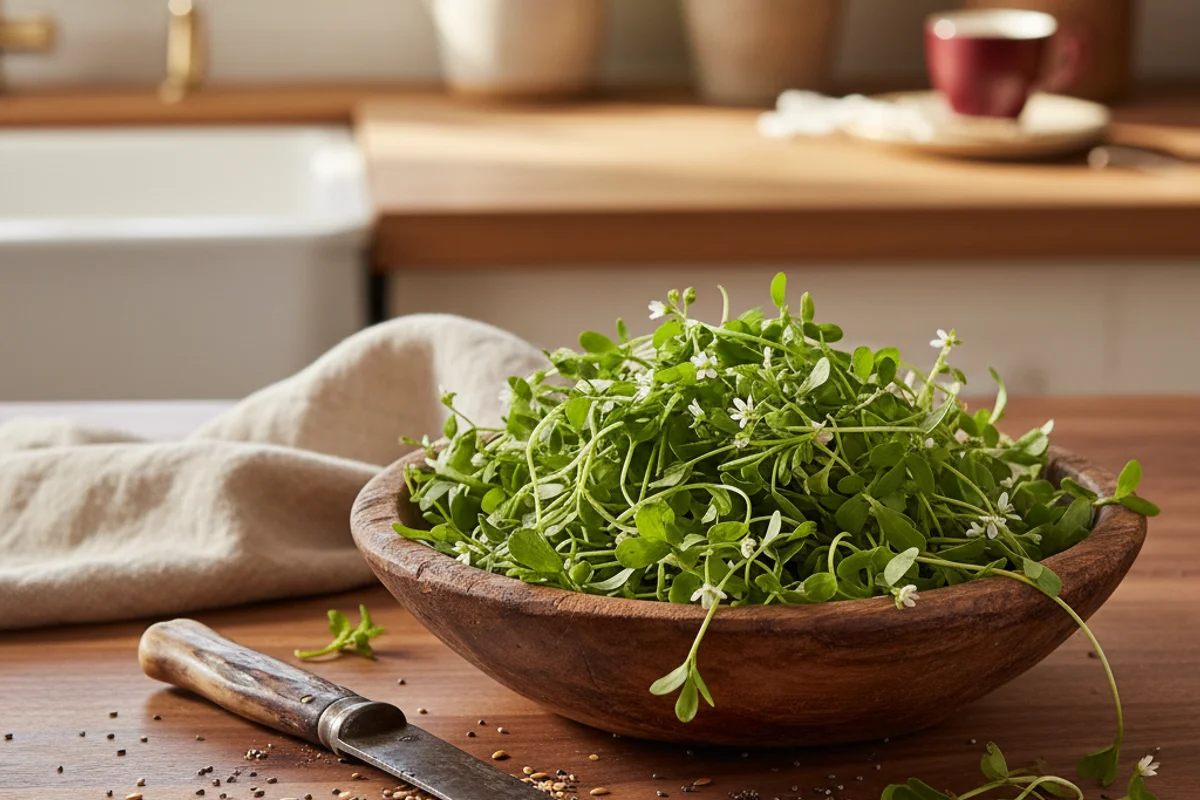
Most people walk right past chickweed without a second glance — it’s that low-growing, sprawling little weed taking over your garden beds and lawn edges every summer. But Stellaria media has been eaten as a salad green and cooked like spinach for centuries. As a wine base, it brings a clean, grassy delicacy that’s closer to a floral white than anything bold or tannic. Don’t expect fireworks young — this one rewards patience the way a good novel rewards a slow reader.
The beginner trap: Bottling this wine too early; it tastes thin and unremarkable under one year old, and two years is genuinely where it starts to shine.
Ingredients
- 1 quart chickweed (whole plant, roots removed), fresh
- 2½ lbs granulated sugar
- 1 orange (zest peeled thin, juice reserved)
- 1 lemon (zest peeled thin, juice reserved)
- 1 tsp yeast nutrient
- Water to make 1 gallon
- 1 packet wine yeast (Lalvin 71B or EC-1118 work well)
Method
- Wash the chickweed thoroughly, then use a vegetable peeler to remove just the colored outer peel from both the orange and lemon — avoid the white pith, which adds bitterness.
- Bring 1 gallon of water to a full boil.
- Place the chickweed and citrus peels together in your primary fermenter, then pour the boiling water over them.
- Let the mixture cool to room temperature, then strain out and discard the solids.
- Stir in the sugar and the reserved citrus juice until the sugar fully dissolves.
- Add the yeast nutrient, then sprinkle in your wine yeast. Cover the fermenter with a clean cloth and secure it.
- Ferment at room temperature for 7 days, stirring once daily.
- Transfer the liquid to a sanitized secondary fermenter (a 1-gallon glass jug works perfectly) and fit an airlock.
- Rack into a fresh sanitized vessel every 30 days until the wine clears completely and drops no new sediment over a full 30-day period.
- Stabilize with ½ tsp potassium sorbate, sweeten to taste if desired, then rack into bottles and seal.
Why this works
Chickweed on its own carries very little sugar, acid, or tannin — it’s essentially flavored water. That’s why the citrus plays a structural role here, not just a flavor one. The zest contributes aromatic compounds and a small amount of pectin, while the juice supplies tartaric and citric acids that give the wine enough backbone to age. Boiling water extracts the plant’s water-soluble flavor compounds quickly and also sanitizes the must before fermentation begins. During the long aging process, harsh alcohol esters slowly break down and integrate, transforming what initially tastes sharp and green into something noticeably smoother and more complex.
Notes
If you can’t find chickweed in the wild, this recipe doesn’t translate easily to store-bought substitutes — foraging or growing your own is really the only path here. Make sure you are 100% confident in your plant identification before harvesting; collect from areas not treated with pesticides or herbicides. If your finished wine tastes flat after stabilizing, a small addition of acid blend (¼ tsp at a time) can brighten it considerably.