COFFEE WINE
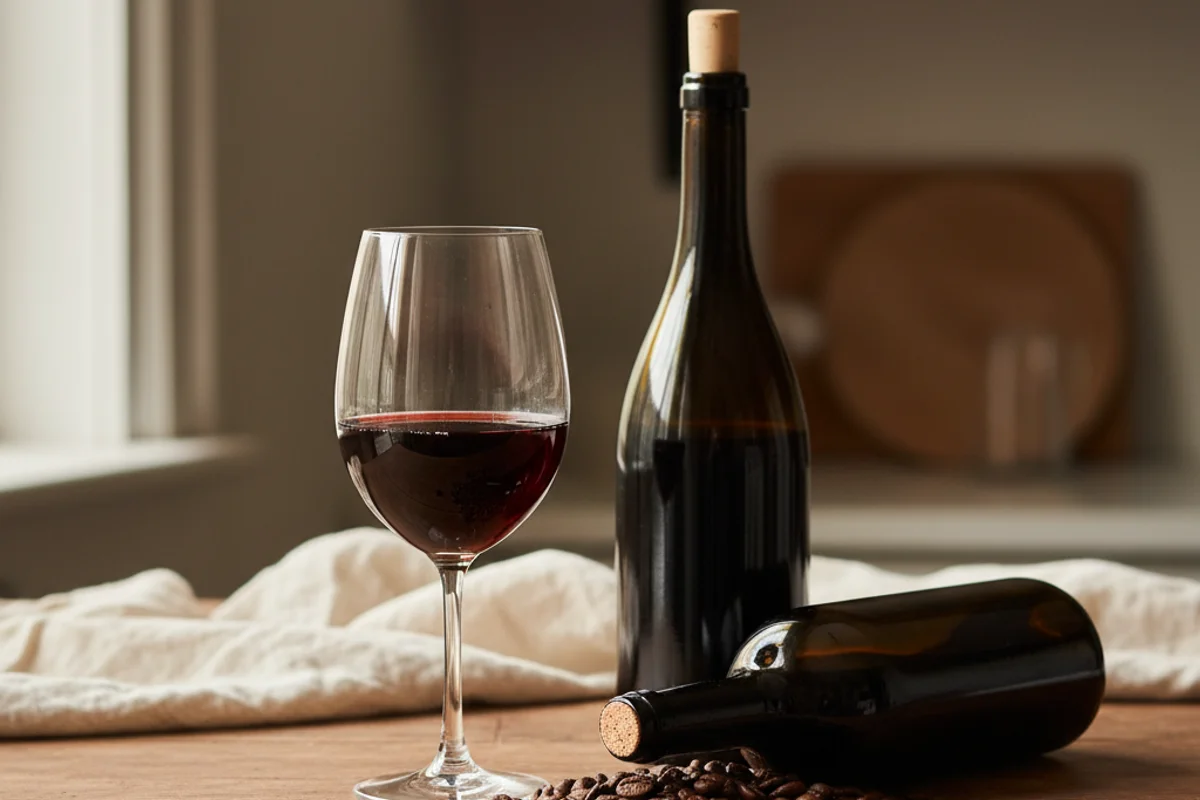
Coffee wine sits at a strange and wonderful crossroads. Your morning brew — roasty, bitter, complex — turns out to have real winemaking potential. Fermented with the right yeast and balanced with a little acid and tannin, it produces a dark, rich country wine with notes of caramel, dark sugar, and yes, that familiar coffee depth. Think of it as a dessert wine that skipped the grapes entirely. It rewards patience, and it’s best served sweet or semi-sweet, where the sugar rounds out the roast.
The beginner trap: Skipping the stabilization step before back-sweetening will restart fermentation in the bottle and turn your coffee wine into a fizzy, potentially explosive mess.
Ingredients
Recipe 1 — Fresh Ground Coffee
- ¾ lb freshly ground coffee (dark roast works best)
- 2½ lbs dark brown sugar
- 1½ tsp citric acid (bottled lemon juice works in a pinch — use 3 tbsp)
- ¼ tsp wine tannin (or 1 cup strong-brewed black tea, unsweetened)
- 7½ pts (about 1 gallon) water
- 1 tsp yeast nutrient
- 1 packet Sauterne wine yeast (or any white wine yeast)
Recipe 2 — Instant Mocha
- 1½ cups instant mocha coffee mix (hazelnut or French vanilla flavors are fine; avoid chocolate-flavored mixes)
- 2½ lbs light brown sugar
- 1½ tsp citric acid
- ¼ tsp wine tannin (or 1 cup plain black tea)
- 7 pts water
- 1 tsp yeast nutrient
- 1 packet Côte des Blancs or Pasteur Red wine yeast
Method
- Bring the water to a boil in a large pot, then stir in the sugar until fully dissolved.
- Recipe 1: Stir the ground coffee into the boiling water, let it return to a boil, then remove from heat and cover. Recipe 2: Stir the instant mocha mix into the boiling sugar water, then remove from heat and cover.
- Let the liquid cool completely to room temperature — rushing this step risks killing your yeast.
- Recipe 1: Strain the cooled liquid through a double layer of cheesecloth or a fine mesh bag into a sanitized fermentation vessel, discarding the grounds. Recipe 2: Pour directly into a sanitized fermentation vessel.
- Stir in the citric acid, tannin, and yeast nutrient.
- Add your activated yeast, then cover the vessel opening with a clean cloth napkin secured with a rubber band.
- Once fermentation is active and vigorous, swap the cloth cover for an airlock.
- Rack the wine three times, 60 days apart each time, topping up the vessel and re-fitting the airlock after each rack.
- For a dry wine: After the final racking, bottle directly. For a sweet or semi-sweet wine: Stabilize with potassium sorbate and potassium metabisulfite, sweeten to taste, wait 10 days to confirm fermentation has not restarted, then bottle.
Why this works
Coffee brings natural bitterness, aroma compounds, and some acidity to the must — but not quite enough of the right kind. Adding citric acid corrects the pH to a range where yeast can thrive and where the wine won’t taste flat. The brown sugar provides fermentable glucose and fructose, and its molasses content adds body and color that white sugar can’t match. Tannin, normally contributed by grape skins, gives the finished wine a subtle structure that keeps it from feeling thin. A low-nitrogen environment is the usual problem with non-fruit wines, and that’s exactly what yeast nutrient fixes — giving your yeast the building blocks it needs to ferment cleanly without producing off-flavors.
Notes
Chocolate-flavored mocha mixes taste unpleasant after fermentation — stick to plain, hazelnut, or vanilla varieties for Recipe 2. If wine tannin powder isn’t available at your local homebrew shop, it can be ordered online, but a cup of very strong black tea is a reliable grocery-store substitute. This wine is best enjoyed after at least six months of bottle aging, when the sharper edges mellow and the coffee character comes forward cleanly.