CRABAPPLE WINE
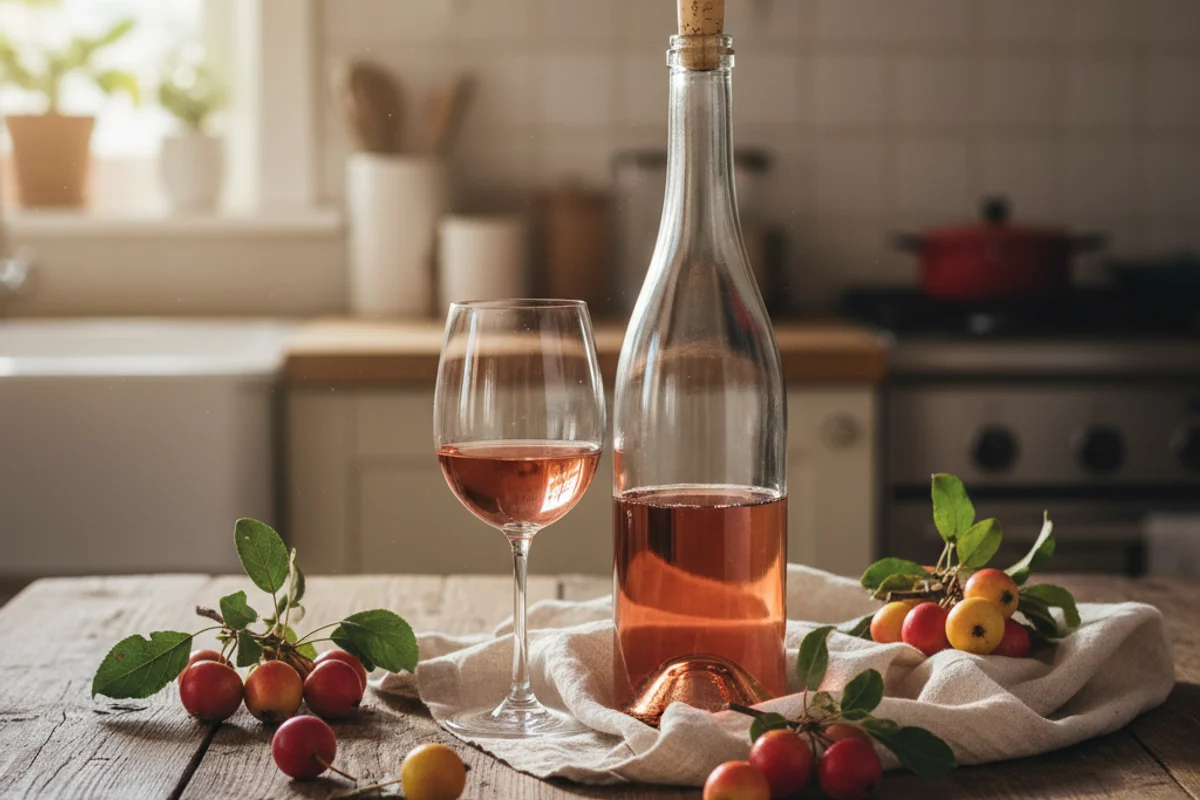
Crabapples are the punk rock of the apple family — small, tart, and mostly ignored by people who don’t know better. But that sharp acidity and intense fruit flavor is exactly what makes them shine in a wine glass. Depending on the variety, you’ll get anything from a crisp, dry white-style wine to something with deep pink color and a bold fruity punch. The natural tannin and acid in the skins do a lot of the heavy lifting here, giving you structure that most fruit wines have to fake with additives.
The beginner trap: Crushing or cutting the seeds releases bitter compounds that will haunt your finished wine — keep those seeds whole and intact no matter what.
Ingredients
- 4 lbs ripe crabapples, fresh or frozen, washed and crushed (seeds kept whole)
- 2 lbs granulated white sugar
- 7½ pts (just under 1 gallon) water
- 1 Campden tablet, crushed
- ½ tsp pectic enzyme
- ½ tsp acid blend (or 1½ tsp lemon juice as a substitute)
- ¼ tsp wine tannin (or 1 cup unsweetened strong-brewed black tea)
- 1 tsp yeast nutrient
- 1 packet Champagne wine yeast (or any dry white wine yeast)
Method
- Wash the crabapples thoroughly, then crush them by hand or with a clean hard object — a wooden rolling pin works well. Keep all seeds whole; do not cut or grind them.
- Bring the water to a boil and dissolve the sugar completely in it. Pour the hot sugar water over the crushed crabapples in your primary fermenter.
- Cover the fermenter with a clean cloth and let everything cool to lukewarm (around 70–75°F / 21–24°C).
- Add the crushed Campden tablet, pectic enzyme, acid blend, tannin, and yeast nutrient. Stir well, cover, and let sit for 12 hours.
- Sprinkle the yeast over the must, re-cover, and let fermentation begin.
- Stir the must and push the fruit cap back down 2–3 times per day for one week.
- Pour the must through a nylon straining bag into a clean container and let it drip-drain completely — do not squeeze the bag.
- Let the strained liquid sit for another 24 hours, then rack it off the sediment into a glass secondary fermenter (carboy) and fit an airlock.
- Rack every 2 months. After the third racking, check the specific gravity and taste the wine.
- If the wine is dry and stable, add potassium sorbate to stabilize, back-sweeten to your taste, wait 10 days, then rack into bottles. Age at least one year before drinking.
Why this works
Crabapples are naturally high in pectin — the same stuff that makes jam gel. In wine, pectin creates a stubborn haze that no amount of time will fix on its own. That’s why pectic enzyme is non-negotiable here. It breaks down the pectin chains so the wine can clear properly. The 12-hour wait before adding yeast gives the enzyme time to work before fermentation kicks off, because yeast activity and rising alcohol both slow the enzyme down. The Campden tablet added at the same time knocks back any wild yeast or bacteria from the fruit skins, giving your chosen yeast a clean runway to do its job.
Notes
Frozen crabapples work just as well as fresh — freezing actually breaks down the cell walls and makes crushing easier and juice extraction better. If you can’t find acid blend at a homebrew shop, lemon juice is a reasonable everyday substitute. For a drier, more complex wine, resist the urge to sweeten heavily at the end — a touch of residual sweetness is all this fruit needs to shine.