CRANBERRY-RASPBERRY SOCIAL WINE
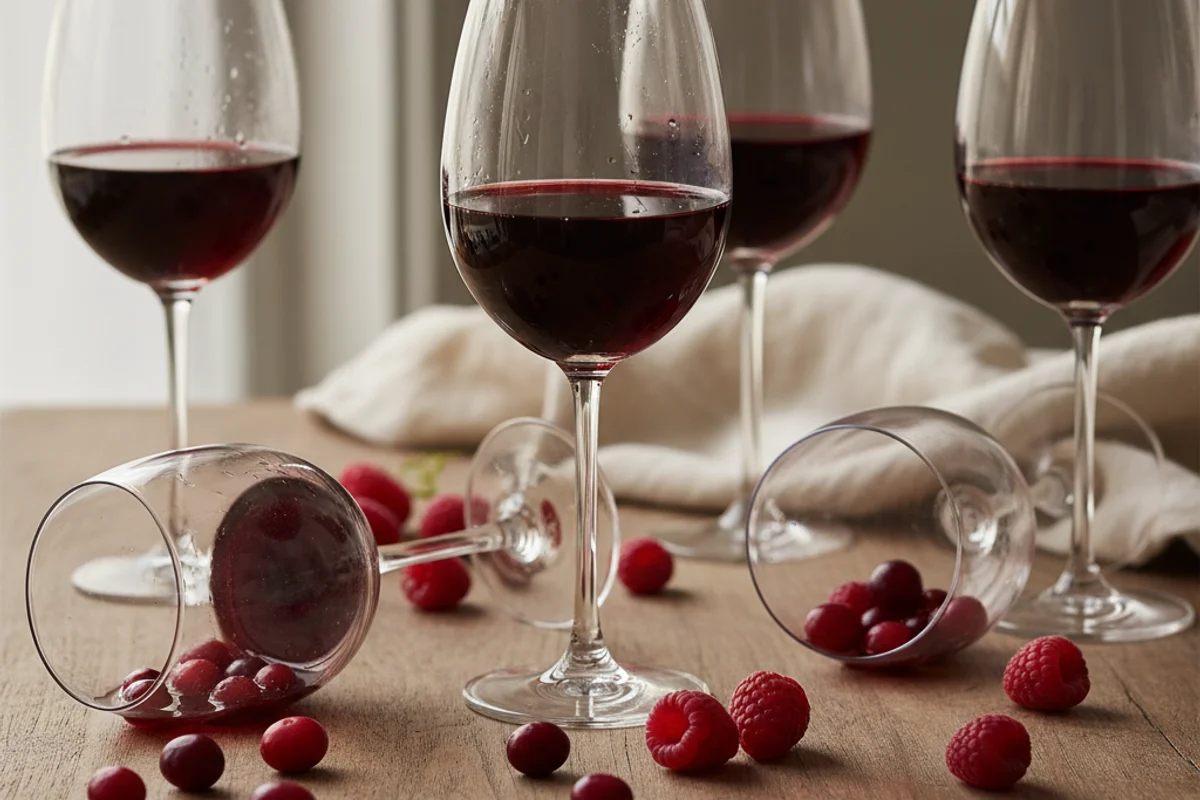
Think of this as the wine you open at 3 p.m. on a slow Saturday — no food required, no occasion necessary. Cranberry brings tart backbone and a deep ruby color, while raspberry syrup layers in soft, jammy sweetness. At around 10.75% ABV, this wine sits firmly in “one more glass” territory without tipping into nap time. It works dry alongside something salty, or sweetened up next to a pastry. Either way, it earns its place at the table — or the couch.
The beginner trap: Grabbing the wrong cranberry juice is the most common mistake — many blends contain preservatives like sodium benzoate that will kill your yeast before fermentation even starts.
Ingredients
- 7 pints (112 oz) 100% cranberry juice from concentrate — check the label, no preservatives except ascorbic acid
- 1 cup raspberry syrup (flavored drink mix concentrate works; look for Torani raspberry syrup as an easy grocery-store find)
- 14 oz to 17 oz granulated white sugar, adjusted to reach a starting gravity of 1.073–1.078
- ½ tsp tartaric acid (or ¾ tsp acid blend)
- 1 Campden tablet, finely crushed and dissolved
- 1 tsp yeast nutrient
- 1 packet wine yeast (Lalvin 71B or EC-1118 work well)
Method
- Check the cranberry juice label and confirm no preservatives beyond ascorbic acid are listed.
- Combine the cranberry juice and raspberry syrup in your primary fermenter, then stir in the crushed, dissolved Campden tablet.
- Take a hydrometer reading, then dissolve your sugar in a small amount of warm juice or water to make a simple syrup and stir it into the must.
- Check your gravity — target 1.073 to 1.078, staying closer to the low end if unsure; do not go above 1.078.
- Stir in the acid and yeast nutrient, then cover the primary loosely and let it sit for 10–12 hours.
- Prepare your yeast in a starter solution per packet instructions, then pitch it into the must.
- On day five, transfer the wine to a 1-gallon (4-liter) secondary vessel and fit an airlock, leaving at least 1 inch of headspace.
- Let the wine ferment to dryness — your hydrometer should read around 0.995–1.000.
- Rack the wine into a clean 1-gallon secondary, top up if needed to reduce headspace, and wait for it to clear.
- After two more weeks, rack again into a clean vessel; stir in one more crushed, dissolved Campden tablet and ½ tsp potassium sorbate dissolved in a little water.
- Wait 45 days, rack one final time, then sweeten to taste if desired and bottle.
Why this works
Cranberry juice is naturally loaded with malic and citric acids, which gives this wine its sharp, clean bite. The raspberry syrup balances that acidity with residual sugars and soft fruit esters, but it doesn’t add fermentable sugar the way fresh fruit would — so you control alcohol through your sugar additions alone. Keeping the starting gravity at 1.073–1.078 targets a final ABV around 10–11%, which is low enough to keep the wine refreshing and socially drinkable. The Campden tablet at the start knocks out any wild yeast or bacteria hiding in the juice, giving your chosen wine yeast a clean runway to work with.
Notes
Frozen raspberries blended and strained can replace the syrup — use about 1½ cups of puree and reduce added sugar slightly to compensate for their natural sugars. If you want a sweeter finish, backsweeten with honey instead of sugar for a rounder, softer result. Always stabilize with potassium sorbate before sweetening, or fermentation can restart in the bottle.