CRANBERRY-RASPBERRY WINE
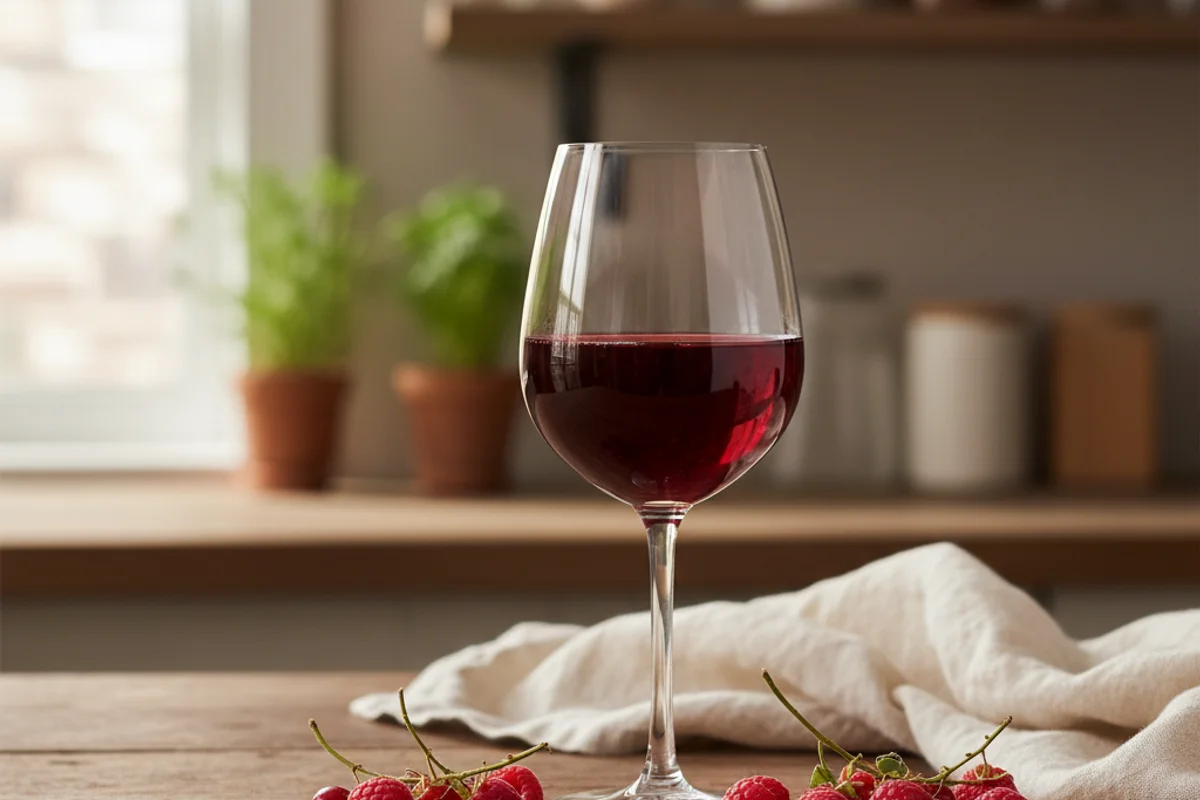
Cranberry brings sharp, mouth-puckering acidity. Raspberry brings bright, floral sweetness. Together, they create a tension that keeps your palate interested from the first sip to the last. This one-gallon recipe skips the fresh-fruit headaches entirely by leaning on frozen concentrate — the kind you’ll find in any grocery store freezer aisle. The result is a deep ruby, tart-forward wine that rewards a little patience with a clean, fruit-driven finish.
The beginner trap: Skipping the back-sweetening step — this wine ferments bone dry, and without a little added sugar at the end, it can taste sharp and thin rather than balanced.
Ingredients
- 1 can (12 oz) frozen cranberry-raspberry juice concentrate, thawed
- 1 lb (454 g) granulated white sugar
- 1 tsp yeast nutrient
- 1/8 tsp wine tannin (or 1/4 cup strongly brewed black tea as a substitute)
- 1 Campden tablet, crushed
- 1/2 tsp pectic enzyme
- Water to bring total volume to 1 gallon
- 1 packet Champagne or Montrachet wine yeast, activated per packet instructions
Method
- Pour the thawed concentrate into a clean 1-gallon jug. Add the sugar, crushed Campden tablet, tannin, and yeast nutrient, then fill with water to within 3–4 inches of the top.
- Cap the jug and shake until the sugar fully dissolves, then remove the cap. Cover the opening with a paper towel secured with a rubber band and let it sit for 12 hours.
- Add the pectic enzyme, stir gently, re-cover, and wait another 12 hours.
- Add the activated yeast, re-cover with the paper towel, and move the jug to a warm spot (65–75°F / 18–24°C).
- Stir the must once daily until the specific gravity (SG) drops to 1.020 — expect this to take about two weeks.
- Top up with water to reduce headspace, fit an airlock, and keep the jug in a warm place until the SG reaches 1.000 (roughly 30–45 days).
- Rack the wine into a clean jug, top up, refit the airlock, and move to a cooler location.
- Rack again after 60 days, then once more 60 days after that, topping up and refitting the airlock each time.
- Once the wine is clear and dry, taste it. If the tartness is too sharp, dissolve 1 crushed Campden tablet and 1/2 tsp potassium sorbate in a small cup of the wine, stir it into the main batch, then sweeten to taste. Refit the airlock and wait 10 days before bottling.
- Rack into clean bottles and age at least 6 months before opening.
Why this works
Cranberries are loaded with natural acids — mainly citric and malic — which is great for wine stability but rough on your taste buds if left unchecked. The pectic enzyme breaks down the pectin in the fruit juice, which would otherwise leave your wine cloudy and hazy no matter how long you wait. Champagne or Montrachet yeast is a strong, clean fermenter that handles high-acid musts without stalling, and it will eat nearly all the sugar, which is why back-sweetening is almost always necessary here. Tannin adds just enough structure to keep the wine from tasting flat and one-dimensional.
Notes
Any brand of frozen cranberry-raspberry juice blend works here — Ocean Spray is the easiest to find. If you want a slightly softer wine, swap half the concentrate for a 100% raspberry juice concentrate. Potassium sorbate is available at homebrew shops or online; do not skip it when back-sweetening, as it stops the yeast from restarting fermentation in the bottle.